Georgia Republican Legislative Leaders Reject Governor’s Push for 2028 Redistricting
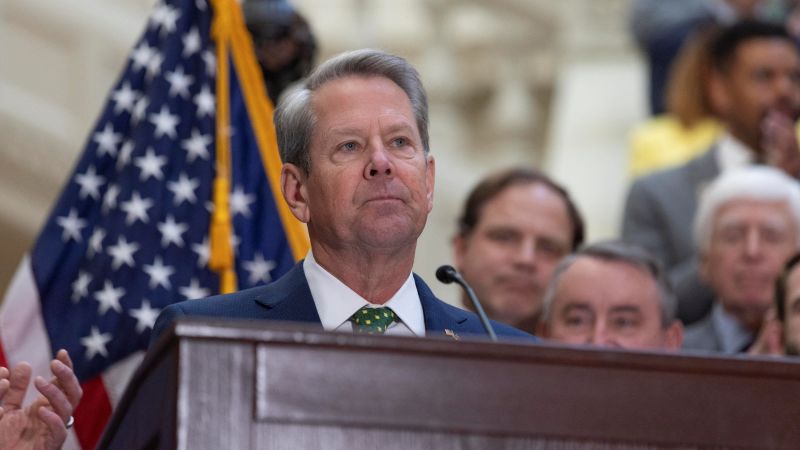
Sandego.net – On June 17, 2026, Georgia’s Republican legislative leaders made a decisive move by rejecting Governor Brian Kemp’s call to initiate redistricting efforts for the 2028 congressional and state legislative elections. The decision came as a surprise to many, especially given Kemp’s vocal advocacy for reshaping districts to maximize Republican gains. House Speaker Jon Burns, a central figure in the state’s legislative process, spearheaded the rejection, sending a letter to Kemp hours before the special session was set to begin. The move coincided with a surge of demonstrators gathering at the Georgia Capitol, where they chanted, “Black voters matter!” to underscore their demands for fairer representation.
A Strategic Pause Amid Legal Uncertainty
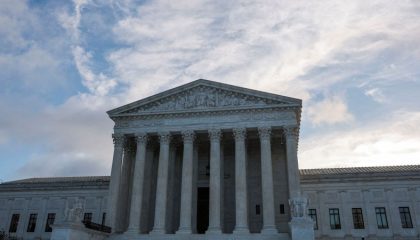
Burns argued that lawmakers should take a step back before committing to redistricting, emphasizing the need to analyze the recent US Supreme Court ruling in Louisiana v. Callais. This decision, which invalidated Louisiana’s congressional map as a racial gerrymander, has raised concerns about the federal Voting Rights Act’s diminished protections for minority voters. By rejecting Kemp’s proposal, the Republican leaders signaled their intention to avoid rushing into a process that could be challenged on racial grounds. Burns stated in a statement, “It’s more important for us to focus on economic priorities rather than partisan games at this stage.”
“Lawmakers want to take their time after the court’s decision in Louisiana v. Callais, which struck down Louisiana’s congressional map as an illegal racial gerrymander and laid the groundwork for other Southern states to redraw their districts,” Burns explained.
The rejection has sparked a debate over the timing of redistricting, with critics suggesting that Georgia’s Republican-controlled legislature could have taken advantage of the weakened Voting Rights Act to secure an edge in the upcoming midterms. However, the leaders prioritized caution, citing pending litigation over Georgia’s current districts and the potential legal risks of acting prematurely. They also highlighted the importance of understanding how race can be used—or restricted—in redistricting after the court’s ruling, which could reshape the political landscape for years to come.
Historical Context and Civil Rights Symbolism
Georgia’s decision to delay redistricting carries additional weight in light of its historical significance. The state’s Capitol, a prominent symbol of political power, is located just blocks from the home where Rev. Martin Luther King Jr. lived, preached, and led the civil rights movement that culminated in the Voting Rights Act of 1965. This proximity to the civil rights icon’s legacy has made minority voting rights a particularly sensitive issue, with demonstrators leveraging the state’s historical context to demand accountability from its leaders.
Kemp’s push for early redistricting was framed as an opportunity to solidify Republican control, especially in districts where non-White, Democratic-leaning voters are concentrated. The governor argued that by redrawing boundaries now, Republicans could create a more favorable electoral environment ahead of the 2028 elections. However, Burns and other lawmakers countered that the timing was critical. “We need to ensure the new maps are legally sound and reflect the realities of how race can influence voting patterns,” Burns said in a press conference.
Risks and Opportunities in Partisan Gerrymandering
The debate over redistricting in Georgia has broader implications for partisan strategies across the country. Partisan gerrymandering, the practice of manipulating district boundaries to favor a particular party, has become a focal point of political discourse. In metro Atlanta, where non-White voters are a growing demographic, spreading these voters across more districts could potentially dilute their influence and shift the balance toward Republican candidates. Burns acknowledged this strategy, stating, “We’re aware of the tactics, but we want to avoid accusations of playing fast and loose with the process.”
Yet, the risk remains that a more evenly distributed map could lead to the creation of battleground districts, especially as White metropolitan voters trend less conservative. This dynamic could open the door for Democratic candidates—regardless of race or ethnicity—to gain more traction in future elections. While the Georgia state Senate is already considered a gerrymandered stronghold for Republicans, the state House and US House maps are seen as more contested territory. Kemp’s request was aimed at leveraging this potential, but the legislative leaders have chosen to proceed with caution.
Despite the rejection, Georgia Republicans have not closed the door on redistricting entirely. Burns noted that the decision does not preclude revisiting the issue later this year, depending on the outcomes of ongoing legal battles. The governor, meanwhile, has vowed to continue pushing for changes that align with his party’s goals. “We’re not giving up on this,” Kemp said in a statement, “but we need the right timing to ensure success.”
Implications for the 2028 Elections
The timing of redistricting is a crucial factor in Georgia’s political strategy. Ten states have already enacted new congressional maps ahead of the November 2026 midterms, with some aiming to secure advantages for their party. Georgia, however, would have been the first state to adjust districts for the 2028 elections, making the decision a significant one. By delaying the process, the legislature may be giving itself more time to refine its approach, especially as the legal landscape continues to evolve.
Burns also highlighted the need to address potential legal challenges to the current maps. “We have to understand the full impact of the court’s ruling before making any changes,” he added. This includes evaluating how race can be used as a tool for gerrymandering, which has become a central issue in the wake of Louisiana v. Callais. The decision has emboldened states to test the limits of the Voting Rights Act, but Georgia’s leaders are wary of overstepping.
For now, the rejection of Kemp’s proposal has left the state’s future redistricting plans uncertain. While the governor remains optimistic about his ability to shape the electoral map, the legislative leaders have chosen a more measured path. The outcome of this decision could influence not only Georgia’s political future but also the strategies of other states seeking to navigate the changing rules of redistricting. As the debate continues, the interplay between legal considerations and political ambitions will remain at the heart of the discussion.
A Nation-Wide Shift in Redistricting Strategy
The situation in Georgia is part of a larger trend across the country. With the Voting Rights Act’s protections weakened, Republican-led states have increasingly turned to redistricting as a tool to consolidate power. The 2026 midterms have already seen several states implement maps that favor their party, and the 2028 elections are expected to be a pivotal moment for this strategy. However, Georgia’s hesitation could set a precedent for other states to follow, particularly those where minority voting rights are a contentious issue.
Kemp’s efforts to push for early redistricting reflect a broader push by the Trump administration to prioritize partisan advantages. The governor’s approach has been consistent with the Republican Party’s strategy of using redistricting to secure electoral gains, especially in states with diverse populations. Yet, the rejection of this plan by legislative leaders underscores the internal debates within the party about how aggressively to pursue such measures. Burns’ emphasis on economic concerns and legal caution signals a shift in priorities, even as the Republican Party continues to seek ways to maximize its influence in upcoming elections.
As the political landscape in Georgia evolves, the tension between strategic gerrymandering and the protection of minority rights will likely remain a defining issue. The state’s decision to delay redistricting could either strengthen its position in the 2028 elections or create new challenges for Republicans. With the Supreme Court’s ruling in Louisiana v. Callais and the growing influence of minority voters, the path forward for Georgia’s legislative leaders will be closely watched by political analysts and activists alike.