White House Leverages Homeland Security Funds to Push Election Reforms
Sandego.net – Recent internal documents and sources reveal that the Trump administration is employing federal homeland security funds as a tool to pressure states into adopting specific election modifications. This strategy involves the potential suspension of millions in financial support for jurisdictions that do not comply with newly imposed regulations. According to the information obtained by CNN, the move is intended to reinforce the administration’s efforts to combat voter fraud, even as evidence suggests such incidents are relatively uncommon.
New Guidelines and Compliance Measures
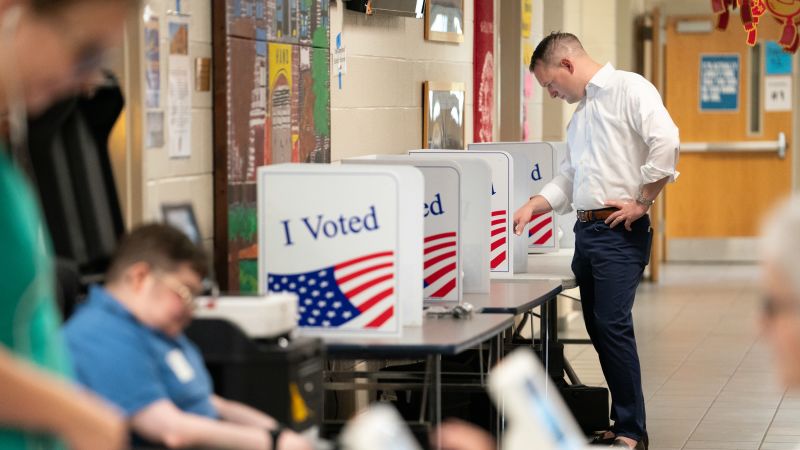
The updated rules for several homeland security grant programs now mandate that states implement a range of reforms, including the elimination of electronic voting systems and the mandatory use of hand-marked paper ballots. These measures aim to ensure that all voting processes are verifiable and transparent. Additionally, states must integrate their voter rolls into the Department of Homeland Security’s (DHS) Systematic Alien Verification for Entitlements (SAVE) database, which is designed to identify potential noncitizen voters.
Under the revised framework, states that fail to meet these requirements risk losing up to 20% of their allocated grant funds. Previously, the DHS required at least 3% of grant money to be dedicated to election security, but the new guidelines escalate the stakes by making compliance a prerequisite for full funding. The grants, which are projected to exceed $1 billion in the current fiscal year, have historically supported state and local efforts to safeguard infrastructure, manage disasters, and prevent terrorism. However, their use as a political instrument is now a focal point of contention.
Legal Challenges and Constitutional Concerns
While the administration’s tactics are part of a broader strategy to exert federal control over state election processes, they have already drawn legal scrutiny. Courts have previously intervened in similar efforts, such as the use of federal funds to influence immigration policies or diversity initiatives. Legal experts argue that the Constitution grants states authority over administering elections, limiting the president’s ability to unilaterally impose changes without congressional approval.
“I expect the new requirements will be blocked in the courts,” stated David Becker, a former Justice Department lawyer who now advises election officials. His comment underscores the potential for legal challenges against the current measures, which could mirror past disputes. The administration’s push for stricter oversight includes demands for states to conduct manual election audits and submit plans to phase out non-paper voting systems. These actions are seen as a way to consolidate power under federal guidance, despite states’ traditional autonomy in electoral matters.
Historical Precedents and State Resistance
This is not the first time the Trump administration has used federal funds to influence state policies. Last year, officials attempted to withhold money from states that did not provide updated population data reflecting the impact of mass deportations. That policy was swiftly challenged in court and ultimately halted. Similarly, the current election reforms are being positioned as a necessary step to protect the integrity of voting systems, yet critics argue they are being used as a means of political coercion.
Some states have already resisted the SAVE database, citing concerns about its accuracy. The system, which cross-references voter information with immigration records, has been criticized for generating false matches that could erroneously flag eligible voters. While many jurisdictions have opted to use SAVE voluntarily, others have chosen to exclude it, leading to legal battles. The Justice Department has recently filed suits against 30 states for refusing to share voter lists with the federal government, further amplifying the tension between state sovereignty and federal mandates.
The financial implications of these reforms are significant. Upgrading voting infrastructure to meet the new standards could cost states hundreds of millions of dollars, particularly in regions that rely heavily on electronic systems. For example, about 30% of voters nationwide reside in areas where ballot-marking devices or direct-recording electronic systems are the primary method of voting. Transitioning to hand-marked paper ballots would require substantial investment in equipment, training, and logistical adjustments. Critics warn that such measures could disproportionately affect states with limited resources, potentially undermining their ability to maintain robust election security programs.
Broader Impact on Electoral Autonomy
The administration’s approach reflects a pattern of leveraging federal resources to pressure states into alignment with its priorities. This strategy has been applied to issues like immigration enforcement and social equity initiatives, where states have been required to adopt federal frameworks or face financial consequences. In the context of elections, the new guidelines are being framed as a way to standardize procedures and reduce the risk of fraud, but opponents see them as an overreach into state decision-making.
By tying election security funding to specific reforms, the Trump administration is effectively creating a financial incentive for states to prioritize its agenda. The SAVE database, for instance, is being used to scrutinize voter eligibility, a process that could slow down election administration and introduce administrative burdens. While the tool is designed to ensure that only citizens vote, its implementation has sparked debates over privacy and the potential for over-policing. States that have adopted the system report mixed results, with some seeing it as a useful tool and others questioning its reliability.
Despite these concerns, the administration remains steadfast in its push for stricter oversight. The new guidelines are expected to be distributed to states later this month, leaving them with limited time to adjust their practices. This timing is strategic, as it coincides with the buildup to key elections, giving the administration a window to influence outcomes through financial pressure. The move also aligns with broader efforts to centralize election management, including the use of executive orders to dictate voting procedures and the collection of sensitive voter data for analysis.
Future Implications and State Preparedness
As the guidelines take effect, states must evaluate their current systems and determine whether they can meet the new requirements. For jurisdictions already using hand-marked paper ballots, the transition may be smoother, but those relying on electronic systems face greater challenges. The potential for millions in lost funding could create a dilemma for states, forcing them to choose between compliance and risking their access to critical resources.
While the administration insists that these changes are necessary to safeguard elections, the political motivation behind them is evident. The strategy mirrors past efforts to use federal funding as a tool for policy alignment, creating a situation where states are incentivized to conform to presidential priorities. This dynamic has raised questions about the balance between federal oversight and state autonomy, particularly in the context of an election year. As legal challenges loom, the outcome of this push could shape the future of electoral administration in the United States, setting a precedent for how federal funds are used to influence state decisions.