Elon Musk’s Trillion-Dollar Fortune: A Government-Driven Path?
Sandego.net – Elon Musk’s meteoric rise to the title of the world’s first trillionaire has sparked debates about the role of public support in his success. While his vision and innovation are undeniably pivotal, many argue that government assistance played a foundational role in enabling both his companies—Tesla and SpaceX—to thrive. From early investments to regulatory policies and direct financial aid, American taxpayers and federal agencies have been instrumental in shaping Musk’s wealth trajectory. This raises a critical question: how much of his $1 trillion net worth can be attributed to government backing?
SpaceX’s Government-Backed Breakthroughs
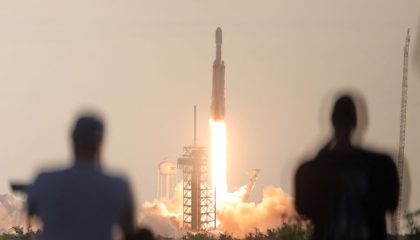
SpaceX’s journey from a fledgling startup to a dominant player in space exploration is closely tied to federal contracts. In its formative years, the company secured over $500 million in grants, a figure that underscores the significant role of taxpayer funds. This support was not just a one-time event but a continuous investment. A key milestone occurred in 2006 when NASA awarded SpaceX a $278 million grant to develop the Falcon rocket system and Dragon space capsule. At the time, the U.S. space program was transitioning from the aging Space Shuttle program, which required a new method to transport astronauts and cargo to the International Space Station.
“There would not be (Tesla and SpaceX) if it weren’t for the government,” said Ross Gerber, CEO of investment firm Gerber Kawasaki, who invested in Tesla during its early stages. “The people who put in the other half of the capital from that era are about to be made multi-billionaires,” added Casey Dreier, chief of space policy at the Planetary Society, in anticipation of SpaceX’s initial public offering.
Dreier highlighted that NASA’s $278 million grant represented nearly half of the capital SpaceX had raised by that point, emphasizing its transformative impact. This financial cushion allowed the company to overcome early challenges, such as technical hurdles and funding shortfalls. By 2008, SpaceX faced a critical juncture, nearly running out of cash. However, a $1.6 billion contract from NASA—a move deemed unprecedented at the time—rescued the company. Musk himself acknowledged this in 2012, stating, “The fact (is) that we could not have started SpaceX, nor could we have reached this point, without the help of NASA.”
Tesla’s Reliance on Public Funding
While SpaceX’s government support is often spotlighted, Tesla’s financial foundation also owes much to public programs. The electric vehicle (EV) manufacturer received a $465 million low-interest loan from the Department of Energy in 2009, months before its initial public offering. This injection of capital was vital in developing the Model S sedan, which became Tesla’s first major commercial success. The loan was repaid early through stock sales in 2013, but its impact on the company’s trajectory was profound.
Moreover, Tesla benefited from a federal tax credit program for EV buyers. This policy allowed consumers to claim up to $7,500 in rebates, effectively lowering the cost of electric vehicles and boosting demand. Before the program expired in 2019, Tesla’s customers collectively received over $3.4 billion in tax credits. These credits not only made Tesla’s cars more affordable but also created a competitive edge in the market. Without this federal incentive, the company might have struggled to maintain its pricing strategy and growth momentum.
The government’s influence extended beyond direct financial aid. In the automotive industry, regulations aimed at reducing carbon emissions also played a role. Automakers were required to meet strict emissions standards, and those that fell short had to purchase “emissions credits” from compliant companies. Tesla, being an early adopter of electric vehicles, consistently met these standards, giving it a surplus of credits to sell. This dynamic allowed the company to generate additional revenue, further bolstering its financial position.
Measuring the Impact: Numbers and Timing
While the exact percentage of Musk’s wealth tied to government support remains a topic of discussion, the scale of financial assistance is staggering. According to data from PitchBook, which tracks private company valuations, SpaceX received more than $500 million in grants during its early years. Tesla, in contrast, drew from a broader mix of sources, including loans, tax credits, and regulatory advantages. However, the timing of these funds is as crucial as their magnitude.
For example, the $465 million loan from the Department of Energy arrived at a pivotal moment for Tesla. In January 2010, the company had sold fewer than 2,000 cars in its entire history, most of them based on Lotus sports cars—a relatively obscure British brand. The loan provided the necessary resources to scale production and launch the Model S, which became a game-changer. By 2013, Tesla had not only repaid the loan but also demonstrated its ability to attract private investment, a testament to the effectiveness of initial government support.
Similarly, the tax credit program for EV buyers helped Tesla navigate the early years of market uncertainty. By reducing the price point for consumers, the credits enabled the company to capture a larger share of the automotive market. The program’s end in 2019, however, forced Tesla to adjust its pricing strategy to sustain demand. Yet, the earlier period of federal incentives had already laid the groundwork for its eventual success.
The question of how much government aid contributed to Musk’s wealth is complex. While some argue that the assistance was minimal compared to private investments, the cumulative effect of these programs cannot be ignored. For instance, the $3.4 billion in tax credits alone allowed Tesla to generate more than $1 billion in additional revenue from U.S. sales. This is a substantial contribution, especially when considering the company’s initial struggles.
A Legacy of Public-Private Synergy
Elon Musk’s net worth is a reflection of a unique symbiosis between private enterprise and public policy. The government’s grants, loans, and regulatory frameworks provided the stability and resources needed for both Tesla and SpaceX to innovate and scale. As the U.S. space program and automotive industry evolved, these companies adapted to leverage public support, transforming it into private profit.
Even as the government’s role is debated, the data remains clear: Musk’s wealth is deeply intertwined with taxpayer-funded initiatives. From NASA’s contracts to the Department of Energy’s loans, the support has been a cornerstone of his companies’ growth. This raises broader questions about the role of public investment in fostering technological innovation and economic expansion. In Musk’s case, the government’s help has been both a catalyst and a critical enabler, shaping the trajectory of two of the most influential companies in modern industry.
Ultimately, while Musk’s vision and leadership are central to his success, the government’s financial and policy contributions cannot be overstated. The combination of grants, loans, and regulatory frameworks has created an environment where both Tesla and SpaceX could thrive. As the debate continues over the extent of this support, one thing remains evident: without government intervention, the path to a trillion-dollar fortune for Musk might have been significantly longer or even unattainable.