Student Unrest Spreads Across France as Anger Over Schools Boils Over
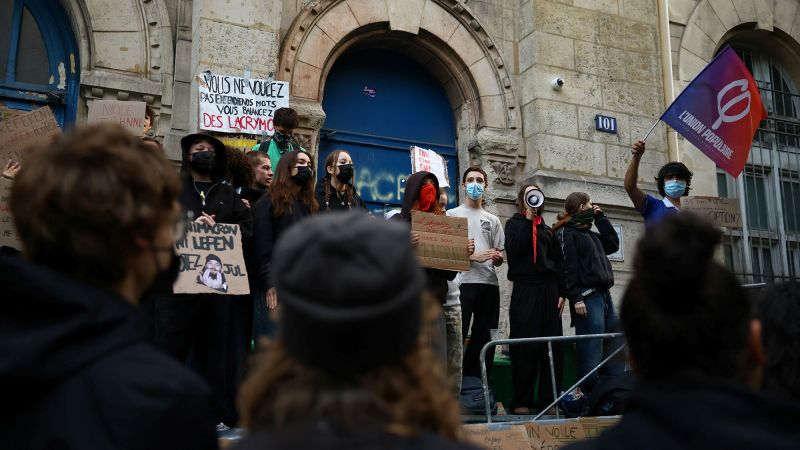
Sandego.net – France is facing its most serious wave of student unrest in decades, with demonstrations that began at one suburban school near Paris expanding rapidly into a nationwide crisis. Schools have closed, thousands of people have been detained and clashes between protesters and police have left students, teachers and officers injured.
The movement began on September 21 at Saint-Exupéry high school, north of Paris, where pupils joined striking teachers demanding more staff and better resources. The immediate dispute was resolved after additional personnel were sent to the school, but the protest had already inspired students elsewhere.
Within days, students at lycées across Paris and the surrounding region were blocking school gates. The action then spread from Lille in northern France to Marseille on the Mediterranean coast, turning a local dispute into a broader challenge for the government.
A System Under Pressure
At the heart of the protests is frustration with what students and teachers describe as an overstretched secondary education system. Many schools have struggled with crowded classrooms, insufficient equipment and unfilled teaching vacancies.
For years, videos from French schools have highlighted practical shortages: too few desks and chairs for pupils, or lessons cancelled because absent teachers were not replaced. Those problems have become more visible as student enrollment has risen.
A rise in births in France around 2010 has contributed to a larger high-school population today. Yet secondary schools have fewer teachers than they did in 2008, even with 250,000 additional students enrolled. In the public system, 70% of classrooms contain more than 30 pupils.
Student leader Manès Nadel said the scope of participation was extraordinary and argued that the Education Ministry had been unable to keep pace with events.
“It’s an unprecedented number of schools that are now involved.”
The protests have brought renewed attention to the gap between growing demand for education and years of inflation-adjusted funding reductions. For many young people, the dispute is not solely about one policy or one school. It reflects a sense that their day-to-day learning conditions have been neglected for too long.
Violence, Detentions and School Damage
The unrest has also been marked by serious violence. Authorities estimate that hundreds of thousands of people, including students, teachers and trade-union representatives, joined demonstrations on Tuesday. More than 5,000 people have been taken into custody since the movement began, with most detainees described as minors without prior criminal records.
In Paris, tear gas filled streets as riot police carrying shields and batons confronted some protesters. Trash bins, desks and chairs were set on fire. More than 100 high schools have sustained damage during the protests.
The human cost has been severe. A student in Lens, in northeastern France, lost a hand after allegedly picking up a grenade. Another student in Tours lost an eye. Students, teachers and police officers have also been injured in confrontations.
Criticism has focused on the tactics used by police. Footage from Alençon showed an officer placing a girl in a headlock, despite the technique being prohibited by law. Opponents of the government say the policing response has deepened anger rather than easing it.
Damage to schools in the greater Paris area alone has been estimated at €7 million, or roughly $7.84 million. The destruction has complicated the debate, as many demonstrators argue they are trying to defend public education while officials stress the cost of repairing the institutions caught up in the disorder.
Political Pressure Mounts
The government initially placed considerable emphasis on the role of the far-left France Unbowed party, known as LFI, whose activists have appeared at some barricades. Its leader, Jean-Luc Mélenchon, has defended students’ right to demonstrate as well as his party’s presence at protests. He is expected to perform strongly in France’s presidential election next spring.
US President Donald Trump also weighed in on Tuesday, portraying the events as a migration issue and claiming on Truth Social that the unrest was “nothing less than out of control mass migration.” His comments shifted attention away from the education grievances that triggered the demonstrations.
The French government did make an early concession involving planned 2027 fees at technological high schools, but that measure has since been removed from the budget. Protest leaders say this reversal reinforced their belief that officials are not listening.
“The government’s response has been irresponsible and it confirms exactly why the students are angry, because they are never heard.”
“They are responding only with repression.”
Authorities have since treated the situation with greater urgency, particularly after violence intensified late last week. The interior minister said the unrest had moved beyond student protest toward urban violence, and roughly 2,000 people were detained in a single day.
On Friday, Education Minister Edouard Geffray met student representatives. The meeting ended without an agreement, leaving the central dispute unresolved: whether the government can offer concrete improvements to schools quickly enough to calm a movement that has already transformed a local staffing complaint into a national confrontation.
Related Reading
Frequently Asked Questions
What is Unprecedented student protests are rocking France?
Unprecedented student protests are rocking France is the main topic of this guide. The article explains the context, practical details, and next steps readers should understand.
Why does Unprecedented student protests are rocking France matter?
Unprecedented student protests are rocking France matters because readers are looking for a useful answer, not just a short summary. Good content should match search intent and help them decide what to do next.