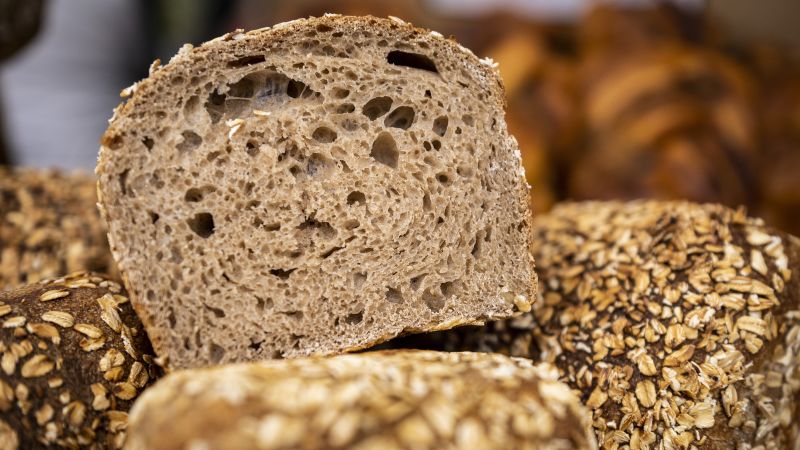
Whole Grains May Offer a Meaningful Boost for Heart and Metabolic Health
Sandego.net – Adding more whole grains to everyday meals could support healthier cholesterol levels, blood pressure and body weight, with benefits beginning at roughly three servings a day. A new analysis published Tuesday in the European Heart Journal examined dozens of studies to better understand why these foods are linked with cardiovascular and metabolic well-being.
Researchers found that about 90 grams of whole grains daily — approximately two slices of whole wheat bread plus a bowl of oatmeal — was associated with measurable improvements in health markers. The findings also suggested that consuming four to six servings a day may provide stronger effects.
Whole grains have long been connected with lower risks of heart disease, hypertension, elevated cholesterol and type 2 diabetes. They may also help people maintain a healthy weight when they are part of an overall balanced way of eating.
What the research found
The review brought together controlled studies in which participants ate three to six servings of whole grains daily for set periods ranging from two weeks to two years. Across those trials, participants showed modest improvements in around a dozen measures tied to long-term health.
Those measures included total cholesterol, LDL cholesterol, blood pressure, body weight and waist size. LDL, often called “bad” cholesterol, can contribute to cardiovascular risk when levels are too high. Blood pressure, excess weight and abdominal fat are also important factors in the development of heart disease.
Each individual change was relatively small. Still, their combined pattern reinforced conclusions from large population studies, said Dagfinn Aune, a research fellow in the department of epidemiology and biostatistics at Imperial College London’s School of Public Health and a coauthor of the meta-analysis.
“likely a causal effect” from eating whole grains, and “this may translate into a reduced risk of cardiovascular disease,”
The study helps strengthen the case that whole grains are not simply a marker of an otherwise health-conscious lifestyle. Their nutritional makeup may itself contribute to better cardiovascular and metabolic outcomes.
Whole grains are different from refined grains
The key is not merely adding another carbohydrate to the plate. Health professionals advise replacing refined grain foods with whole-grain choices whenever possible.
Whole grains retain the complete grain kernel as it naturally occurs. That includes the bran, germ and endosperm. Oatmeal, brown rice, whole wheat bread, farro, popcorn and quinoa are familiar examples. These foods contain fiber and other nutrients that are diminished when grains are heavily processed.
Refined grains, including white rice and foods made with white flour, have had parts of the grain removed during processing. Those removed portions are also where much of the fiber and many nutrients are found. Choosing brown rice instead of white rice, or oatmeal instead of a refined-grain breakfast item, can be a practical way to make the shift.
However, whole grains should not be viewed as a standalone cure for heart disease. Alice Lichtenstein, a professor at the Friedman School of Nutrition Science and Policy at Tufts University in Medford, Massachusetts, cautioned that the broader dietary pattern remains more important than a single ingredient swap.
“If you eat a cinnamon bun made of whole grain, as opposed to a cinnamon bun made with refined grain, I’m not sure you’re going to see a benefit,”
Lichtenstein, who was not involved with the meta-analysis, also noted that simply increasing carbohydrate intake to meet a whole-grain target could contribute to weight gain. The most useful approach is to substitute whole-grain foods for refined alternatives, rather than piling additional foods onto an already calorie-dense diet.
A realistic daily target
Many people in the United States do not reach the two to four daily servings of whole grains suggested in the latest federal Dietary Guidelines for Americans. One serving may be one slice of whole wheat bread or one-half cup of cooked oats, brown rice or quinoa.
The American Heart Association encourages eating foods made from whole grains but does not give everyone the same daily quota. There is no universal amount proven to be ideal for every individual, because bodies, genetic factors and lifestyles differ, Lichtenstein said. She was the lead author of the nonprofit organization’s dietary guidelines released in March.
“we’re trying to keep the focus on the dietary pattern.”
That pattern includes plenty of fruits and vegetables alongside whole grains, while reducing saturated fat, added sugars, salt, ultraprocessed foods and alcohol. In this context, whole grains can become one dependable part of a heart-supportive eating routine rather than a narrowly focused nutrition goal.
How to make better choices at the store
Replacing three refined-grain servings each day with whole-grain choices can be a manageable starting point for people who want a specific objective. Pantry habits may make the transition easier over time.
“My suggestion is as items run out in the pantry, replace them with whole grain versions,”
Product labels deserve careful attention. Bread that looks dark brown is not necessarily whole grain, and terms such as “multigrain” or “made with whole grain” do not guarantee that a product is primarily made from whole-grain flour.
“Turn the package over and look at the ingredient list,”
Lichtenstein advised that a whole grain should appear first on that list. If it does not, the product may be largely based on refined flour despite its packaging claims.
Small substitutions can add up: oatmeal at breakfast, whole wheat bread for sandwiches, brown rice or quinoa with dinner, and popcorn as a snack. The research suggests that steady choices across the day matter more than any one food. Making whole grains the default in place of refined options can support a more balanced diet and, over time, may help reduce risks connected to cardiovascular disease.
Related Reading
Frequently Asked Questions
What is You should probably be eating more?
You should probably be eating more is the main topic of this guide. The article explains the context, practical details, and next steps readers should understand.
Why does You should probably be eating more matter?
You should probably be eating more matters because readers are looking for a useful answer, not just a short summary. Good content should match search intent and help them decide what to do next.