
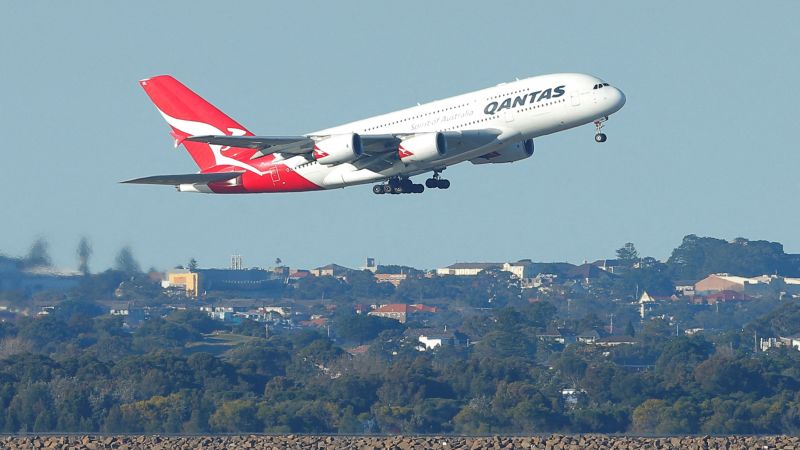
Qantas Brings Forward A380 Retirement as Superjumbo Era Narrows
Sandego.net – Qantas plans to start withdrawing its 10 Airbus A380 aircraft from service in 2028, accelerating a retirement timetable that had previously extended four more years. The decision reflects a mounting challenge for the biggest passenger jet ever built: keeping it flying is becoming more expensive as fuel, maintenance and parts pressures grow.
For travelers, the move marks the beginning of the end for an aircraft associated with cavernous cabins, two full passenger decks and an unusually calm ride. For the industry, it is another sign that the economics that once made the A380 a symbol of global aviation ambition have shifted.
A smaller global A380 fleet
Only 171 A380s remain in active service, well below the fleet’s late-2010s high of more than 230 aircraft, Cirium data shows. Airbus ended production in 2021 after demand for new orders faded. The pandemic then prompted several airlines, including Air France and Thai Airways, to permanently retire their A380 fleets while international travel was sharply disrupted.
The aircraft’s revival after the worst of the pandemic surprised many observers. At a time when the industry was expected to favor smaller, more fuel-efficient planes for medium- and long-haul routes, the A380 returned to service with a number of carriers. Delays in deliveries of newer Airbus and Boeing aircraft helped make existing large-capacity jets valuable again on busy routes.
Yet its return did not erase the structural difficulties facing the model. A380 operators with relatively small fleets must manage the specialized maintenance, parts supply and operational planning required by an aircraft no longer in production. Those demands can be especially difficult for airlines that use the plane only on a limited number of major routes.
“It’s an aircraft that’s been out of production since 2021,” Cam Wallace, the CEO of Qantas International and Freight, told investors recently. “We already have supply chain challenges today and we know there’s likely to be supply constraints in the future.”
A distinctive passenger experience
Qantas has long had a close association with the A380, whose double-deck configuration made it a natural showcase for premium cabins as well as high-capacity international travel. The jet can seat more than 500 passengers with ease, while its enormous interior has given airlines room to create some of their most elaborate long-haul products.
Its appeal, however, is not limited to premium travelers. Many passengers value the sense of space created by its broad fuselage and upper deck, while aviation enthusiasts remain drawn to its immense scale. From the ground, the sight of such a large aircraft lifting off or descending toward a runway still feels extraordinary.
“It’s my favorite aircraft,” said Sebastian Barney, a resident of Melbourne, Australia, and Qantas frequent flyer who often boards an A380 on his way to and from the United States. “It feels more open and a smoother ride” than other planes.
That blend of comfort and spectacle has helped the A380 retain a loyal following even as the industry’s priorities move elsewhere. Modern long-range twin-engine aircraft generally offer airlines more flexibility: they can operate routes with fewer passengers while consuming less fuel than a four-engine superjumbo. The A380, by contrast, works best where demand is consistently high and airport infrastructure can handle it efficiently.
Emirates remains central to the aircraft’s future
The long-term picture for the A380 is increasingly defined by Emirates. The Dubai-based airline operates 101 of the type and has another 15 in storage, Cirium figures show. Its network, airport operations and passenger offering have been built around the aircraft to an extent unmatched by any other carrier.
Dubai’s megahub model enables Emirates to channel large numbers of connecting travelers through its airport, making the A380 particularly useful on routes with substantial demand. Replacing more than 100 superjumbos would also be a lengthy undertaking, even if the airline chose to do so, because current aircraft production rates mean a replacement program of that scale could take most of a decade.
“Airlines with smaller fleets of A380s are going to retire them,” Dimitroff said. “Especially as the industry as a whole focuses on premium travel.”
George Dimitroff, Cirium’s global head of aircraft valuations, sees a growing divide between Emirates and the rest of the sector. While other airlines gradually remove small A380 fleets, he expects the plane to become increasingly concentrated at Emirates.
“It’s going to eventually be an Emirates-only aircraft.”
Emirates has indicated that it expects to operate the A380 into the early 2040s and is spending billions to update cabins and introduce technologies including Starlink connectivity.
“Emirates plans to fly the A380 into the early 2040s, which is why we are investing billions to refurbish our existing planes with the latest cabin interiors and technologies like Starlink,” Tim Clark, the president of Emirates, said in a statement.
What Qantas’s decision means
Qantas has not set a final date for its last A380 flight, so passengers still have time to travel on the type bearing the Flying Kangaroo logo. But beginning retirements in 2028 makes clear that the airline sees a finite future for the fleet.
The superjumbo is unlikely to vanish overnight. Its remaining years will be shaped by the carriers that can fill it reliably, maintain it economically and use its scale as an advantage. Qantas’s exit, though, reinforces a broader conclusion: the A380’s extraordinary design remains beloved, but its place in everyday airline fleets is steadily becoming more exceptional.
Related Reading
Frequently Asked Questions
What is Qantas is retiring its A380s Is it?
Qantas is retiring its A380s Is it is the main topic of this guide. The article explains the context, practical details, and next steps readers should understand.
Why does Qantas is retiring its A380s Is it matter?
Qantas is retiring its A380s Is it matters because readers are looking for a useful answer, not just a short summary. Good content should match search intent and help them decide what to do next.