
Republican Legal Push Meets Local Election Reality
Sandego.net – A legal campaign backing President Donald Trump’s proposed mail-voting restrictions is running into a practical obstacle: election officials in several Republican-led states say they may not be able to carry out the requirements before the midterm elections.
The dispute centers on a plan that would allow the US Postal Service to deliver ballots only for states that meet specified conditions. The Supreme Court is expected to decide in the coming days whether the proposal can take effect for the midterms.
Twenty-three Democratic-led states and the District of Columbia are challenging the plan, arguing that a rapid rollout could disrupt voting and prevent large numbers of eligible people from casting mail ballots. The Trump administration, meanwhile, has relied on assurances from Republican state officials that election systems can adapt in time.
Yet filings and interviews with election administrators reveal a less certain picture. In at least half of the states where Republican attorneys general are supporting the administration’s position, local officials have indicated that they cannot fully comply with potential Postal Service requirements within the available time.
Envelope Barcodes Create a Major Hurdle
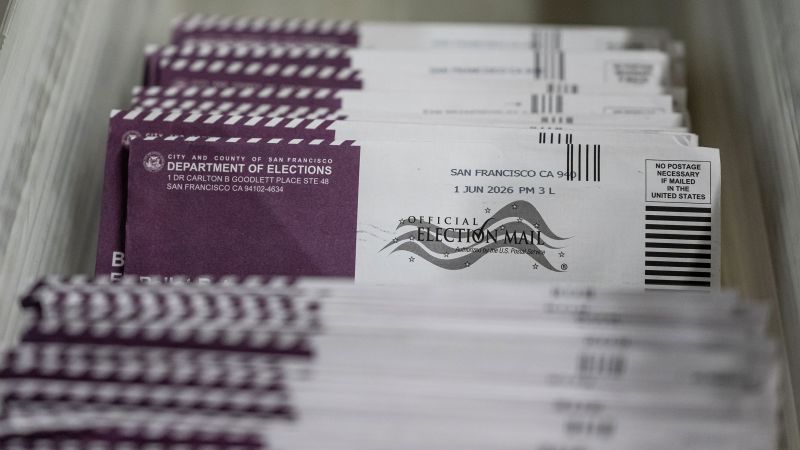
One central concern involves ballot envelopes. Trump’s directives could require unique voter-specific barcodes that allow automated tracking by the Postal Service. Replacing existing envelopes, arranging compatible printing and redirecting staff time to submit voter lists to USPS could pose substantial logistical challenges for counties.
Missouri illustrates the problem. The state’s attorney general, Catherine Hanaway, supports the administration’s position, while Secretary of State Denny Hoskins submitted an August 29 declaration saying he believed implementation was possible this year.
But several Missouri election clerks have said their offices would struggle if the rules were suddenly revived. Some counties use ballot envelopes without individualized tracking barcodes. Even if those jurisdictions could secure funding and quickly replace their materials, officials say the available printing capacity is limited.
Two Missouri election clerks said the state’s sole vendor able to print envelopes carrying the required barcodes was not accepting additional clients for the midterms.
“I don’t think our secretary of state or our president are really understanding … this hurts our Republican counties a lot more than it hurts our blue counties,” said Kurt Bahr, the elections clerk for St. Charles County, Missouri.
Bahr said several Democratic counties already work with vendors capable of meeting the barcode standard. He believes his office may be the only Republican county operation in Missouri already using such a vendor. The result could be an unusual disparity in which counties that generally vote Republican face greater difficulty meeting a voting rule championed by Republican officials.
Small Counties Face Limited Options
For smaller election offices, the consequences could extend beyond paperwork and procurement. Scott County clerk Allen Seabaugh said he might have to personally drive absentee ballots to the county’s roughly 100 voters on the permanent disability list if compliant envelopes cannot be produced.
That workaround would not serve every absentee voter. People authorized to vote by mail because they will be outside the county during the election could not receive their ballots through an in-person delivery arrangement.
The situation highlights why election administration often depends on long planning cycles. Ballot design, vendor contracts, mailing procedures, voter-list preparation and staffing levels are typically coordinated well before an election. A court decision close to a major voting deadline can force counties to reconsider each part of that process at once.
Unclear Guidance for Local Officials
In several states supporting the restrictions, local election officials have not received detailed direction from state election leaders on how to prepare for the possibility that the Postal Service standards could be imposed. Some have instead been instructed to proceed as though the rules will not apply this year.
Derek Muller, an elections law professor at Notre Dame, described the divide between courtroom arguments and administrative planning.
“There’s a suggestion on the election administration side that no one really thinks this is going to be implemented,” Muller said. “And a lot of the litigation is just theatrical at this point.”
Missouri and Texas are leading the state-level effort to assist Trump’s position in the legal fight. Both attorneys general offices have close ties to the administration.
Hanaway’s office said she supports what it described as common-sense changes intended to strengthen the integrity of mail voting. Hoskins acknowledged the compressed timeline in a Friday statement, while leaving open the prospect of implementing only portions of the proposal.
“Obviously, time is of the essence,” Hoskins said. “While implementation could cause some issues, we are willing to work to implement any part of the president’s plan that is feasible with the short time constraints.”
The White House has maintained that local officials had sufficient notice to prepare. Spokesperson Lauren Bis said the mail-ballot safeguards had been proposed months earlier, giving election administrators ample time for the 2026 election.
The pending Supreme Court decision will determine whether those competing assessments become an immediate operational test. If the restrictions are allowed to proceed, counties may need to make rapid decisions about envelopes, vendors, staffing and ballot delivery. If they are blocked, election offices that have continued with existing procedures will avoid a late-stage overhaul.
For voters, the dispute carries a direct practical significance. Mail voting relies on systems that must work before ballots are sent, not merely after a legal rule is approved. The question is no longer only whether the proposed standards can be defended in court, but whether local election offices can put them into operation without limiting access to absentee ballots during the midterms.
Related Reading
Frequently Asked Questions
What is Theatrical litigation?
Theatrical litigation is the main topic of this guide. The article explains the context, practical details, and next steps readers should understand.
Why does Theatrical litigation matter?
Theatrical litigation matters because readers are looking for a useful answer, not just a short summary. Good content should match search intent and help them decide what to do next.