A Knock at the Door Ended Six Decades of Silence for an Oregon Family
Sandego.net – In the wooded hills above Astoria, Oregon, an 85-year-old woman answered her front door expecting a door-to-door salesperson. Instead, she found an FBI agent in jeans and a sweatshirt asking whether she had any missing relatives. The question, delivered in the spring, unraveled a mystery that had haunted one family for more than sixty years and consumed investigators for half a century.
The agent, Special Agent Meagan Sharp, explained that a DNA sample once submitted by the woman’s late son, Robert, had produced a genetic match to unidentified remains discovered in 1972 along a stretch of forest near Bandon, Oregon. The FBI needed a closer familial connection to confirm the identification. The answer, it turned out, lay in the family tree of Sandra Kalander’s husband, John.
“Who wants to know?” Kalander, who lives in the wooded hills of Astoria, recalls asking with a laugh.
The Man Behind the Mystery
The remains belonged to Armas Henry Lahti, a World War II Navy veteran who, after the war, made his living as a commercial fisherman along Oregon’s rugged coastline. Lahti was the second cousin of John Kalander, and his presence in the family’s orbit was a familiar one during the postwar decades. Despite a nickname — “Mousy” — that belied his actual temperament, Lahti was described by those who knew him as a warm, sociable figure who regularly visited the Kalander household after the peak fishing season ended.
Sandra Kalander remembers the man getting down on the floor to play cards with her then-toddler son Robert, the very child whose ancestry test would eventually bridge the gap between a decomposed body and a grieving family. She described him as family-oriented and, in her words, “just a heck of a nice guy.”
A Disappearance Wrapped in Rumor
Sometime around 1965, Lahti simply stopped appearing. He was in his fifties at the time, his wife having died years earlier, and he had no children. His solitary lifestyle — running his own boat, traveling constantly between fishing grounds — meant that his absence did not immediately register as alarming to those around him.
Chancy Fabrizio, who volunteers as a special deputy at the Coos County Sheriff’s Office and took over the case in 2024, explained the practical difficulties investigators faced. There was no missing-person report matching the body’s description. Neighbors and relatives assumed he was simply pursuing his independent routine.
“(He) did a lot of stuff on his own. He ran his own boat by himself,” Fabrizio said.
It was also common practice in that era not to file formal missing-person reports for adults who simply stopped showing up, Fabrizio noted. The combination of Lahti’s itinerant work life, his lack of dependents, and the era’s informal attitudes toward adult disappearances left investigators with almost no paper trail to follow.
The Body in the Woods
In 1972, workers found a set of remains in the forest off Highway 101 near Bandon. By the time investigators examined them, the body had spent an unknown period exposed to rain, scavenging animals, and insects before being placed in cold storage, where it sat for roughly fifty years. Decomposition had been severe. Still, the Coos County Sheriff’s Office recorded “marks indicative of homicidal violence” — specifically, two bullet wounds to the head.
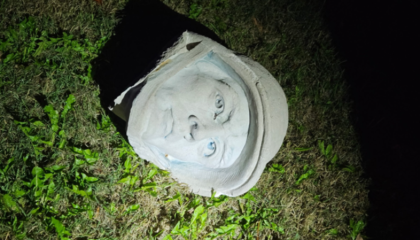
For decades, detectives attempted to push the case forward through conventional means. A composite sketch was released to the public; no one recognized it. Every lead appeared to terminate in a dead end. The victim’s identity remained unknown, and with it, the circumstances of his death.
Genetic Genealogy Closes the Loop
The breakthrough came not from a witness or a document but from a consumer ancestry test. Robert Kalander, who passed away more than a decade ago, had submitted a DNA sample to a genealogy service. Years later, that sample surfaced in the FBI’s genetic-genealogy database as a distant match to the unidentified remains. The agency then worked backward through the family tree to find a closer relative who could provide a confirmatory sample.
That relative was Sandra Kalander. The spring visit from Agent Sharp was the culmination of layered investigative work — traditional detective craft combined with the relatively new tool of genetic genealogy — finally narrowing a sixty-year-old cold case to a single name.
“It was shocking to find out, finally after all these years, what happened,” Kalander said.
What Remains of a Life
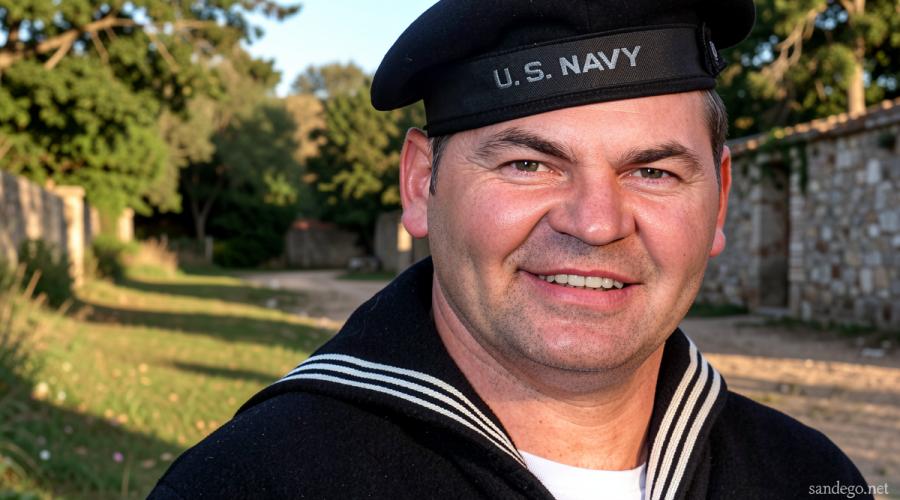
With time having eroded most living memories of Lahti’s final days, the evidentiary landscape is thin. Old newspaper clippings offer fragments: a 1942 announcement of his enlistment as a boatswain’s mate in the Navy, a photograph of him and his wife at a wedding, his mother’s obituary. Some records spell his first name “Armes,” an anglicized rendering of the Finnish form “Armas” that his family preferred. The Kalander household retains a single photograph of Lahti in his Navy uniform, wearing his regalia with evident pride.
John Kalander, now 87, recalls fishing alongside his cousin in his youth, gradually learning the man’s habits and character over successive seasons. Sandra Kalander’s memories, though faded by decades, reasserted themselves the moment the FBI agent spoke his name at the door.
The Unanswered Question
Identification is a milestone, not a resolution. Investigators still face the central question: how did a commercial fisherman end up with two bullet wounds to the head in a forest more than sixty years ago? Rumors persisted over the decades of a bar dispute from which Lahti allegedly walked away one evening, rifle in hand. Whether that story holds any factual weight, and whether the person responsible might still be alive, remain open questions as living witnesses grow fewer each year.
Fabricio and other volunteers continue pressing for answers, driven by the hope of delivering closure to a family that waited six decades for someone to knock on the door and say his name.
Related Reading
Frequently Asked Questions
What is His family long wondered what happened?
His family long wondered what happened is the main topic of this guide. The article explains the context, practical details, and next steps readers should understand.
Why does His family long wondered what happened matter?
His family long wondered what happened matters because readers are looking for a useful answer, not just a short summary. Good content should match search intent and help them decide what to do next.