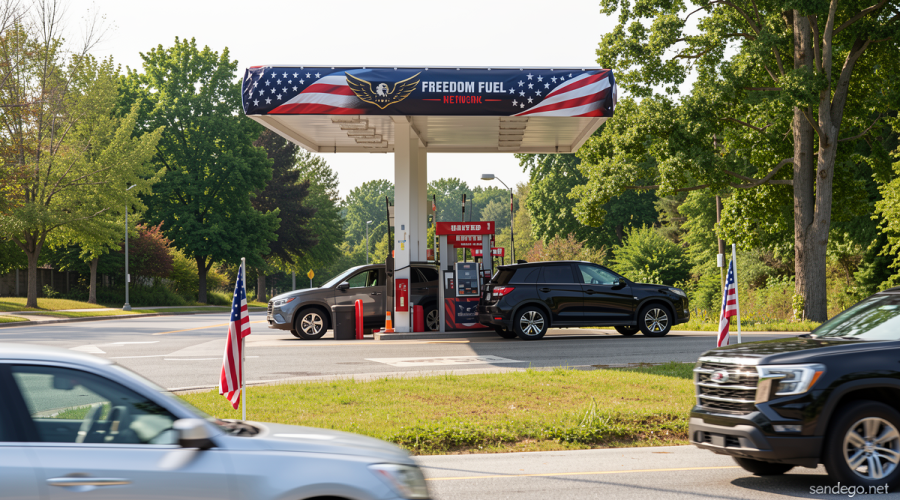
Freedom Fuel Faces $4M Fuel Debt Suit
Sandego.net – Freedom Fuel won praise from President Trump last month after its Philadelphia-area stations slashed pump prices by roughly half a dollar per gallon. That goodwill now faces a legal challenge: a federal complaint filed on August 19 in the U.S. District Court for Eastern Pennsylvania alleges that the intermediary purchasing gasoline for the chain never remitted payment for approximately $4 million in fuel deliveries. The suit names KRSM, a purchasing entity, and its president, Syed Kazmi, as defendants; the retail brand itself is not a party.
What the Complaint Alleges
Manfield Oil Company, based in Gainesville, Georgia, brought the action through attorney Urs Broderick Furrer. Per the filing, Manfield shipped at least 1.12 million gallons of gasoline to no fewer than 10 stations over the preceding month. Furrer told reporters that not a single dollar of the $4,000,000 balance had been received, even though the final delivery predated the complaint by more than five weeks.
“Despite the fact that the last delivery was more than five weeks ago, KRSM has not paid one dollar towards the $4,000,000 that KRSM owes Mansfield,” Furrer stated in an email.
The complaint designates KRSM as a foreign corporation with its principal business address in Lawrenceville, New Jersey — a classification that shapes jurisdictional questions and the scope of discovery available to the plaintiff.
KRSM’s Response and the Pricing Backstory
KRSM’s counsel, Mauro Tucci, dismissed the framing of a straightforward debt-collection case. In remarks to reporters he characterized the dispute as a billing disagreement rooted in pricing errors on the supplier’s side.
“An accounting dispute over fuel invoices mis-priced by Mansfield Oil,” Tucci described the matter, adding that the company intended to contest the suit and would offer no further commentary while litigation remained pending.
The original pricing controversy erupted in early July, just before the Independence Day long weekend, when 25 newly rebranded stations across Philadelphia and southern New Jersey began posting pump prices around $3.48 per gallon. At that moment the Pennsylvania statewide average sat near $3.99, and national pump prices had climbed more than 30 percent compared with the same period a year earlier. Within days, President Trump issued a public endorsement on Truth Social dated July 1, writing: “Taking the lead, and others should follow. They are doing this because they love the USA.” He added that gas prices would “soon be back to the record low prices Americans enjoyed at the pump before our very successful ‘excursion’ in Iran.”
A White House spokesperson moved quickly to distance the administration from the company, telling reporters that the chain operated entirely as a private enterprise receiving no government funding, subsidies, or preferential treatment. “They are simply reducing their margin to make prices at the pump more affordable for drivers in Philadelphia and New Jersey,” the spokesperson said. That thinner-margin explanation has not been independently verified, and the now-pending lawsuit raises questions about whether the cost structure behind the discount was as conventional as described.
FAQ
Is Freedom Fuel itself being sued? No. The August 19 complaint targets KRSM, the purchasing intermediary, and its president Syed Kazmi. The retail brand is not named as a defendant.
How much fuel is at issue? Manfield Oil alleges it delivered at least 1.12 million gallons to no fewer than 10 stations and that the full $4,000,000 invoice remains unpaid.
What does KRSM say? Its counsel, Mauro Tucci, calls the matter an accounting dispute over invoices he says were mis-priced by the supplier and says the company will contest the suit.
Did the government subsidize the low prices? A White House spokesperson stated the administration provided no funding or subsidies and attributed the discount to reduced profit margins. That claim has not been independently confirmed.