US-Iran Clash Reignites Over Strait of Hormuz as Iranian Missiles Target Jordanian Air Bases
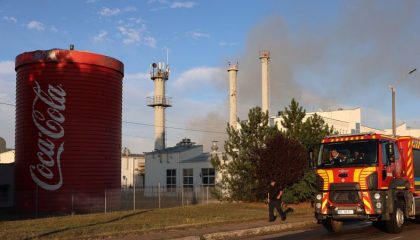
Sandego.net – A month of relative calm between Washington and Tehran shattered on Sunday when American forces struck two rocket launchers on Iran’s Larak Island, prompting an immediate retaliatory barrage of missiles and drones aimed at two US military installations inside Jordan. The exchange represented the first direct military escalation between the two adversaries since late July, ending a fragile lull that had followed a period of intense fighting.
US Central Command confirmed the operation through spokesperson Capt. Tim Hawkins, who stated that American forces hit two Iranian launchers on the island earlier that Sunday. Residents in the vicinity reported hearing a loud explosion near the island, as relayed through Iran’s semi-official Fars News Agency. The timing was deliberate: US military observers had detected Iranian personnel in the process of preparing to fire rockets embedded with sea mines into the narrow waterway separating Iran from Oman.
Iran’s Retaliatory Strike
Within hours, Iran’s Islamic Revolutionary Guard Corps announced it had launched missile and drone attacks against two American air bases in Jordan. The statement, carried by state broadcaster IRIB, framed the response as a necessary answer to what the IRGC labeled a “US-Zionist enemy” operation on Larak Island — one it claimed produced casualties among both military personnel and civilians.
An IRGC spokesperson went further in a brief IRIB-carried statement, calling the American action a
“strategic and deadly mistake” by the Trump administration.
Jordan’s armed forces confirmed that air defense systems engaged and destroyed eight incoming missiles that penetrated the kingdom’s airspace. The military announced the projectiles were neutralized before they could endanger civilians or infrastructure, per the state-run Petra news agency. No confirmed impacts on the ground had been reported as of the latest updates.
The Strait of Hormuz at the Center of the Storm
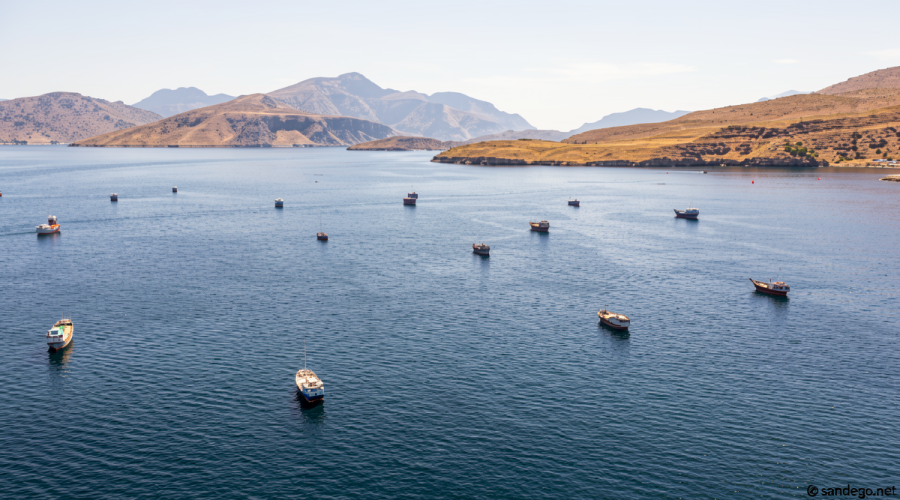
Larak Island sits close to the Strait of Hormuz, the roughly 33-mile-wide chokepoint through which roughly one-fifth of global oil consumption passes. The waterway has remained the focal point of regional tension and diplomatic maneuvering throughout the ongoing conflict. Last week, CENTCOM announced it had completed clearing sea mines from the strait’s international shipping lanes — a task the Trump administration characterized as a prerequisite for restoring normal commercial transit.
President Donald Trump reinforced that posture on Tuesday, warning that
“Iran has been notified that any ship or boat placing new mines will be immediately and systematically destroyed.”
A US official added that American forces were monitoring the area closely and remained prepared to protect the free flow of commerce through what he called “this essential waterway.”
Even as missiles flew, Iran and Oman were continuing discussions over a proposed framework to reopen maritime traffic through the strait. Regional mediators, including Qatar, have lent their support to those talks. Iranian officials have repeatedly tied the future of navigation through the waterway to broader negotiations with Washington and to the trajectory of regional security arrangements.
A Month of Economic Pressure Instead of Bombs
The July 29 date marks the last time American forces struck Iranian territory before Sunday’s operation. On that day, the US completed what it described as a “heavy wave of strikes” in response to an attempted attack on American military positions the previous day. Since then, the White House has stated there are no ongoing negotiations between the two sides regarding the six-month war.
President Trump has shifted emphasis toward economic coercion in recent weeks, asserting last week that American financial strength would push Iran “toward a very big victory.” The Treasury Department has threatened sweeping new sanctions against any country that declines to sever economic ties with Tehran, branding the initiative an “economic D-Day.” The strategy signals an attempt to squeeze Iran’s economy without reopening sustained aerial bombardment — a calculus that Sunday’s exchange now complicates.
Markets React
Oil markets responded swiftly to the renewed hostilities. Brent crude, the international benchmark, climbed 2.8 percent to $90.57 per barrel on Sunday. US benchmark crude rose 2.7 percent to $85.64 per barrel. The price jump underscored how quickly investor sentiment can shift when the strait’s security environment deteriorates, even if no vessel was struck and no confirmed casualties were reported on either side.
The White House, when asked for direct comment on the Iranian retaliation, directed inquiries to US Central Command. CENTCOM had not issued a further public statement as of the latest reporting cycle.
For regional observers, the episode raises an immediate question: whether the month-long pause was ever more than a tactical intermission, and whether the economic-pressure strategy can survive even a single round of exchanged fire. The answer will likely depend on whether both sides treat Sunday’s strikes as an isolated incident or as the opening salvo of a renewed campaign.
Related Reading
Frequently Asked Questions
What is US and Iran trade attacks marking?
US and Iran trade attacks marking is the main topic of this guide. The article explains the context, practical details, and next steps readers should understand.
Why does US and Iran trade attacks marking matter?
US and Iran trade attacks marking matters because readers are looking for a useful answer, not just a short summary. Good content should match search intent and help them decide what to do next.