Uganda’s Youngest-Ever Monarch, King Oyo Nyimba of Tooro, Passes at 34
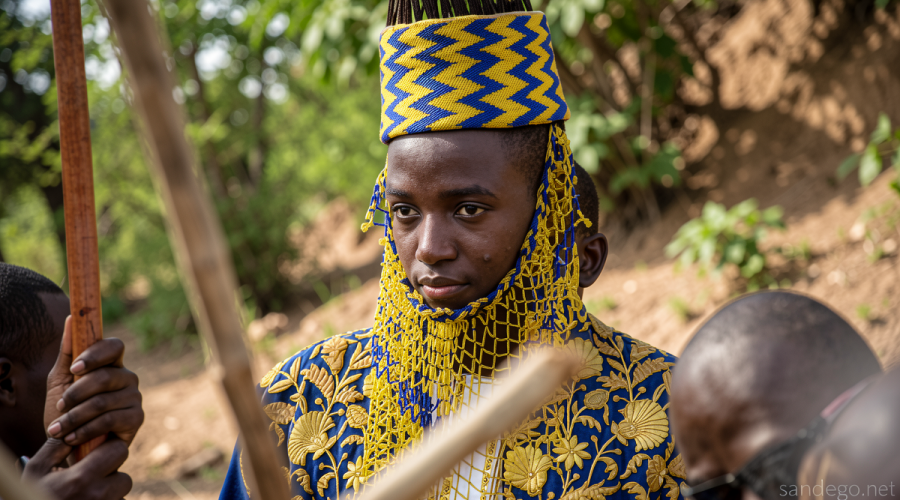
Sandego.net – The small western Ugandan kingdom of Tooro lost its ruler on Thursday evening when King Oyo Nyimba Kabamba Iguru Rukidi IV died at approximately 10:00 p.m. local time. He was 34 years old. The announcement came from the kingdom’s own prime minister, Calvin Armstrong Rwomiire Akiiki, who took to the social platform X late Thursday to inform the public. No cause of death was disclosed at the time of the announcement.
The passing of a monarch who had worn the crown since toddlerhood sent shockwaves through Ugandan society. Within hours, tributes flooded national social media channels, and mainstream outlets across the country devoted front-page coverage to the event. The reaction was swift, emotional, and unmistakably national in scope, underscoring how deeply traditional royal institutions remain woven into the fabric of Ugandan identity even within a modern republic.
A Kingdom Within a Republic
To understand the weight of this loss, context is essential. Uganda is constitutionally a republic, governed by an elected president and a parliamentary system. Yet beneath that modern framework survive several pre-colonial kingdoms—Tooro among them—that continue to operate under their own customary charters. Their rulers hold no formal executive authority over national policy, but their cultural, spiritual, and social authority remains formidable. They preside over land disputes, customary justice, ceremonial life, and the collective memory of their peoples. In Tooro’s case, the kingdom occupies a compact territory in western Uganda, close to the border with the Democratic Republic of Congo, and its monarch is addressed as the Omukama, a title carrying deep ritual significance.
Crowned at Three
Rukidi IV’s accession to the throne occurred on September 12, 1995, when he was barely three years old. His father, Rukirabasaija Patrick David Matthew Kaboyo Olimi III, had died, and the succession passed immediately to the infant. That made him, at the time, the youngest reigning monarch anywhere on Earth—a distinction that followed him through every milestone of his brief adult life. For more than two decades, the world watched a child grow into a king under the gaze of cameras, scholars, and curious foreign publics.
In the weeks preceding his death, Balaam Barugahara, a minister serving in the government of President Yoweri Museveni, indicated that the king had been undergoing medical treatment in the United States. The details of that treatment were not made public, and the kingdom’s leadership did not elaborate on the circumstances of his final days.
The Kingdom’s Voice
Prime Minister Akiiki’s announcement carried the gravity of formal royal protocol. Speaking in a post on X, he said:
“It is with profound sadness and a heavy heart that I announce the passing of His Majesty the Omukama of Tooro, King Oyo Nyimba Kabamba Iguru Rukidi IV.”
Akiiki went on to describe the loss as “immeasurable” and confirmed two points of immediate institutional concern: the king had never married, yet an heir had been designated, and “continuity of the Crown is assured.” That assurance was offered to steady a kingdom that had, for over thirty years, identified its sovereign with a single young life.
National Grief and Political Reaction
The death quickly transcended the boundaries of Tooro itself. Bobi Wine, the pop singer turned opposition politician who leads Uganda’s principal opposition movement, posted his own tribute on X, calling the news “most devastating” and wishing that the late king’s soul “rest in eternal peace.” His intervention signaled that the loss was being received not merely as a regional royal event but as a national one.
Across the country, ordinary Ugandans shared memories, photographs, and condolences. The sheer volume of public mourning highlighted how traditional monarchies, despite their limited constitutional role, continue to function as anchors of communal identity—particularly in regions where ethnic and cultural affiliation remains a primary axis of social organization.
A Birthday Message That Now Reads as Epitaph
In April of this year, Prime Minister Akiiki had issued a public message marking the king’s birthday. The tone was one of pride in a young ruler navigating modernity without abandoning tradition. He wrote:
“Our King is not distant from the realities of his people; he is part of this generation, part of this ecosystem, growing, learning, and leading… His youth is not a limitation; it is a strength. It brings energy, fresh perspective, and the courage to imagine a different future for Tooro.”
Those words, composed months ago as celebration, now carry the weight of elegy. They frame a life cut short at the very moment the kingdom’s leadership had publicly affirmed its confidence in a young sovereign’s capacity to shape the future.
What Comes Next
With the succession confirmed, Tooro’s institutions will move through customary protocols to install the designated heir. The transition will be watched closely, both within the kingdom and by the broader Ugandan public, as a test of whether the continuity of a centuries-old institution can absorb the shock of losing a monarch who had ruled—however symbolically—since the mid-1990s. For a nation that balances republican governance with living traditional authority, the death of its youngest-ever king is not merely a royal event. It is a moment that asks every Ugandan to reckon with how much of their cultural self still turns on figures the constitution does not formally recognize.
Related Reading
Frequently Asked Questions
What is Ugandan King Oyo Nyimba once world?
Ugandan King Oyo Nyimba once world is the main topic of this guide. The article explains the context, practical details, and next steps readers should understand.
Why does Ugandan King Oyo Nyimba once world matter?
Ugandan King Oyo Nyimba once world matters because readers are looking for a useful answer, not just a short summary. Good content should match search intent and help them decide what to do next.