Hundreds of Ukrainian Children Evacuated to Italy Four Years Ago Now Face Legal Struggle for Return
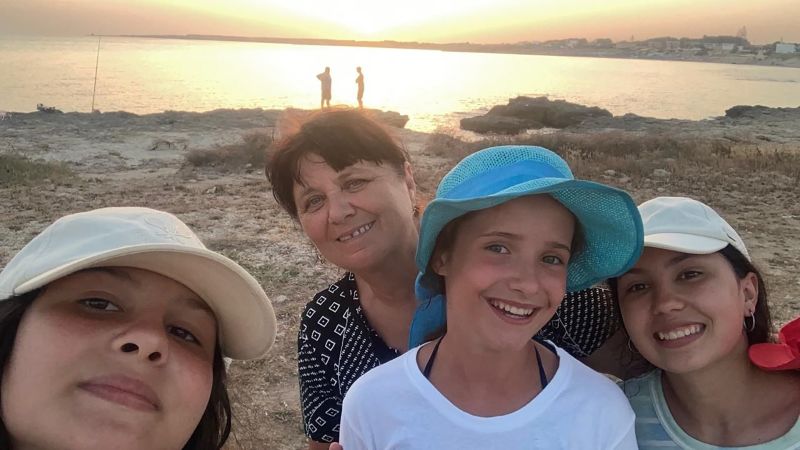
Sandego.net – In the aftermath of Russia’s full-scale invasion of Ukraine in early 2022, a group of 25 children were evacuated to Naples by Liubov Rudyka, director of a children’s home in Sumy. Rudyka, who had been organizing holidays for the children before the war, believed the move would provide temporary refuge. However, what began as a protective measure has since evolved into a complex legal dispute, with Italy refusing to facilitate the children’s return to their homeland.
Italy’s Legal Stance Blocks Ukrainian Efforts
Four years later, the situation has become a legal battleground. Ukrainian officials have informed CNN that several minors who were evacuated with Rudyka are among dozens whose repatriation has been stalled by Italian courts. The conflict escalated in April when Kyiv revealed that a 15-year-old boy named Sasha had been formally adopted by an Italian family, despite his mother’s desire for him to return to Ukraine. This case has highlighted the broader tensions between Ukraine and Italy over the children’s futures.
“We continue to send official requests, and the Italian representatives insist the judiciary operates independently. But I demand intervention,” said Dmytro Lubinets, Ukraine’s human rights ombudsman, during an interview with CNN. He compared the current situation to the alleged illegal deportation of thousands of Ukrainian children to Russia, emphasizing Italy’s reluctance to cooperate.
Lubinets pointed out that Italy’s legal system now treats the children as unaccompanied minors under strict protections. This approach, he argued, has effectively sidelined Ukraine in decisions about the children’s care. The Italian government, the Ombudsman for Children and Adolescents, the Commission for International Adoption, and the court that approved Sasha’s adoption all declined to comment, citing privacy laws that shield minors from public scrutiny.
The Evacuation Process and Italian Legal Framework
When Rudyka made the journey to Naples in the summer of 2022, she envisioned a brief stay that would allow the children to return home. Instead, the Italian authorities quickly assigned refugee status and began the process of transferring guardianship to local families. Under Italian law, which was strengthened during the European migrant crisis a decade ago, unaccompanied minors cannot be returned to their home countries without a court’s explicit approval. This provision, intended to protect vulnerable children, has been used to justify the current stalemate.
Rosa Emanuela Lo Faro, an Italian lawyer representing some of the minors, explained that the children were often cut off from their Ukrainian lives. “Communication with their original guardians, friends, and family was restricted,” she told CNN. “They were only allowed to interact with their new Italian caretakers, creating a sense of isolation.” While Lo Faro succeeded in overturning some guardianship decisions through the Italian Supreme Court of Cassation, she acknowledged that the process remains arduous and inconsistent.
Ukraine’s Demographic Crisis Intensifies Concerns
The Ukrainian government fears that prolonged stays abroad will exacerbate the nation’s demographic challenges. With the war having displaced millions and left a generation of children without stable family structures, Kyiv argues that the evacuations were meant to be temporary. “The war is still ongoing, but parts of the country are now safe,” Lubinets noted. “We are concerned that these children will remain in Italy indefinitely, further straining Ukraine’s ability to recover its population.”
Ukraine’s stance is supported by the fact that the evacuations occurred in the early days of the invasion, when Sumy was heavily surrounded by Russian forces. At the time, the charity that facilitated the move to Italy was seen as a lifeline. However, the transition from temporary shelter to permanent residency has raised questions about the children’s long-term welfare. Rudyka, who initially acted as their legal guardian under Ukrainian law, now finds herself powerless to reclaim custody without Italian judicial intervention.
Conflicting Narratives: Safety vs. Sovereignty
While Kyiv claims the children were taken for their safety, the Italian authorities defend their actions as necessary to ensure the minors’ well-being. “The evacuation was a strategic decision to protect children from the war’s horrors,” said a spokesperson for the Italian government. “Italy has legal obligations to safeguard their interests.” This perspective contrasts with Kyiv’s argument that the Italian courts are prioritizing legal formalities over the children’s right to return home.
The dispute also reflects a deeper ideological divide. Ukraine accuses Italy of adopting a rigid legal framework that prioritizes procedural compliance over humanitarian considerations, while Italy emphasizes its commitment to child protection. “The Italian position is not different from the Russian stance,” Lubinets stated. “They took our children away and deny us access, all in the name of independence.”
Challenges in Repatriation and Future Outlook
The complexity of the situation is compounded by the influence of foster families. Lo Faro revealed that some Italian adopters exert pressure on authorities to maintain custody, often citing the children’s improved quality of life. “They argue the kids are thriving here and would struggle if sent back to Ukraine,” she said. Despite these efforts, the Italian Supreme Court has occasionally granted Ukraine’s requests, but the overall trend remains one of resistance.
As the war enters its fourth year, the fate of these children has become a symbol of the broader conflict between Ukraine and its neighboring nations. With over 250,000 children displaced since 2022, the inability to reclaim even a fraction of them raises alarms about Ukraine’s future population growth. The country’s aging population and low birth rates mean every child counts, and their prolonged absence in Italy could have lasting consequences.
Rudyka, reflecting on the journey, expressed frustration at the turn of events. “I believed we were giving them a safe haven, not a permanent home,” she said. “Now, we have to fight for every child, every day.” Her words underscore the emotional toll of the dispute, as well as the determination of Ukraine to resolve it. The battle for the children’s return is not just a legal one—it is a test of international cooperation and the principles of sovereignty in the face of humanitarian need.