
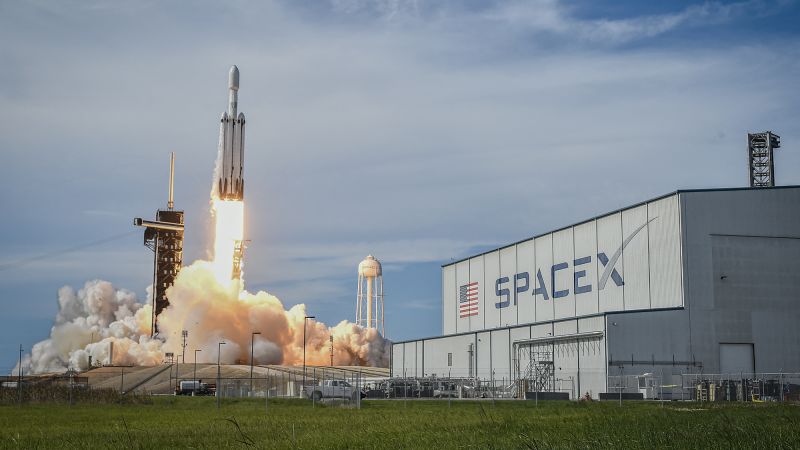
SpaceX’s Record-Breaking IPO Unveiled
Sandego.net – On June 3, SpaceX, led by Elon Musk, announced its intention to secure $75 billion through an initial public offering, a move that would position the company at a valuation of approximately $1.77 trillion. This historic offering could propel Musk into the rarefied club of trillionaires, surpassing his current status as the world’s wealthiest individual. The filing submitted to the Securities and Exchange Commission outlines the specifics of the stock sale, which involves the issuance of 555.6 million shares at a predetermined price of $135 each. This fixed pricing strategy stands out in the current IPO landscape, where flexibility is typically the norm, reflecting both the fervor surrounding artificial intelligence advancements and Musk’s penchant for grand, transformative objectives.
Valuation and Ownership Dynamics
Despite the massive scale of the offering, Musk’s stake in SpaceX remains substantial. The filing states that he will retain nearly half of the company’s total shares post-IPO, though some of these are classified as special voting shares. This structure ensures that Musk maintains 82.4% of the voting power, granting him significant control over strategic decisions. The valuation, however, hinges on the assumption that shares will trade at the initial price of $135, a figure that underscores the market’s confidence in the company’s future potential. This amount alone would equate to roughly the combined net worth of the next three richest individuals, according to Forbes’ real-time billionaire tracker, which includes Google founders Larry Page and Sergey Brin, as well as Oracle’s Larry Ellison.
The AI Influence on Market Trends
The unprecedented valuation of SpaceX is part of a broader trend in the financial markets, where artificial intelligence has become a catalyst for extraordinary growth. The AI race has driven startups to eye-watering valuations, often before they even begin trading publicly. This phenomenon has sparked a Wall Street rally, as investors increasingly favor companies at the forefront of AI innovation. While profitability remains elusive for many in the sector, the narrative of AI’s transformative impact on productivity and corporate earnings continues to attract speculative interest. SpaceX’s foray into AI, formalized through its recent merger with xAI, highlights how the company is diversifying beyond its core space ventures to capitalize on this momentum.
Expansion and Strategic Vision
SpaceX’s journey from a rocket-building enterprise to a multifaceted technology giant is a testament to its evolving ambitions. Founded in 2002, the company initially focused on developing reusable rockets and delivering payloads to orbit. By 2021, it had expanded into telecommunications with the launch of Starlink, a satellite-based internet service that has since become a key revenue stream. The February 2026 merger with xAI, Musk’s artificial intelligence company, further solidifies this shift. The integration of AI into SpaceX’s operations is not merely a secondary initiative but a foundational element of its long-term strategy. The IPO documents emphasize the company’s dual focus on human space exploration and AI-driven advancements, including plans to establish data centers in space to support its ambitious goals of lunar and Martian outposts.
Market Significance and Investor Appetite
The IPO, set to begin trading on Friday, is poised to become the largest public offering in history, dwarfing the previous record of $29.4 billion set by Saudi Aramco in 2019. This milestone reflects the heightened appetite for high-risk, high-reward investments in an era where technological breakthroughs are seen as potential game-changers. The decision to set a single price target rather than a range is a strategic choice, signaling the company’s optimism and the market’s eagerness to back its vision. Investors are betting on SpaceX’s ability to scale its operations and generate returns, even as it navigates the challenges of turning AI innovations into sustainable profits. The filing also notes the substantial capital required to sustain both the space and AI divisions, which will be funded through the IPO and subsequent stock sales.
Comparisons and Wealth Concentration
Musk’s net worth, should the IPO succeed, could surpass $1.1 trillion when combined with his stake in Tesla, valued at nearly $300 billion on June 3. This level of wealth would outstrip the combined fortunes of Jeff Bezos, the fifth richest person on Forbes’ list, and the trio of Page, Brin, and Ellison. The sheer magnitude of the valuation raises questions about the concentration of wealth in the hands of tech executives, with Musk’s potential dominance in the space and AI sectors fueling speculation about the future of economic power. Meanwhile, the broader market is watching closely as SpaceX joins a wave of AI-focused companies preparing for public debuts. Anthropic has already announced its plans, while OpenAI is expected to follow, indicating a growing trend of valuing innovation over immediate profitability.
Broader Implications for the Economy
SpaceX’s IPO is more than a financial event—it symbolizes the commercialization of space travel and the shift toward viewing it as a viable industry. The company’s rockets have already revolutionized the corporate space sector, with launches encompassing not only satellites but also astronauts for private missions. This success has positioned SpaceX as a leader in space exploration, but its AI division is now a critical driver of its valuation. Wall Street analysts suggest that the sector’s rapid development, coupled with Musk’s influence, is reshaping investor priorities. Even as some companies struggle to demonstrate practical applications for AI, the market remains bullish, driven by the promise of future breakthroughs and the potential to disrupt entire industries.
Future Prospects and Market Outlook
The IPO marks a pivotal moment for SpaceX, but it also highlights the broader dynamics of the tech and finance sectors. With the company’s plans to expand into AI and data centers in space, the stakes are high, and the risks are considerable. However, the market’s reaction to the filing suggests that investors are willing to overlook current profitability challenges in favor of long-term growth. As the IPO nears, the question remains: will the public’s enthusiasm translate into sustained value for the company and its shareholders? The answer may hinge on SpaceX’s ability to deliver on its ambitious promises while navigating the complexities of a rapidly evolving technological landscape. This story has been updated to reflect the latest developments in the IPO process and market sentiment.
“The IPO is a reflection of how far we’ve come in the space industry and the transformative power of AI,”
remarked a financial analyst in the filing, underscoring the dual narrative of SpaceX’s growth. The company’s path to success, however, is not without hurdles. While its rockets and satellites have established a solid foundation, the AI division is still in its early stages, with practical applications yet to fully materialize. Nonetheless, the market’s willingness to invest in speculative ventures hints at a future where technology’s potential is measured not just in patents or code, but in its capacity to redefine economic value. As the offering begins, the world will be watching to see if SpaceX can maintain its trajectory toward becoming a household name in both space exploration and artificial intelligence.