Meta’s $18B Settlement Ends State Child Harm Trial
Sandego.net – Meta settles landmark state child harm claims in an approximately $18 billion multistate deal that brings final judicial approval to one of the most consequential legal confrontations between state governments and a major technology company. District Court Judge Yvonne Gonzalez Rogers signed off on the agreement on Wednesday, resolving allegations that Facebook and Instagram were deliberately engineered to addict young users and damage their mental health.
The deal was announced just over a week after trial opened in California, where four states had pressed claims seeking up to $1.4 trillion in damages alongside structural product changes. Instagram chief Adam Mosseri was scheduled to take the witness stand for a second consecutive day, and CEO Mark Zuckerberg was also expected to testify. The courtroom drama will now proceed without the states’ full claims being adjudicated on the merits.
What the Money Covers
Just over $17 billion of the total resolves the joint lawsuit filed by 29 states in 2023; the remaining slice addresses claims between Meta and additional states and territories. The company stated the funds will finance state-level youth online safety initiatives. Seventy percent of the settlement fund will be disbursed to the states through annual installments spread across the next decade. The remaining 30 percent is contingent: it will be paid only if YouTube and TikTok also commit to comparable financial contributions and implement analogous changes to their own applications.
For perspective, $18 billion represents a small fraction of the roughly $200 billion in revenue Meta generated last year. Yet the operational changes bundled into the agreement could reshape how the company monetizes teen attention. In its most recent earnings filing, Meta acknowledged that the youth-safety-related trials posed a risk of “material loss” to the business.
Platform Changes Written Into the Agreement
The settlement goes beyond a financial transfer. Meta has committed to a suite of structural modifications aimed at curbing how much time teenagers spend inside its apps. A cumulative two-hour daily time limit will apply across Meta’s apps for users aged 13 through 17, alterable only by a parent or guardian. After every 15 minutes of continuous use on Facebook or Instagram, the platform will display a prompt designed, in the company’s words, “to encourage intentional use.” A default night mode will block teen access from midnight until 6 a.m., and a school mode will suppress the volume of notifications delivered during school hours. Meta will also conceal the visible count of likes on posts, a step intended to reduce social-pressure dynamics among younger users.
These measures build on restrictions and safety tools Meta had already rolled out by default within its Teen Accounts settings — tools whose adequacy had been challenged by the states and by outside experts during the litigation.
Reactions and Ongoing Exposure
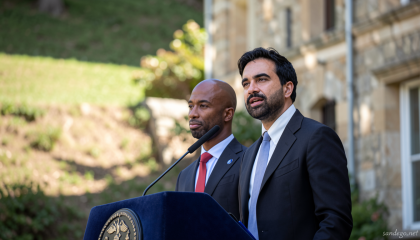
North Carolina Attorney General Jeff Jackson, speaking at a Wednesday press conference, described the agreement as the largest settlement ever reached with a big-technology company. He framed the decision as a pragmatic choice to accelerate child-safety upgrades rather than wait through years of further litigation.
“Litigation would mean that we were still many years away from bringing any of these child safety upgrades to these platforms, it would risk losing another generation,” Jackson said.
The states’ original complaint accused Meta of intentionally engineering addictive mechanics — an infinitely scrolling feed, algorithmic recommendation systems, and frequent push notifications — to capture and retain the attention of children and teenagers. They further alleged the company misled the public about the risks its platforms posed to young people and illegally harvested data from children under 13 without obtaining parental consent.
Meta did not admit wrongdoing as part of the settlement. The company had long maintained that its platforms do not harm children, pointing to substantial investment in safety features and characterizing the states’ claims as “unsubstantiated.” In a Wednesday blog post explaining the agreement, the company offered a forward-looking statement:
“Ensuring teens have a safe and productive experience on our platforms is an absolute imperative for Meta. We want to get this right for parents and teens, and that’s why we partnered with state attorneys general to set a new industry standard.”
Frequently Asked Questions
How much did Meta pay in the settlement? Approximately $18 billion, of which just over $17 billion resolves the 29-state joint lawsuit and the remainder covers additional state and territory claims.
When will states receive the money? Seventy percent will be paid through annual installments over the next decade. The remaining 30 percent is contingent on YouTube and TikTok making comparable commitments.
What platform changes are required? A two-hour daily teen time limit, 15-minute usage prompts, a midnight-to-6 a.m. night mode, a school-hours notification suppression mode, and the removal of visible like counts on posts.
Did Meta admit fault? No. The company did not admit wrongdoing and characterized the states’ claims as “unsubstantiated,” while simultaneously committing to the structural changes outlined above.
Who approved the deal? District Court Judge Yvonne Gonzalez Rogers granted final judicial approval on Wednesday, ending the multistate litigation before a merits verdict.