Six-Second Videos Are Back — and This Time, No AI Allowed
Sandego.net – The internet’s most beloved micro-format is staging a comeback. Nearly nine years after Twitter pulled the plug on Vine, a new platform called Divine has launched with the explicit mission of reviving the six-second looping video experience that once defined a generation’s sense of humor. The app went live last week following roughly nine months of development and beta testing, and it arrives at a moment when short-form content dominates every major feed — yet creators and viewers alike are increasingly hungry for something that feels handmade, absurd, and unmistakably human.
Where Vine Came From
To understand why Divine’s arrival generates genuine excitement, it helps to recall what Vine actually was. Launched in 2012, Vine was among the first mobile applications to let ordinary people record, edit, and share ultra-short video clips. Its six-second loop format stripped storytelling down to its most compressed, punchline-driven essence. Twitter acquired the platform just months after launch for $30 million, a deal that seemed to signal the format’s mainstream arrival.
In practice, Vine never found a sustainable revenue model. By the time Instagram rolled out its own short-video features, the competitive landscape had shifted decisively. Twitter, already under financial strain, announced in 2016 that it would wind down the service. The app was formally shut in 2017, and the internet collectively grieved — not just for the format, but for a particular kind of low-stakes, silly creativity that had no obvious successor.
Vine’s cultural footprint, however, proved durable. It helped catapult Logan Paul and Shawn Mendes into mainstream visibility. It seeded countless memes and catchphrases that still circulate in 2026. And volunteer archivists, working before the servers went dark, preserved millions of clips for posterity. Divine has tapped into that preserved archive, giving new users access to more than two million original Vine posts.
What Divine Actually Does
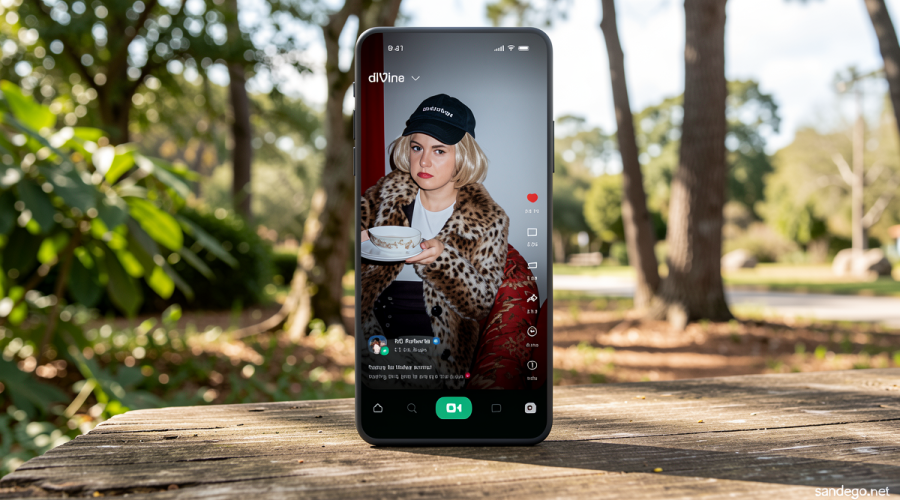
Divine mirrors the core Vine mechanic: a vertically scrolling feed of six-second looping videos. Users can record and publish their own clips, browse the restored archive, and engage with a community that Rabble — the app’s founder, who goes by that single name — says has already reached approximately 100,000 registered users within days of launch.
The platform is not formally affiliated with Vine or with X (the company formerly known as Twitter). Its creation, however, carries a notable pedigree: Rabble was an early employee at Twitter, and the project received backing from Jack Dorsey, Twitter’s original co-founder. That lineage lends the venture a degree of institutional credibility while keeping it operationally independent.
The Anti-AI Line
Perhaps the most pointed differentiator is Divine’s blanket prohibition on AI-generated video content. In a market where algorithmic feeds are increasingly saturated with synthetic clips, the founders have committed to multiple detection layers designed to flag and exclude machine-made posts.
“I want to see things that are creative and are human and that are weird … there’s a way in which AI generates this sort of mediocrity,” Rabble said.
The stance echoes moves already underway at Pinterest and LinkedIn, both of which have introduced measures to curb the flood of AI-produced imagery in user feeds. Divine takes the position further by making it a hard platform rule rather than a moderation guideline.
Transparency, Choice, and Decentralization
Rabble has framed the project as a direct response to what many users describe as a loss of agency over their own social-media experience — particularly since the controversial sale of X to Elon Musk. The app’s design philosophy centers on giving viewers and creators visible control.
Concretely, Divine publishes a detailed explanation of the algorithm powering its “For You” recommendation feed. Users can also switch among alternative feeds tuned to different interests — animal-focused content, style-oriented clips, or simply the most-viewed videos on the platform. No single opaque ranking decides what appears.
Beneath the surface, the infrastructure is built on a decentralized architecture comparable to Mastodon and Bluesky. That means a user’s profile and content can be migrated to other compatible platforms without lock-in. The underlying technology is open-sourced, so independent developers could spin up their own niche communities using the same stack without ever posting to Divine itself.
“I look forward to a place where we can have a better idea of what healthy social media is, and where people think that it doesn’t have to be this sort of nightmarish hellscape,” Rabble said. “I think this idea of not having human agency over how we make our own norms and rules has created a toxic culture.”
Nostopia and the Broader Wave
Divine is not operating in a vacuum. In recent months, the owners of MySpace have publicly discussed plans to revive the social-networking site that dominated the early 2000s. Together, these efforts point to a broader cultural current: a cohort of internet users who remember a pre-algorithmic era and want platforms where their own choices — not a proprietary ranking function — determine what they see.
For now, Divine’s early content skews toward nostalgia. Some users have recreated 2010s meme formats; others have simply celebrated the platform’s return with clips that evoke a period when social media felt less like a productivity tool and more like a playground. This week the app announced its first brand partnership, a collaboration with Taco Bell, signaling that commercial interest is following the user growth.
Whether Divine can sustain momentum beyond the novelty window remains to be seen. The six-second format has not changed; what has changed is the audience’s tolerance for synthetic content and their appetite for platforms that explain their own machinery. If Divine can hold its anti-AI line while scaling past the initial 100,000-user mark, it may prove that the most radical feature in 2026 is simply letting people make weird, imperfect, human videos — and letting them decide what those videos mean.
Related Reading
Frequently Asked Questions
What is A new app is bringing Vine?
A new app is bringing Vine is the main topic of this guide. The article explains the context, practical details, and next steps readers should understand.
Why does A new app is bringing Vine matter?
A new app is bringing Vine matters because readers are looking for a useful answer, not just a short summary. Good content should match search intent and help them decide what to do next.