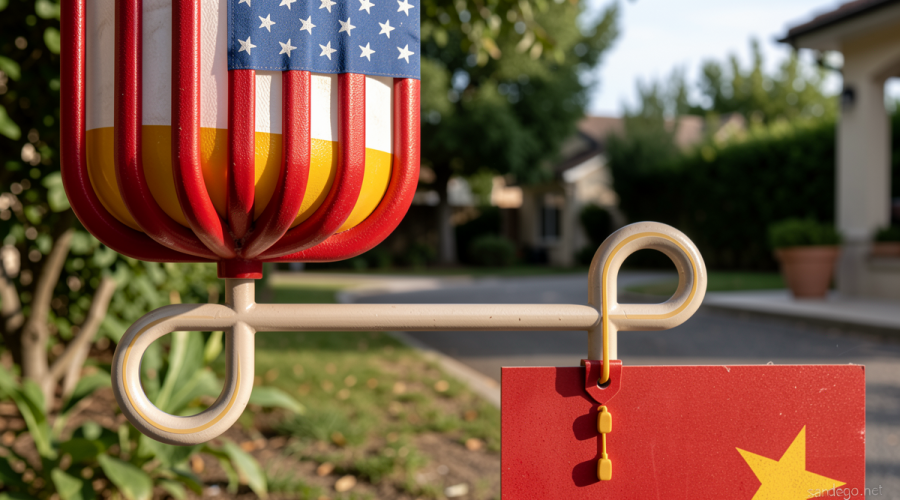
China’s Hidden Dependence on American Blood Plasma
Sandego.net – Every year, millions of Americans roll up their sleeves, insert two needles into their forearms, and let a pale fluid drain into collection bags — not out of altruism alone, but because the small payment helps cover rent, groceries, or a cat’s food. Roughly 70 percent of the world’s plasma flows from these American donors, and no nation leans on that supply more heavily than China. The dependency, rooted in decades of regulatory caution and a traumatic public-health history, now places millions of Chinese patients at the mercy of trans-Pacific logistics and shifting geopolitical winds.
A Mother’s Treatment, Priced in American Plasma
In a small town in Henan province, central China, Ge Lan, a 44-year-old store worker, watched a pale yellow solution drip steadily into her mother’s vein. The infusion was human albumin — the most abundant protein found in blood plasma — prescribed to rebuild protein levels depleted by stomach cancer surgery. Each 10-gram bottle, imported from abroad, carried a price tag of approximately $46, making it the single most expensive item in her mother’s entire course of treatment.
“I just hope (she) gets better soon,” Ge Lan said. “I’m worried about the money too, but I have no choice.”
Over two months, her mother consumed 72 bottles. The cumulative cost equaled roughly seven months of Ge’s own earnings. Only intervention from a sister kept the treatment going; without that help, Ge said, she could not have continued. And without the infusions, her mother’s post-surgical condition risked deteriorating sharply.
The Scale of the Gap
China ranks as the largest consumer of human albumin on the planet. The protein is indispensable in managing critical trauma — severe burns, massive hemorrhage — and in correcting hypoalbuminemia caused by chronic liver disease and other long-term conditions. Yet domestic production has never kept pace with demand. A 2024 study co-authored by researchers affiliated with China’s national drug inspection authority and Zhejiang’s provincial counterpart found that more than 60 percent of the country’s albumin market is filled by foreign manufacturers, and every one of those imported units is derived from plasma collected in the United States.
The practical consequence is straightforward: if trans-Pacific supply chains falter — whether through trade friction, a pandemic-scale health emergency, or broader geopolitical disruption — Chinese hospitals face the prospect of shortages and sharp price escalation for a product their patients cannot do without.
Why America Collects, and Why China Cannot
The United States is one of the very few nations that compensates plasma donors, a policy that sustains a steady, large-scale collection infrastructure. Sky Tucker, a 25-year-old community college student, has donated plasma twice weekly for seven years. For her, the motivation is less noble than necessary.
“While I do know it could save a life, most of the time, I’m just worried about if I’m gonna get my next meal or if I can feed my cats,” Tucker said.
China, by contrast, operates under stringent collection rules designed to prevent a repeat of the catastrophe that scarred its rural population in the 1990s. Those restrictions cap the volume of plasma the country can gather domestically, leaving an estimated annual shortfall of around 6,000 tons — a figure derived from industry data and domestic-demand estimates cited by Chinese state media.
The Scandal That Shaped a Generation of Rules
In the mid-1980s, Beijing banned imports of nearly all blood products — with the sole exception of human albumin — amid global alarm over the HIV/AIDS epidemic. The government then pushed to build a homegrown plasma industry. In impoverished Henan province, local authorities staked economic ambitions on the trade, courting hundreds of thousands of cash-strapped farmers with a simple pitch.
“Stretch your arm, show your veins; one stretch, one fist — 50 yuan earned,”
the slogan ran through villages across central China, as documented in a 2004 report by The Beijing News, a state-run newspaper. At the time, 50 yuan represented roughly a month’s income for many rural households. The collection frenzy, however, was riddled with unsafe practices — reused needles, unsanitary procedures — and became the vector for one of China’s worst HIV outbreaks. Henan recorded its first confirmed case in 1995, prompting authorities to shutter blood banks across the province. By a 2004 provincial census reported by state broadcaster CCTV, officials acknowledged that 25,000 former plasma sellers in the province had contracted the virus.
That memory still governs policy. Xi Chen, associate professor of public health at Yale University, noted that Beijing’s current push to expand domestic collection capacity is a direct response to the vulnerability exposed by foreign dependence.
Efforts to Close the Gap
In 2023, China licensed dozens of new plasma collection centers, broadening the geographic footprint of domestic supply. Last July, regulators cleared the country’s first rice-based albumin product for market entry — a plant-derived alternative intended to ease pressure on plasma-sourced supply as part of a wider strategy to reduce reliance on American plasma.
Yet these measures address only a fraction of the gap. The sheer volume of albumin required by China’s hospitals, combined with the regulatory caution born of the 1990s crisis, means the country will remain structurally dependent on imported plasma for the foreseeable future. For patients like Ge Lan’s mother, that dependency translates into a simple arithmetic: survival measured in dollars, shipped across an ocean, priced by a market they cannot influence.
Related Reading
Frequently Asked Questions
What is US supplies most of the world?
US supplies most of the world is the main topic of this guide. The article explains the context, practical details, and next steps readers should understand.
Why does US supplies most of the world matter?
US supplies most of the world matters because readers are looking for a useful answer, not just a short summary. Good content should match search intent and help them decide what to do next.