Black August Returns to Russia as War Deepens
Sandego.net – It’s Black August in Russia once again, and this time the dread is anchored in very tangible shortages. Ukrainian drone strikes have set fire to refineries and logistics depots across multiple cities, sending fuel-station queues stretching for blocks and stoking speculation about another conscription wave. For households that have endured four years of a war opened in February 2022, the conflict has migrated from a distant front into grocery receipts and gas-pump prices. Into that material strain, an old cultural superstition has reasserted itself with unusual urgency.
The Folk Memory of Summer Catastrophe
Russian commentators have long invoked the phrase “Black August” to describe a perceived clustering of destabilizing events in late summer. The analogy most often cited is Britain’s “silly season,” when parliament thins out and tabloids fill pages with triviality. Russian popular memory, however, runs on a darker frequency, and a quick survey of recent decades lends the superstition an uncomfortable evidentiary base.
In the summer of 1991, a group of Communist hardliners attempted a coup against Mikhail Gorbachev; its failure accelerated the dissolution of the Soviet union within months. Seven years later, the state defaulted on domestic debt and the ruble collapsed, erasing household savings overnight. The following year, militants pushed into Dagestan and ignited the second Chechen War — the conflict that vaulted a former KGB officer, Vladimir Putin, into the highest office in the country after Boris Yeltsin arranged a surprise handover on New Year’s Eve of that same year.
Putin’s own tenure has not escaped the pattern. The Kursk nuclear submarine sank with all 118 crew aboard, and a brief but savage war with Georgia in 2008 exposed the belligerent edge that would define his foreign policy for two decades. Each episode reinforced the cultural conviction that the final weeks of summer carry a particular gravitational pull toward disaster.
Fuel Lines, Falling Rubles, and Mobilization Rumors
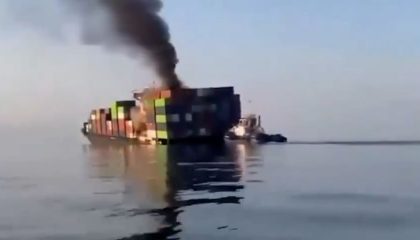
The present season layers those historical anxieties onto acute material hardship. Russian advances along the Ukrainian front have been marginal, while Ukrainian strikes have blackened skies over major cities, targeting petroleum infrastructure and the sprawling distribution centers that underpin the country’s fast-growing e-commerce sector. At the pump, long lines and climbing prices have turned routine errands into small acts of endurance. Whispers of a fresh mobilization round circulate through social media and kitchen-table talk alike.
Exiled commentator Ilya Varlamov addressed the question head-on this week, conceding that the historical clustering of disasters is “a coincidence, of course.” Yet he added that the coincidence has calcified into expectation:
“Many Russians await the month with apprehension. Especially now, when the country is truly in crisis. … The fuel crisis has returned, prices are rising and have no intention of stopping, the ruble is falling, elections are coming and God knows what else.”
Varlamov also relayed remarks recently made public by a senior Russian economist, who warned that Moscow was confronting a “social crisis,” was “losing both the technological and economic competition globally,” and would not prevail in a war of attrition against a Ukraine sustained by Western partners.
Even the pro-Kremlin tabloid Moskovsky Komsomolets, ordinarily a vehicle for state-approved optimism, acknowledged the traditional seasonal jitters — though it reached for celestial omens rather than economic data. The paper noted that a lunar eclipse was scheduled for the month and, while not the largest of its kind, would occur opposite Pluto, a body it described as “associated with catastrophes.”
“This could trigger social shifts, political changes in relations with neighbors, and domestic unrest. Incidents of accidents, heightened anxiety, and breakdowns – including nervous disorders – may increase.”
Amid the speculation, Putin has maintained his customary projection of composure. Speaking Wednesday about infrastructure and development projects, he acknowledged economic damage inflicted by Ukrainian strikes while framing the
Related Reading
Frequently Asked Questions
What is It s Black August in Russia?
It s Black August in Russia is the main topic of this guide. The article explains the context, practical details, and next steps readers should understand.
Why does It s Black August in Russia matter?
It s Black August in Russia matters because readers are looking for a useful answer, not just a short summary. Good content should match search intent and help them decide what to do next.