Mike Fincke Concludes Three-Decade NASA Career Following Space Medical Incident
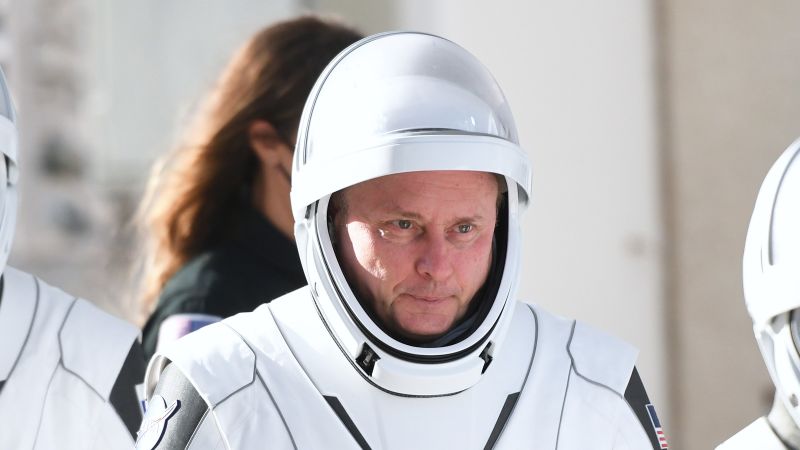
Sandego.net – After more than thirty years of service to the American space program, veteran astronaut Mike Fincke is preparing to step down from his position at NASA. The announcement arrives several months after a surprising health episode aboard the International Space Station compelled an early return for Fincke and three fellow travelers. According to an official agency statement, Wednesday marks Fincke’s final day with the organization.
While Fincke is departing his role, he emphasized his ongoing dedication to space exploration in a public statement. The astronaut, who originally became part of the astronaut corps in 1996, expressed appreciation for everyone involved in his career. “I am profoundly grateful to my crewmates, the teams on the ground, our international partners, and the families who make this work possible,” Fincke explained. He outlined ambitious goals for the future, noting that humanity will return to the Moon, journey toward Mars, and eventually reach distant celestial bodies. “Together, we will return humanity to the Moon, travel to Mars, journey outward to the planets and moons beyond Earth, and someday reach for the stars – all while caring for Earth, the most beautiful planet in our solar system.”
A Career Marked by Extended Orbital Time
Fincke’s extensive tenure in space places him among the most experienced American astronauts. Over four separate missions spanning his career, he accumulated 549 days in orbit, ranking fourth among his NASA colleagues. Nine spacewalks further demonstrate his versatility during extravehicular activities. The overwhelming majority of those orbital days occurred aboard the International Space Station, which spans approximately the size of a football field.
His most recent mission drew worldwide attention due to an unexpected medical situation. During this flight, Fincke temporarily lost his ability to speak for approximately twenty minutes. He later described the experience to various news organizations, noting that the sensation differed from choking. His fellow crew members immediately recognized something was wrong and took swift action. “It was all hands on deck within just a matter of seconds,” Fincke recalled.
Unprecedented Early Return from the Space Station
The medical episode triggered an urgent response from NASA officials. Fincke traveled aboard SpaceX Crew-11 alongside NASA astronaut Zena Cardman, Japan Aerospace Exploration Agency’s Kimiya Yui, and Russian cosmonaut Oleg Platonov. The group returned to Earth in mid-January, arriving weeks ahead of their scheduled timeline. This marked the first instance in history where NASA had to abbreviate an International Space Station staffing mission specifically for health-related reasons.
Initially, the space agency maintained confidentiality regarding which astronaut experienced the medical concern and what the specific issue entailed. This standard practice protects astronaut privacy, though Fincke voluntarily identified himself several weeks after the incident. During the journey home, NASA confirmed the affected crew member remained in stable condition. In a February statement, Fincke noted that agency officials determined returning to Earth would allow access to advanced medical imaging technology unavailable on the orbital outpost.
Operational Adjustments and Continued Mission
The International Space Station contains substantial medical equipment, though it lacks the full complement of tools found in a typical emergency room. The unexpected health problem initiated a rapid sequence of operational changes. NASA canceled a planned spacewalk, expedited the Crew-11 return, and accelerated preparations for the next staffing mission. Fincke and his Crew-11 teammates left the station with only three astronauts remaining.
Crew-12, consisting of four astronauts, arrived at the space station on February 14, restoring staffing levels to seven personnel. This number represents NASA’s standard target for maintaining scientific experiments and daily operations efficiently. The agency continues to investigate the nature of Fincke’s medical event, which remains classified as a mystery by researchers.
Looking Ahead
Neither Fincke nor NASA has disclosed specific details about his post-retirement plans. His departure represents a significant transition for the space agency, which has benefited from his decades of experience. As NASA continues its Artemis program and prepares for future lunar and Mars missions, Fincke indicated he intends to contribute to training the next generation of space professionals. “I am excited to carry those lessons forward and help prepare the next generation of engineers, explorers, and leaders,” he stated. His legacy includes not only extensive time in orbit but also demonstrating how the space program responds to unexpected challenges while maintaining crew safety and mission objectives.
Related Reading
Frequently Asked Questions
What is NASA astronaut Mike Fincke leaves agency?
NASA astronaut Mike Fincke leaves agency is the main topic of this guide. The article explains the context, practical details, and next steps readers should understand.
Why does NASA astronaut Mike Fincke leaves agency matter?
NASA astronaut Mike Fincke leaves agency matters because readers are looking for a useful answer, not just a short summary. Good content should match search intent and help them decide what to do next.