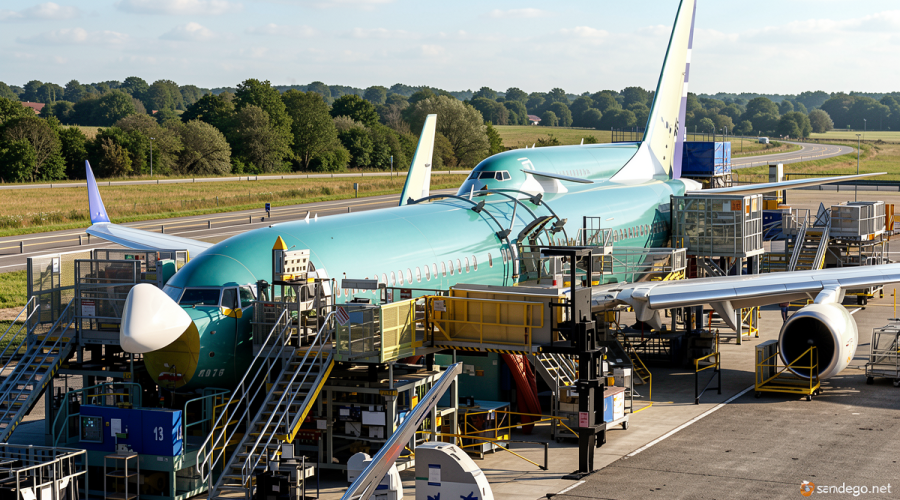
Aviation Regulator Mandates Crack Inspections Across Boeing 737 Max Fleet
Sandego.net – The Federal Aviation Administration has issued a comprehensive directive requiring airlines to examine hundreds of Boeing 737 Max aircraft for structural cracks that could potentially weaken the airframe. This new airworthiness order targets an estimated 471 airplanes registered in the United States, encompassing the Max 8, Max 9, and Max 8-200 variants. The regulatory body emphasized that undetected damage in critical areas might compromise the aircraft’s overall structural integrity during flight operations.
Location and Nature of the Structural Issues
According to the FAA, the cracks have been identified in a structural reinforcement component situated around the forward service door on the right side of the aircraft. This specific area is located adjacent to the front galley, making it accessible for maintenance crews during routine inspections. The agency has instructed airlines to implement inspection schedules tailored to each airplane’s individual usage patterns. Any aircraft exhibiting cracking must undergo repairs before being cleared for passenger service again.
The inspection requirements are designed to catch potential problems early. The FAA noted that the mandated inspection intervals offer multiple opportunities for maintenance teams to identify cracks before they grow large enough to affect the airplane’s structural integrity. This approach allows airlines to continue operations without imposing a full grounding of the affected fleet.
Boeing’s Response and Engineering Analysis
Boeing has undertaken a thorough engineering analysis to pinpoint the root cause of the cracking phenomenon. The manufacturer stated that it is actively developing engineering modifications intended to prevent similar issues from occurring in future aircraft. The company emphasized its commitment to supporting airline customers through this process.
“This issue has not been observed on the 737 MAX fleet, but Boeing extended the inspections to 737 MAX airplanes as the model shares a similar design and build process,” the company said in a statement. “We support both directives and continue to support our airline customers.”
The statement clarifies that while the specific cracking pattern was not previously documented on the MAX series, the manufacturer chose to proactively include these aircraft in the inspection program due to shared design characteristics with earlier 737 models.
Historical Context and Previous Structural Concerns
This is not the first instance where Boeing has faced structural cracking challenges across its 737 lineup. In 2019, the aviation regulator mandated inspections for certain 737-700, 737-800, and 737-900 aircraft after cracks were discovered in the component connecting the fuselage to the wings. That earlier directive demonstrated the company’s willingness to address structural issues comprehensively across multiple aircraft generations.
The current situation has emerged against a backdrop of heightened scrutiny for Boeing since January 2024, when a door plug detached from an Alaska Airlines jet during flight. The National Transportation Safety Board investigation revealed that four bolts designed to secure the door plug were missing when the aircraft was delivered to the airline in October 2023. This incident significantly impacted public confidence in Boeing’s manufacturing and quality control processes.
Broader Regulatory Actions and Operational Impact
Adding to the regulatory attention on Boeing’s fleet, the FAA proposed another airworthiness directive last month. This separate proposal would require inspections of seat assemblies on 453 Boeing 737 Max jets to verify proper installation. The combination of these directives underscores the thoroughness of current oversight efforts.
For airlines operating the affected aircraft, the September 10 effective date provides a clear timeline for compliance. The inspection-based approach rather than a full grounding means that flights can continue while maintenance crews work through the required examinations. Airlines will need to allocate resources for both the inspections and any necessary repairs, depending on the condition of each individual aircraft.
The structural reinforcement around the forward service door represents a critical load-bearing component. Cracks in this area, while not immediately dangerous, could potentially propagate under repeated stress cycles during normal flight operations. The inspection intervals are calibrated to detect these cracks at manageable sizes before they reach critical thresholds.
Passengers traveling on affected aircraft should expect minimal disruption, as the FAA’s decision to avoid grounding reflects confidence in the inspection program’s ability to ensure safety. The directive represents a preventive measure rather than an emergency response, allowing airlines to maintain schedules while addressing the structural concerns systematically.
Related Reading
Frequently Asked Questions
What is FAA orders inspection of hundreds of 737?
FAA orders inspection of hundreds of 737 is the main topic of this guide. The article explains the context, practical details, and next steps readers should understand.
Why does FAA orders inspection of hundreds of 737 matter?
FAA orders inspection of hundreds of 737 matters because readers are looking for a useful answer, not just a short summary. Good content should match search intent and help them decide what to do next.