FISA: What to Know About the Government’s Key Spy Powers on the Brink of Expiration
Sandego.net – FISA – Section 702 of the Foreign Intelligence Surveillance Act (FISA) is facing another potential expiration after congressional negotiations collapsed, leaving the critical surveillance tool in limbo. This law, which grants the U.S. government authority to monitor foreign communications, has become a focal point of political discord, with House Republicans now refusing to stay in Washington for further votes. The program’s fate hinges on whether lawmakers can reach a consensus before its deadline, which looms this week. With tensions escalating both domestically and internationally, the lapse could create significant gaps in intelligence efforts, according to national security experts.
The Core Function of Section 702
Section 702 allows the U.S. government to intercept communications from non-U.S. citizens, including phone calls, emails, and internet data, as part of its broader counterterrorism strategy. While primarily targeting foreign adversaries, the law has drawn controversy due to its ability to inadvertently collect data on American citizens. This dual use has sparked debates about privacy rights and government oversight. The authority enables intelligence agencies to swiftly access vast amounts of information, often used to track suspects or uncover threats before they materialize.
“What more can I do?” — House Speaker Mike Johnson, reacting to the stalled renewal of Section 702.
Despite its utility, the program has been a point of contention for months. Congressional leaders have struggled to agree on a permanent extension, with Republicans and Democrats locked in a deadlock over its provisions. The most recent compromise—a 45-day temporary patch—has only delayed the inevitable. Without renewed legislation, the surveillance law will expire on Friday at midnight, creating uncertainty for agencies reliant on its capabilities.
Why the Renewal Stalled
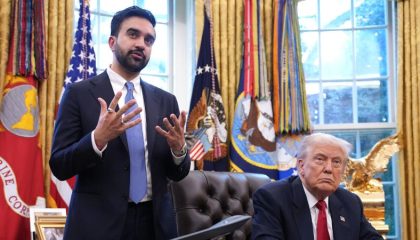
The impasse stems from President Donald Trump’s appointment of Bill Pulte as the acting director of national intelligence (DNI). Pulte, previously the head of the Federal Housing Finance Agency, lacks formal experience in intelligence matters, which has raised concerns among Democrats. “Bill Pulte should not be leading DNI,” said GOP Rep. Brian Fitzpatrick, a former FBI special agent, highlighting the perceived risk of the program’s direction. Fitzpatrick argued that the lapse would endanger national security, making Americans “1000%” less safe.
“Two things are true. Bill Pulte should not be leading DNI and nobody should vote against FISA because of Bill Pulte.” — Brian Fitzpatrick, emphasizing the importance of the program.
House Speaker Mike Johnson accused Democrats of holding critical votes hostage, claiming that their opposition to the reauthorization would be futile. “I pray that we do not have a serious calamity on our shores over the next few weeks,” Johnson said, signaling his reluctance to call lawmakers back to Washington during the next recess. This stance has deepened the divide, with Republicans prioritizing procedural efficiency and Democrats pushing for broader safeguards.
The Technical Scope of the Surveillance Authority
Under the updated FISA law enacted in 2008, the government can compel telecom companies and internet providers to share data from the “backbone” of the global network. This includes access to phone metadata, email content, and internet traffic, enabling intelligence agencies to monitor foreign targets efficiently. However, the program’s reach extends to Americans, with their communications sometimes intercepted as a byproduct of surveillance efforts.
A September 2023 report by the Privacy and Civil Liberties Oversight Board, a watchdog tasked with evaluating the program’s impact, revealed an additional “highly sensitive technique” introduced in 2022. This method allows the government to collect data from specific addresses or accounts, further expanding its ability to track individuals. The report underscored the program’s value but also highlighted the need for transparency in its application.
The Broader Implications of Expiration
With the U.S. war with Iran intensifying and domestic threats growing, the expiration of Section 702 could have far-reaching consequences. National security officials have long emphasized the law’s role in identifying terrorist plots, monitoring drug trafficking, and defending critical infrastructure from cyberattacks. “Section 702 is more critical than ever,” one senior official noted, citing the fragile ceasefire in the Iran conflict and rising concerns about political violence.
The program’s data is integral to intelligence operations, including the Presidential Daily Brief, which provides key insights to the White House. CNN reported that a significant portion of the information featured in these briefings comes from Section 702, underscoring its importance in decision-making. Without a renewal, agencies may face delays in accessing critical data, potentially hindering their ability to respond to emerging threats.
Historical Context and Current Challenges
Section 702 has been a cornerstone of U.S. intelligence since its enactment in 2008. It has been repeatedly reauthorized through short-term extensions, each time facing scrutiny over privacy concerns and efficiency. The latest round of negotiations, however, has been unusually tense, with Republicans arguing that Democrats are obstructing progress. House Republicans’ decision to leave Washington for the next recess has left the program in a precarious state, as lawmakers scramble to find a resolution.
While the program’s expiration is imminent, its impact remains uncertain. Some experts suggest that the government could still operate under existing authority, but others warn of a “data gap” that could leave intelligence agencies without the tools needed to track foreign activities. The situation has also raised questions about the role of the acting DNI, with critics questioning whether Pulte’s leadership is adequate for such a high-stakes task.
As the deadline approaches, the debate over Section 702 reflects deeper disagreements about the balance between security and privacy. Republicans emphasize the law’s effectiveness in combating global threats, while Democrats advocate for stricter oversight and transparency. The absence of a permanent extension may force agencies to rely on alternative methods, potentially compromising the speed and scope of their intelligence operations. For now, the program remains in limbo, with the nation’s safety hanging in the balance until Congress can reach a compromise.
With the 250th anniversary of American independence approaching and geopolitical tensions at their peak, the expiration of Section 702 has taken on new significance. Lawmakers must now decide whether to prioritize immediate action or continue debating the program’s future. The outcome will shape the nation’s intelligence capabilities for years to come, testing the resilience of both the legislative process and the government’s ability to respond to global challenges.