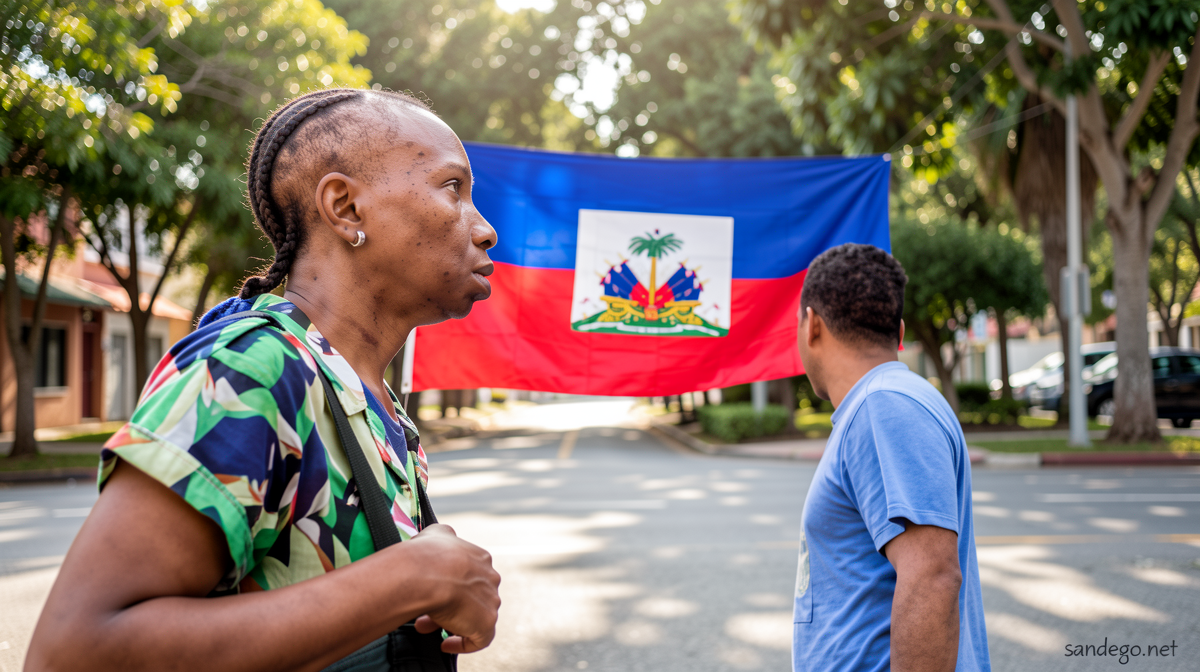
US Court Confirms Haitian TPS Protections Are No Longer in Place
Sandego.net – A federal judge has officially confirmed that temporary deportation protections for Haitian immigrants are no longer in place, marking the end of a significant legal battle. US District Judge Ana Reyes issued her final order on Wednesday, implementing the Supreme Court’s decision to allow the Trump administration to proceed with ending the Temporary Protected Status program. This ruling affects approximately 350,000 Haitians who had been granted protection after fleeing their homeland during a period of severe political instability and devastating natural disasters.
How the Legal Process Unfolded
The journey to this outcome began earlier this year when Judge Reyes, a Biden administration appointee, temporarily blocked the termination of Haiti’s TPS designation. Her initial ruling found that then-DHS Secretary Kristi Noem had circumvented established legal procedures when ending the program. The judge also determined that racial bias may have influenced the decision, though the Supreme Court ultimately concluded that the evidence presented did not sufficiently support that particular finding.
In late June, the high court reversed Reyes’s earlier intervention, establishing that federal courts lack authority to review challenges to the Homeland Security secretary’s determination to end TPS for multiple nations based on procedural arguments. The Supreme Court’s ruling clarified that the status was fundamentally intended as a temporary measure rather than a permanent residency pathway.
What This Means for Haitian Residents
Judge Reyes’s latest order explicitly states that the stay on DHS Secretary Kristi Noem’s termination designation is no longer operative. This means the protections are officially gone, creating immediate practical implications for those who relied on them.
As a result of today’s order implementing the Supreme Court’s decision, Haitian TPS holders – all of them non-criminals – can no longer legally work, and many are subject to removal to Haiti, which continues to be one of the most dangerous countries in the world, said Geoff Pipoly, an attorney representing the Haitian TPS holders who brought the legal challenge.
The loss of work authorization has already begun affecting employment, particularly in sectors that depend heavily on Haitian workers. Nursing homes and home care agencies have started releasing staff members whose work permits expired earlier this week. Westminster Communities of Florida terminated twelve Haitian TPS holders who served as certified nursing assistants and dining service workers.
Enforcement Actions Accelerate Nationwide
Immigration and Customs Enforcement has intensified its operations targeting individuals whose TPS status is set to expire. Two sources familiar with the enforcement strategy confirmed that Haitians are among the primary focus of these efforts. DHS Secretary Markwaye Mullin communicated the administration’s straightforward approach to NewsNation this week.
We’re going after them right now, Mullin stated. These individuals can either self-deport or we’ll arrest you and send you back. It’s that simple.
Some Haitians have been summoned to ICE offices to receive ankle monitors, a monitoring system that restricts movement while allowing individuals to remain in the community rather than face detention. This alternative form of supervision has been employed by ICE for years as a means of tracking immigrants without incarceration.
Legal Challenges Continue
While the immediate protections have ended, the legal case overseen by Judge Reyes continues. Haitian plaintiffs are pursuing equal protection claims, arguing that the administration demonstrated discriminatory intent when eliminating the protections. Attorneys have indicated they will seek additional evidence to strengthen their position.
Nothing in the decision suggests that the plaintiffs here cannot try to marshal the additional evidence necessary to prove their equal protection claim, lawyers for the migrants told Reyes in a court filing last month.
Similar challenges have emerged regarding TPS terminations for nationals from Ethiopia, Burma, and South Sudan. In those cases, judges have recently prevented the administration from proceeding with deportations while evaluating new legal arguments. This has generated criticism from the Trump administration, which maintains that TPS was designed as a temporary solution from its inception.
FAQ: Understanding the TPS Decision
What is Temporary Protected Status? TPS is a designation that allows individuals from designated countries to remain in the United States temporarily when conditions in their home country make return unsafe. It provides protection from deportation and work authorization.
How many Haitians are affected by this ruling? Approximately 350,000 Haitian residents received Temporary Protected Status and are now subject to the termination of their protections following the court’s confirmation.
Will Haitians be deported immediately? Not necessarily. While the protections are lifted, enforcement is gradual. Some individuals may receive ankle monitors or have time to arrange voluntary departure. The administration has indicated it will pursue both self-deportation and enforcement actions.
Are there other legal options available? Yes. Haitian plaintiffs are continuing to pursue equal protection claims in court. Additionally, similar challenges regarding TPS terminations for nationals from Ethiopia, Burma, and South Sudan are still being evaluated by judges.
What happens to work authorization? Haitian TPS holders can no longer legally work once their status is officially terminated. Many have already begun losing employment, particularly in nursing homes and home care agencies that depend heavily on Haitian workers.