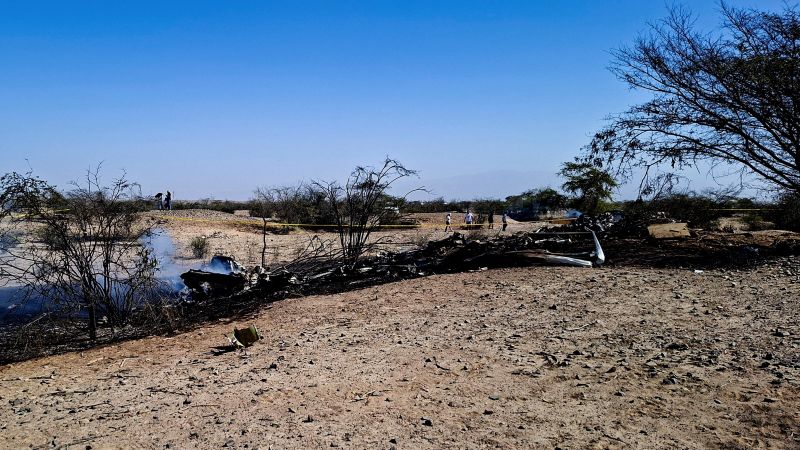
What We Know So Far About the Nazca Plane Crash That Killed 11 Tourists
Sandego.net – What we know so far about the tragic plane crash near Peru’s Nazca Lines reveals that eleven European tourists and two Peruvian crew members lost their lives on Saturday. The accident involved an Aerodiana sightseeing aircraft that went down while flying over the famous UNESCO World Heritage site after reporting mechanical difficulties. Peru’s Ministry of Transportation and Communications has ordered a temporary suspension of Aerodiana’s operations until investigators verify the company’s compliance with aviation regulations. What we know so far indicates the Cessna 208B Grand Caravan was carrying twelve passengers when it crashed approximately 2 kilometers from the Nazca airfield.
Timeline of Events Leading to the Crash
The incident occurred around 1 p.m. local time, or 2 p.m. Eastern Time, when the aircraft departed from Pisco Airport for a tour of the Nazca Lines. According to Peruvian Foreign Trade and Tourism Minister Rogers Valencia, the crew made a distress call indicating mechanical problems before losing radio contact with ground control. “There was a call from the aircraft indicating that it was experiencing mechanical problems,” Valencia told journalists at the crash site. What we know so far suggests the plane was on a routine sightseeing flight when the technical issue proved fatal. The Aviation Accident Investigation Commission is now reviewing audio recordings, the aircraft’s trajectory, and mechanical components recovered from the debris field.
Victims and International Response
The eleven European victims came from three nations: seven Italian tourists, two German visitors, and two Spanish travelers. Minister Valencia confirmed that consular representatives from Italy and Germany arrived at the scene promptly. The Italian Foreign Ministry announced that its embassy in Lima has been coordinating with Peruvian officials, and relatives of the Italian victims have already been informed. Italian Prime Minister Giorgia Meloni shared her condolences on social media platform X, stating: “On behalf of the Italian government and on my own behalf, I express my deepest condolences to their loved ones at this time of immense grief.” What we know so far shows that both governments are working closely to support affected families.
Operational Impact and Investigation
Pisco Airport remains fully operational while authorities determine the extent of liability in the tragedy. Peruvian President Keiko Fujimori told reporters that “the suspension of the airport is being evaluated,” though she prefers to await investigation completion before making final decisions. Aerodiana expressed sorrow for the victims’ families in a statement, highlighting its eighteen-year history and commitment to passenger safety. The airline declared itself “fully prepared to provide the necessary support” and emphasized that the incident “affects us deeply and reaffirms our willingness to cooperate with full accountability.” What we know so far indicates that immediate results are expected as investigators assess the wreckage condition.
Understanding the Nazca Lines
The Nazca Lines represent one of the world’s most remarkable archaeological treasures. These enormous ancient geoglyphs depicting animals and geometric patterns are carved into the arid desert landscape and are most effectively appreciated from aerial perspectives.
Sightseeing flights remain popular with international visitors precisely because the Nazca Lines are best viewed from above. The region has experienced fatal aviation incidents in the past, making this tragedy particularly significant for Peru’s tourism industry. What we know so far about this crash includes confirmation that the aircraft was traveling on a standard route over the geoglyphs when the mechanical failure occurred. CNN has contacted Aerodiana seeking additional commentary on the situation as the investigation continues.
Frequently Asked Questions
What caused the Nazca plane crash? What we know so far indicates the Cessna 208B Grand Caravan experienced mechanical problems before crashing. The Aviation Accident Investigation Commission is reviewing all evidence to determine the exact cause.
How many people died in the accident? Eleven European tourists and two Peruvian flight crew members perished, totaling thirteen victims.
Which countries were the victims from? The tourists came from Italy (seven), Germany (two), and Spain (two).
Is Aerodiana still operating flights? Peru’s Ministry of Transportation and Communications has ordered a temporary halt to Aerodiana’s operations until investigations are completed.
What is the status of Pisco Airport? Pisco Airport remains fully operational while authorities evaluate whether a suspension is necessary.