Markets Question Fed’s Inflation Strategy as Yields Climb
Sandego.net – Investors are sending a clear message to Federal Reserve Chairman Kevin Warsh: words alone won’t suffice. Following the central bank’s latest policy decision, long-term bond yields surged dramatically, suggesting traders believe more aggressive action may be necessary to combat persistent price pressures.
Warsh’s Firm Stance Meets Market Skepticism
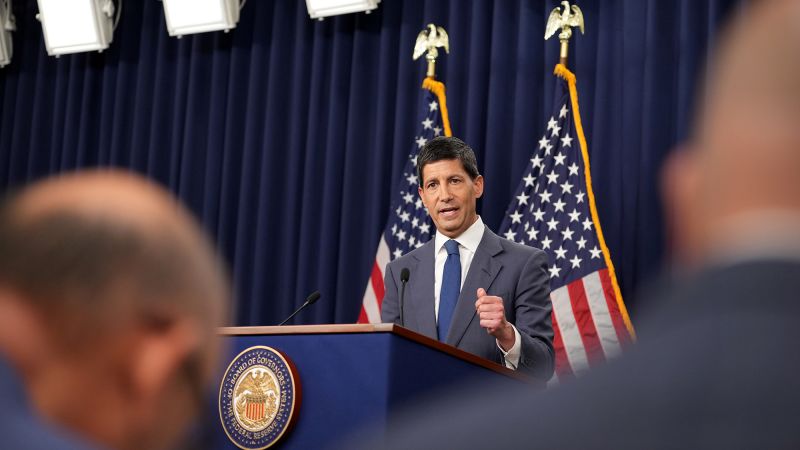
During his post-meeting address, Warsh emphasized the Fed’s unwavering commitment to price stability. He made his position unmistakably clear regarding the central bank’s approach to inflation control.
Let me reiterate: There is no soft inflation target. There is no soft implicit target, not on this committee’s watch. There’s only a target, and it’s 2%.
Despite these assurances, the bond market responded with caution. The 30-year US Treasury yield climbed from approximately 5.1% to 5.21%, marking its strongest level since 2007. Meanwhile, the 10-year yield advanced from just above 4.61% to nearly 4.69%, approaching its peak over the past twelve months.
These movements reflect investor concerns about future inflation trajectories and economic expansion. When bond prices decline, yields naturally rise as investors demand greater compensation for holding longer-dated securities amid uncertainty.
What Traders Are Signaling
The rapid sell-off in long-term bonds indicates that market participants worry the Fed may not take sufficient measures to address stubborn inflationary pressures. Steve Sosnick, chief strategist at Interactive Brokers, captured this sentiment in his assessment following Warsh’s comments.
Really the market’s issue is, are you doing something? It’s one thing to talk about fighting inflation. It’s another thing entirely to do something about it. And again, it’s not clear what he’s doing about it.
This skepticism comes as the Fed maintains interest rates at current levels for the fifth consecutive session. Recent geopolitical tensions between the United States, Israel, and Iran have triggered significant oil price volatility, contributing to renewed inflationary concerns.
Market Volatility and Policy Uncertainty
Warsh has indicated a preference for reduced central bank messaging, suggesting he wants markets to respond to economic fundamentals rather than Fed communications. He described this approach as allowing markets to “play the ball” instead of following “the referee.”
I was comforted that markets in the inter-meeting period weren’t reacting to us. They weren’t reacting to (the Fed’s quarterly dot plot) or to speeches. They appeared more than ever to be reacting to real-time events, so they’re gauging themselves how restrictive the Treasury curve should be, and that I think has been a useful development.
However, this hands-off approach has coincided with heightened market turbulence. The Dow Jones Industrial Average plummeted more than 1,100 points, recording its sharpest decline in over a year. The dollar index also dropped more than 0.5% as traders recalibrated expectations for potential rate increases.
Looking Ahead: Rate Hike Expectations
According to CME FedWatch, markets now assign a 57% probability to a September rate increase, down from nearly 70% earlier in the day but consistent with previous assessments. This shift reflects growing confidence that the Fed may need to act sooner rather than later.
The implications extend beyond financial markets. The 10-year Treasury yield serves as a benchmark for borrowing costs throughout the economy, including residential mortgages. The 30-year fixed mortgage rate recently reached 6.58%, its highest reading in nearly twelve months.
Internal divisions within the Fed also emerged, with three members voting in favor of raising rates during Wednesday’s meeting. This split suggests varying perspectives on the appropriate policy response to current economic conditions.
Michael Feroli, chief US economist at JPMorgan Chase, noted that Warsh’s press conference lacked specific details about implementation strategies.
In Warsh’s press conference, he once again failed to specify how he intended to achieve his stridently asserted inflation resolve.
As markets continue testing the new Fed chair’s approach, the coming weeks will reveal whether verbal commitments translate into meaningful policy action. The bond market’s reaction suggests investors want to see results, not just rhetoric.
Related Reading
Frequently Asked Questions
What is The bond market to Kevin Warsh?
The bond market to Kevin Warsh is the main topic of this guide. The article explains the context, practical details, and next steps readers should understand.
Why does The bond market to Kevin Warsh matter?
The bond market to Kevin Warsh matters because readers are looking for a useful answer, not just a short summary. Good content should match search intent and help them decide what to do next.