Unearthing History: Okinawa’s Enduring War Legacy
Sandego.net – Eight decades have passed since the conclusion of one of the Pacific War’s most devastating conflicts, yet the island of Okinawa continues to yield its secrets. The ground still holds both human remains and unexploded ordnance from that tumultuous period. Among those dedicated to recovering these pieces of history is Takamatsu Gushiken, a man whose life’s purpose centers on finding the lost souls of the Battle of Okinawa.
The Bone Digger’s Mission
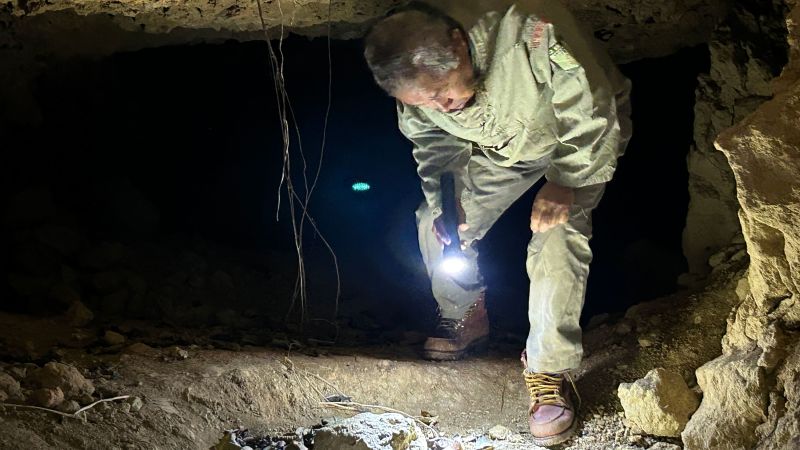
Gushiken navigates the narrow passages of limestone caves scattered across Okinawa’s hillsides. This slight figure moves with remarkable agility through tight crevices, carefully avoiding the jagged rock formations overhead while searching the earth below. With a lamp strapped to his forehead illuminating the dirt at his feet, he uses simple gardening tools to uncover what lies beneath the soil—remains of those who sought shelter in these caves during the fighting.
When asked about his dedication to this work, Gushiken offers a simple yet profound explanation.
“They are human, and I am human too,”
he says softly, his voice catching with emotion as he looks downward.
At one particular site, Gushiken has discovered portions of a human skull near the ear region, along with smaller bones that may have belonged to a foot. Even tinier fragments suggest the presence of a child or infant. He has also recovered a bullet, which helps him reconstruct events that transpired here eighty years ago. His theory: a mother and her child had taken refuge in this cave while battle raged outside. When American soldiers worked to clear Japanese defenders from the caves, these two civilians became caught in the crossfire.
A Devastating Toll
These civilians would join an estimated 240,000 people who perished or went missing during the Battle of Okinawa. The conflict began with the American invasion force landing on April 1, 1945, and concluded when the United States declared victory on June 22. According to the National World War II Museum in Louisiana, this staggering figure encompasses approximately 100,000 civilians, 110,000 Japanese troops and Okinawan conscripts, and over 12,000 American and allied soldiers.
The devastation was wrought by overwhelming American military might. US forces deployed 1.1 million 105-millimeter howitzer rounds across the island, along with more than half a million mortar rounds. Additionally, they fired over 16 million machine gun rounds and 9 million rifle bullets during the campaign.
Physical Remnants of War
Today, visitors can walk through these historic sites and physically touch the evidence of battle. On Ie Shima, an offshore island covering 23 square kilometers, a pawn shop remains as the sole surviving structure from the fighting. This island housed a crucial airstrip during the war.
In Tomigusuku, the former Japanese Navy underground headquarters displays walls pockmarked with shrapnel scars. A memorial outside commemorates Vice Admiral Minoru Ota and his 4,000 men, who
“committed suicide in this underground headquarters on June 18, 1945.”
Near the Sefa Utaki Sacred Site in Nanjo, an unexploded grenade sits beside an unmarked cave entrance, just off a busy roadway. Inside, smooth pickaxe marks reveal the cave’s original construction, leading to what once served as a machine gun emplacement.
At the Okinawa Peace Park on the southern shore, visitors can stand beside the cave where Japanese garrison commander General Mitsuru Ushijima ended his life on June 22, 1945, as American forces closed in from below.
Preserving Memory
The Okinawa Prefectural Archives offers another window into the past. Visitors can drop a pin on their phone’s map application at any of these locations and then visit the archives to view historical photographs. Archivists have carefully matched American military surveillance and reconnaissance images with today’s landscape, creating a powerful visual record.
Kazuhiko Nakamoto leads this archival effort, working alongside colleagues Akira Yoshimine and Eriko Nishiyama to document Okinawa’s wartime experience. Nakamoto shares how his mother, just six years old in 1945, survived the battle while separated from her parents. She remained in the care of her grandmother, who traveled throughout the island’s southern region seeking safety as combat intensified.
“It was like a miracle that she survived,”
Nakamoto reflects, noting that his family was among the fortunate ones.
Through these efforts, Okinawans continue to honor those who suffered in a war not of their making, ensuring that the sacrifices made during those terrible months will never be forgotten.
Related Reading
Frequently Asked Questions
What is 80 years after World War II Okinawa?
80 years after World War II Okinawa is the main topic of this guide. The article explains the context, practical details, and next steps readers should understand.
Why does 80 years after World War II Okinawa matter?
80 years after World War II Okinawa matters because readers are looking for a useful answer, not just a short summary. Good content should match search intent and help them decide what to do next.