Pope Blesses Barcelona’s Gaudí-Designed Masterpiece
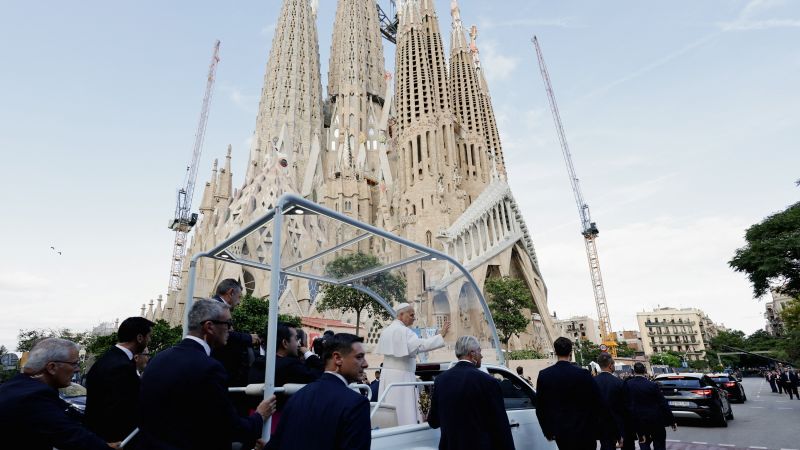
Sandego.net – On a historic day marking a century since the death of Antoni Gaudí, Pope Leo XIV made a symbolic visit to the Sagrada Família in Barcelona, celebrating a Mass and consecrating the church’s newest tower, which now stands as the tallest structure in the world. The occasion, steeped in both architectural and spiritual significance, drew thousands of attendees, including Spain’s royal family, as the pontiff honored the unfinished legacy of the iconic basilica. Gaudí, whose visionary design remains central to the building’s identity, died in 1926 after being struck by a tram. At the time, bystanders had failed to recognize him, mistaking him for a beggar, and his injuries led to a delay in medical care that ultimately claimed his life.
A Century of Unfinished Dreams
Gaudí’s passing in 1926 left his magnum opus, the Sagrada Família, incomplete—a reality he accepted with quiet resolve. His final vision for the basilica, blending natural forms and religious symbolism, has taken over a century to materialize. Today’s event, the blessing of the Tower of Jesus, represents a pivotal moment in this prolonged construction journey. The tower, rising above the rest of the structure, not only elevates the church’s height but also encapsulates the enduring spirit of Gaudí’s ambition.
According to the basilica’s records, the building attracts a staggering number of visitors annually, with more Americans than Spaniards making the pilgrimage to its doors. This underscores the global appeal of the site, which has become a beacon of both art and faith. The Pope’s presence during the ceremony added a new layer of significance, as he emphasized that the basilica’s incompleteness is not a flaw but a testament to its ongoing evolution. “It is a work in progress, not a finished product,” he stated, highlighting the timeless nature of Gaudí’s vision.
Symbolism and Design: Nature Meets Faith
The Sagrada Família is a stunning fusion of organic and geometric elements, with intricate carvings of trees, flowers, and fruit adorning its façade. These details reflect Gaudí’s deep inspiration from the natural world and religious iconography, creating a space that feels both sacred and alive. The 18 towering spires represent key figures from scripture, including apostles, evangelists, and the Virgin Mary, while the three facades tell the story of Jesus’ life, death, and final judgment. Such design choices have transformed the basilica into a living narrative, where each stone carries a spiritual message.
During the Mass, the Pope’s homily touched on the intersection of faith and human action. He spoke of “faith that shapes the stones,” praising Gaudí as a “builder of spiritual pilgrimage.” The reference to castells—human towers formed during Catalan festivals—added a fascinating dimension to the discussion. According to Peter Stanford, author of *Gaudí: God’s Architect*, the towers of the Sagrada Família have often been described as “drippy candles,” but some of Gaudí’s followers argue they are inspired by the dynamic, communal nature of castells. This duality in interpretation highlights the basilica’s ability to spark debate and wonder among visitors.
From Tragedy to Triumph: A Journey of Resilience
The construction of the Sagrada Família has faced numerous challenges over its 144-year history. The Spanish Civil War in 1936, for instance, disrupted progress, as anti-clericalist groups vandalized the site. They set fire to the crypt and Gaudí’s workshop, destroying many of his original plans. However, the lost designs were later reconstructed by his collaborators, allowing future architects to continue his work. Today, the basilica’s completion relies on modern technology, including digital modeling software, 3D printing, and industrial robots. Jordi Faulí, the current chief architect overseeing the project, explained that Gaudí’s successors have inherited a design philosophy that balances tradition with innovation.
The Pope’s visit also coincided with a poignant moment as Valentina, a blind girl, presented a model of the Tower of Jesus to the pontiff. The model featured braille inscriptions, allowing her to share her understanding of the structure’s symbolism with the Pope. This gesture underscored the basilica’s role as a place of inclusivity and inspiration, where even the most intricate details are made accessible to all. Following the blessing, the basilica was illuminated, and the night sky was transformed by fireworks and drone displays showcasing Gaudí’s face—a visual reminder of his enduring influence.
A Call to Action: Faith in Practice
During his remarks, the Pope issued a powerful message on the relationship between faith and action. “We cannot believe in Jesus and promote war,” he declared, adding that faith demands a commitment to peace and justice. He criticized the US-Israeli strikes on Iran and the use of religious rhetoric to justify conflict, urging leaders to align their policies with the teachings of the Church. His comments resonated with the basilica’s mission, which serves as both a place of worship and a moral statement about the role of faith in society.
The Pope also addressed the ongoing immigration crisis, stating that abandoning those in need is incompatible with Christian values. These words, delivered in the context of the basilica’s completion, echoed the spirit of Gaudí’s work—a structure that embodies the idea of building for others and leaving a legacy of hope. The ceremony, therefore, was not just a celebration of architectural achievement but also a reaffirmation of the basilica’s purpose as a symbol of unity and perseverance.
The Path to Sainthood and a New Era
As the Sagrada Família nears completion, the Vatican has taken steps toward recognizing Gaudí as a saint. In April of last year, the Church declared him “venerable,” an important milestone on the path to canonization. This recognition highlights the architect’s deep spiritual devotion and his impact on both the faith community and the world of design. The Pope’s visit further solidified this legacy, as he acknowledged the basilica’s role in connecting the divine with the earthly.
Gaudí’s death in 1926 left the basilica unfinished, but his influence continues to shape its evolution. The recent blessing of the Tower of Jesus marks a significant milestone, yet the building remains a work of ongoing transformation. The Pope’s participation in the event, following in the footsteps of Pope Benedict XVI, who consecrated the basilica in 2010, underscores the cathedral’s importance in Catholic tradition. As the final pieces of the structure take shape, the Sagrada Família stands as a testament to the power of vision, faith, and resilience—bridging the past and future in a way that inspires generations to come.
In conclusion, the Sagrada Família is more than a monument; it is a living expression of Gaudí’s philosophy and the enduring quest for meaning. The Pope’s blessing, combined with the basilica’s ongoing construction, reaffirms that the journey to completion is as vital as the destination. As visitors continue to flock to the site, the basilica’s story remains a powerful reminder of how art and faith can shape our understanding of the world and our place within it.