Trump approves deal with Saudi Arabia: Saudi Arabia Receives Trump Administration Approval for Nuclear Fuel Enrichment Agreement Sandego.net – President
Saudi Arabia Receives Trump Administration Approval for Nuclear Fuel Enrichment Agreement
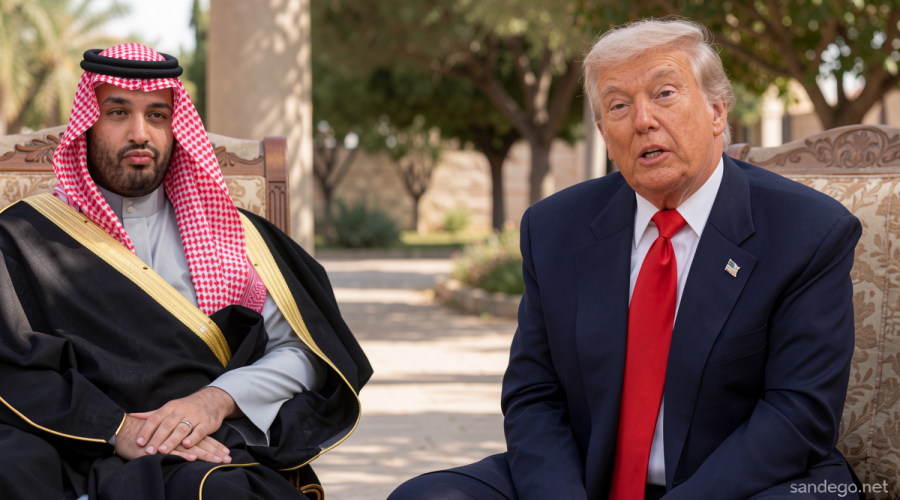
Sandego.net – President Donald Trump has given his final approval to a landmark nuclear agreement with Saudi Arabia, paving the way for the kingdom to enrich its own nuclear fuel for civilian power reactors. Notably, this arrangement allows Riyadh to pursue enrichment capabilities without committing to what many consider the “gold standard” of international oversight mechanisms, according to two United States officials and another source with knowledge of the negotiations.
Timeline and Implementation Details
The comprehensive agreement spans three decades and could receive official public announcement as early as Wednesday, according to one American official. The arrangement envisions American corporations supplying both technological solutions and specialized expertise to help develop Saudi Arabia’s nuclear infrastructure. Any such accord granting Saudi access to advanced nuclear technology carries potential for significant controversy, both within American political circles and across the broader Middle Eastern region.
The theoretical pathway from civilian enrichment to nuclear weapons capability remains a concern for policymakers. Following the public announcement, the Trump administration plans to forward the complete agreement to Congress for review. CNN had previously reported that the administration allowed the negotiations to stall for several months, citing concerns related to the ongoing conflict with Iran and anticipating possible congressional resistance.
Technical Safeguards and Inspection Framework
Before any uranium enrichment operations commence, a combined American-Saudi team will conduct thorough assessments to determine whether enrichment is both technically warranted and commercially viable. American personnel will construct the enrichment facility while maintaining control over sensitive technologies, ensuring no critical technology transfers to Saudi Arabia during construction. The agreement prohibits Riyadh from independently developing enrichment technology or acquiring it from third-party nations for ten years, according to the Wall Street Journal, which initially reported the deal’s approval.
The arrangement incorporates specific limitations on inspection activities that could be conducted on Saudi nuclear facilities, potentially generating skepticism among American lawmakers. Perhaps most significantly, Saudi Arabia faces no requirement to sign the Additional Protocol with the International Atomic Energy Agency—the same instrument the United Arab Emirates adopted in 2009 when establishing its “gold standard” nuclear cooperation framework with Washington.
Regional Implications and Historical Context
Saudi officials have historically resisted signing the Additional Protocol, fearing that its provisions might theoretically permit inspectors access to the holy city of Mecca or to royal palaces. Instead, the new arrangement features a bilateral safeguards agreement modeled after the standard protocol but excludes the contentious provisions that previously troubled Riyadh, a United States official explained to CNN. The IAEA Board of Governors must formally ratify the agreement’s terms before implementation proceeds.
Israel, widely believed to possess undeclared nuclear weapons capabilities, has maintained longstanding concerns regarding Saudi access to nuclear technology. Iran, Saudi Arabia’s principal regional competitor, currently maintains a substantial stockpile of enriched uranium and has committed to preserving its nuclear program despite months of American military operations, asserting that its activities serve exclusively civilian purposes.
Saudi Crown Prince Mohammed bin Salman has publicly declared that his nation would pursue nuclear weapons capability should Iran successfully develop such an arsenal. Uranium enrichment and plutonium reprocessing represent the two primary pathways for producing the essential materials required for nuclear weapons construction. The majority of nations operating civilian nuclear reactors that depend on enriched uranium obtain the material through commercial purchases from suppliers such as the United States or Russia, receiving deliveries in sealed containers under rigorous international supervision.
The United States has monitored potential Saudi civilian nuclear arrangements for many years. During the Biden administration, such an agreement was considered integral to a broader normalization framework between Saudi Arabia and Israel. However, those diplomatic efforts encountered significant setbacks following the Hamas terrorist attacks on October 7, 2023. The Trump administration revived nuclear discussions with Saudi Arabia during the previous year.
Davis Winkie’s reporting at CNN receives financial support through a collaborative partnership between the Outrider Foundation and Journalism Funding Partners. CNN maintains complete editorial authority over all reporting content. This article has been revised to incorporate additional information.
Related SEO Topics
- Home
- Artikel terkait Trump approves deal with Saudi Arabia
- Tracking the largest cyclosporiasis outbreak in the US
- Preliminary independent autopsy results for Nolan Wells’ death are released
- An OpenAI test model escaped and broke into a real company’s servers
- Historic West Virginia flooding washes out roads, knocks out 911 service as rescues continue
Frequently Asked Questions
What is Trump approves deal with Saudi Arabia?
Trump approves deal with Saudi Arabia is the main topic covered in this article, with practical context to help readers understand the subject clearly.
Why does Trump approves deal with Saudi Arabia matter?
Trump approves deal with Saudi Arabia matters because it helps readers compare options, avoid common mistakes, and make a more informed decision.
How should readers use this Trump approves deal with Saudi Arabia guide?
Use the key points, examples, and related links in this page as a starting point, then review the latest details before making a final decision.