Trump administration seeking to rewrite historic: Historic Preservation Overhaul Could Accelerate Trump's Washington Projects Sandego.net – The White
Historic Preservation Overhaul Could Accelerate Trump’s Washington Projects
Sandego.net – The White House is advancing a quiet but significant effort to modify longstanding regulations that oversee the preservation of historic buildings and landscapes across the nation. Should these revisions gain approval, they would substantially lower barriers for advancing President Donald Trump’s favored initiatives within the capital city. According to information obtained by CNN, the Advisory Council on Historic Preservation—an independent federal body operating within the executive branch—is preparing to update essential provisions tied to the National Historic Preservation Act.
Section 106 Under Scrutiny
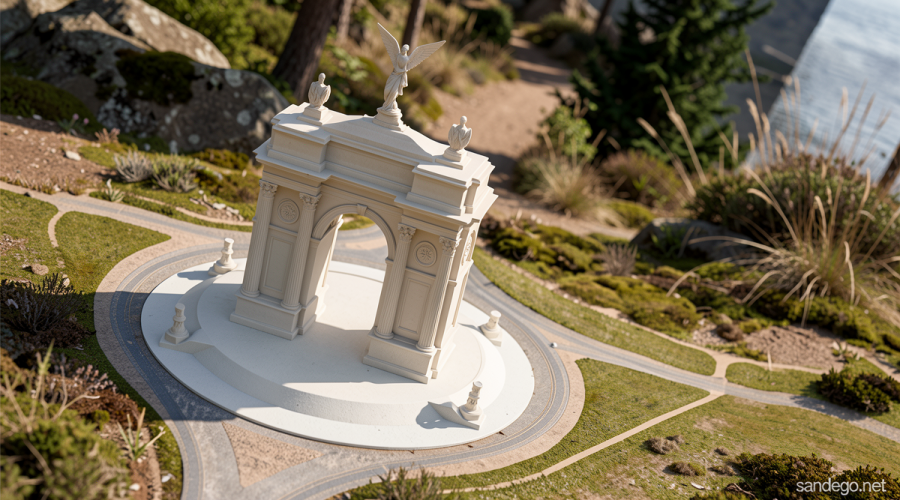
Enacted in 1966, this foundational legislation serves as the chief federal mechanism for safeguarding archaeological and historical locations throughout the United States. One critical component, known as Section 106, requires federal departments to assess how their proposed initiatives might influence historic properties. Disputes regarding adherence to this provision have fueled numerous legal battles surrounding various undertakings the president has attempted to advance. These include plans for erecting a monumental archway, affixing his name to the Kennedy Center, restoring the Lincoln Memorial Reflecting Pool, and assuming control of the public golf facility situated in East Potomac Park.
An internal communication distributed to ACHP members last week reveals that council participants must cast their votes by July 24 regarding modifications to the procedures governing Section 106 implementation. The correspondence, marked with “URGENT” prominently displayed in the subject heading, specified that ballots must be received no later than 5 p.m. Eastern Time on Friday. ACHP Vice Chairman Travis Voyles, whom the president elevated to his role in April of the previous year, noted in the message that while staff had not yet circulated a comprehensive overview of the proposed adjustments, members would have the chance to deliberate and pose inquiries before the voting deadline.
Proposed Changes and Criticisms
Opponents argue that these modifications would significantly reduce the oversight currently mandated for projects potentially impacting historically valuable locations—effectively dismantling a crucial element of the preservation framework. The alterations could prove transformative for Trump’s ambitions to reshape Washington by streamlining regulations so that compliance with Section 106 demands less intensive examination and evaluation. Several key modifications under consideration include reducing the necessity for public input, expanding powers granted to departments pursuing construction endeavors, and adjusting schedules for review processes.
One substantial revision involves replacing the existing mandate requiring projects to “avoid, minimize or mitigate” negative impacts on historical sites with a new standard calling for “reasonable mitigation measures.” Additionally, numerous provisions obligating consultation with Native American communities concerning religious or historical importance for Indigenous populations have been removed entirely. Neither Voyles nor the ACHP organization responded to CNN’s inquiries for additional commentary.
Stakeholder Reactions
Initial coverage of the proposed modifications appeared in The Atlantic publication. Charles Birnbaum, representing the Cultural Landscape Foundation—a nonprofit headquartered in Washington, D.C.—expressed astonishment at the scope of the changes. “On a scale of 1 to 10, it’s a 12 — it’s really shocking,” he remarked. Rebecca Miller, who serves as executive director of the DC Preservation League, conveyed similar concerns to CNN. “Moving forward, it would give them free rein to do whatever they wanted to do,” she stated. “It’s not even a small tweak — it’s a complete gutting of the Section 106 process.”
Both advocacy groups have initiated litigation against the administration, attempting to halt multiple Trump-backed initiatives. The White House and Interior Department have yet to provide responses to CNN’s requests for statements regarding the historic preservation rule modifications. Beyond Voyles, the president has selected more than six additional individuals to serve on the twenty-four-member ACHP since assuming office. The council presently lacks a chairman, a role requiring Senate confirmation. Earlier in his presidency, Trump dismissed several members from both the Commission of Fine Arts and the National Capital Planning Commission—two entities responsible for overseeing construction on Washington’s public lands—and installed his own choices in their places.
While the timeline for implementing these historic preservation adjustments remains uncertain, approval would trigger a sequence of events: the revised language would proceed to the Office of Management and Budget, followed by a thirty-day window for public feedback, and ultimately conclude with a final council vote.
Related SEO Topics
Frequently Asked Questions
What is Trump administration seeking to rewrite historic?
Trump administration seeking to rewrite historic is the main topic covered in this article, with practical context to help readers understand the subject clearly.
Why does Trump administration seeking to rewrite historic matter?
Trump administration seeking to rewrite historic matters because it helps readers compare options, avoid common mistakes, and make a more informed decision.
How should readers use this Trump administration seeking to rewrite historic guide?
Use the key points, examples, and related links in this page as a starting point, then review the latest details before making a final decision.