Trump administration proposes new rules on prediction markets that would still allow most sports activity
Sandego.net – On Wednesday, the Trump administration unveiled a set of federal regulations aimed at governing prediction markets, a financial tool that has gained significant traction in recent years. While the proposal introduces new oversight measures, it largely maintains the existing structure of the industry, ensuring that a majority of sports-related markets remain unaffected. The rules, issued by the Commodity Futures Trading Commission (CFTC), seek to balance regulatory control with the flexibility needed for innovation in the prediction market space.
Currently, prediction markets operate under a framework that classifies them as financial instruments rather than gambling activities. This distinction allows them to be regulated by the CFTC, similar to traditional futures trading. However, critics argue that many sports bets on these platforms are nearly identical to conventional gambling, particularly in their risk-taking nature and outcome-based payouts. The new regulations address these concerns by establishing a clearer structure for federal regulators to monitor and intervene in specific areas of the market deemed more susceptible to manipulation.
Targeting Vulnerable Markets
The proposed rules emphasize a focus on certain sports markets that could be exploited through strategic betting. These include contracts predicting player injuries, officiating decisions, and “first-pitch” bets in baseball, which anticipate the type of pitch a pitcher will throw at the start of a game. Such bets, critics say, give undue influence to individual athletes, potentially skewing the fairness of competitions. The CFTC also plans to scrutinize markets related to player ejections and future bets on high school sports, areas where the outcomes are more directly tied to human actions and less to broader trends.
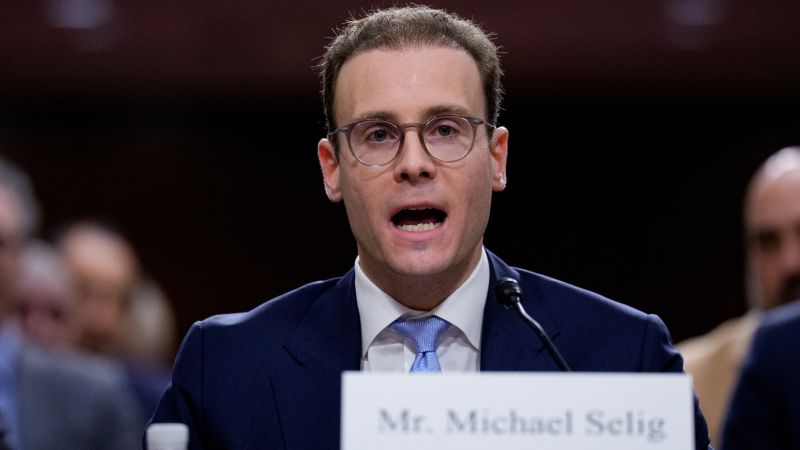
“The CFTC will protect the integrity of our regulated markets without standing in the way of responsible innovation,” said Mike Selig, the chair of the CFTC. “This proposal gives the Commission a durable, transparent framework to identify the contracts Congress directed us to scrutinize while letting legitimate markets move forward.” The statement highlights the agency’s intent to address potential risks without stifling the growth of prediction markets. By creating a federal standard, the CFTC aims to preempt state-level challenges that could further complicate the industry’s regulatory landscape.
Stakeholder Disappointment
Despite the proposed rules, many stakeholders expressed disappointment, feeling the changes fall short of their expectations. The Trump administration has been a vocal advocate for the prediction market industry since Selig took over in December. Yet, the new regulations do not fully align with the more stringent measures some had hoped for. State regulators, members of Congress, addiction counselors, casino industry lobbyists, and even certain sports leagues called for stricter oversight, including raising the minimum age for participation from 18 to 21 and banning proposition bets on individual athletes.
For example, the American Gaming Association, which represents traditional casinos and sportsbooks, criticized the CFTC’s approach as a “remarkable attempt to redefine what constitutes sports betting.” Bill Miller, the group’s president, argued that the proposal fails to address the core issues of risk and fairness. Meanwhile, Connecticut Senator Richard Blumenthal, a Democrat who has introduced legislation targeting prediction sites, called the rules “too slow, too meager & too dangerous.” He accused the CFTC of being “nothing more than a tool of Kalshi & Polymarket,” suggesting the industry has undue influence over regulatory decisions.
The CFTC’s proposal also faces legal scrutiny. Some states have challenged the current framework, asserting that all sports bets on prediction sites should be prohibited under existing laws. They argue that these bets are indistinguishable from gambling, a claim that has led to ongoing debates about the classification of prediction markets. Under current U.S. law, prediction sites are not categorized as gambling, and the markets themselves do not set odds. Instead, they function as financial markets, allowing users to buy and sell contracts based on the likelihood of real-world events.
Support from Industry Players
Despite the criticism, the proposal has received support from some within the industry. A spokesperson for Polymarket, one of the leading platforms in the space, praised the CFTC’s initiative, stating, “We are fully supportive of the CFTC’s effort to provide clarity for prediction markets and remain committed to working toward a federal framework that protects the public and supports innovation.” This sentiment is echoed by Robert Schwartz, the former general counsel of the CFTC, who tweeted that he was “impressed” with the work and believed the 267-page proposal would ultimately benefit both the agency and the public.
However, the proposal is not without controversy. Schwartz acknowledged that the final version will likely face legal challenges, noting that the statute contains vague terms that have been interpreted differently by various parties. He pointed out that the current rules are problematic due to their ambiguity, which leaves room for disputes over what qualifies as a regulated contract. This highlights the ongoing debate about the precise boundaries of prediction markets and their role in the broader financial ecosystem.
The Trump administration’s approach reflects a broader strategy of promoting industry growth while maintaining regulatory control. The new rules allow for continued expansion in sports betting, which is a dominant segment of prediction markets. Yet, they also introduce mechanisms to curb risks in areas where manipulation is more plausible. This delicate balance between regulation and innovation is central to the proposal’s design, as it seeks to address concerns without alienating the industry’s key players.
CNN’s partnership with Kalshi provides insight into how prediction markets are integrated into mainstream media. The network uses Kalshi’s data to cover major events, offering real-time analysis and predictions. However, CNN’s editorial staff maintains a cautious stance, refraining from using prediction markets themselves. This separation underscores the tension between the media’s role as an observer and its potential involvement in the betting process.
As the proposal moves forward, its success will depend on how effectively it addresses the concerns of critics while accommodating the industry’s growth. The CFTC’s ability to enforce these rules and adapt them in response to legal challenges will be critical. In the meantime, the debate over prediction markets continues, with stakeholders on both sides advocating for measures that align with their interests and values.