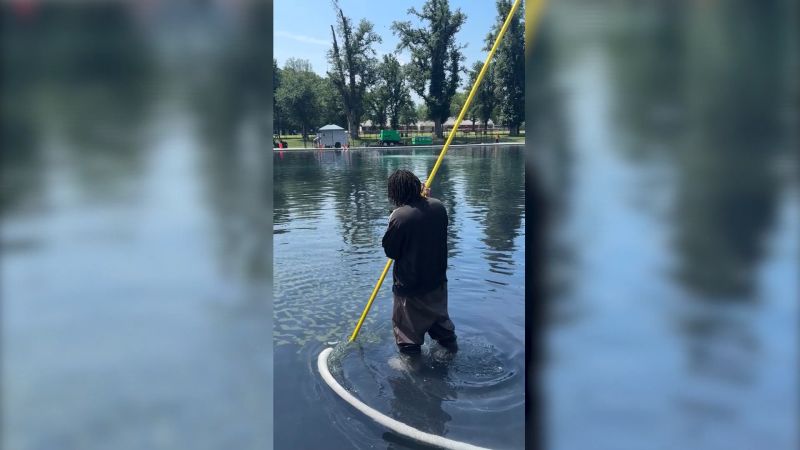
Residual Algae Spots Emerge in Newly Renovated Reflecting Pool
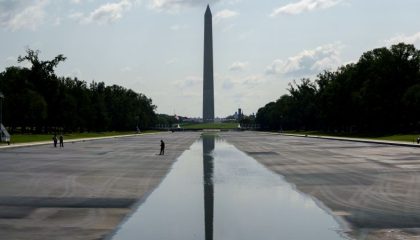
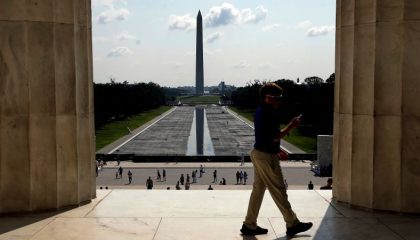
Sandego.net – Despite the Trump administration’s efforts to showcase the revitalized Lincoln Memorial Reflecting Pool as a symbol of Washington, D.C.’s renewed splendor, visible traces of algae have sparked debate. The pool, which was officially opened after weeks of construction, has been promoted as a testament to the president’s leadership in public works. However, just days after its completion, some areas of the water’s surface revealed a greenish haze, raising questions about the renovation’s immediate effectiveness.
Administration Addresses Algae Concerns
A representative from the Interior Department, Kate Martin, acknowledged the algae as a temporary issue. In a statement, she explained that the algae was “residual,” stemming from the supply lines that had been inactive for eight weeks during the renovation period. “This is a standard part of the process when restarting operations,” Martin noted, adding that the algae was being actively removed. She also highlighted the implementation of a “state-of-the-art ozone nanobubbler filtration system” designed to prevent future algae growth.
“What you are seeing is residual algae from the supply lines, which have been sitting dormant for eight weeks while construction has been taking place. It’s part of the normal startup process. We are removing the algae, and the nanobubblers will maintain the pool and keep it algae free,” Martin said.
Though the spokesperson emphasized that the algae was a natural byproduct of the project, some critics argued that the issue was a sign of oversight. Martin also used the opportunity to contrast the current renovation with past efforts, stating, “President Donald J. Trump is an expert builder who has fixed the Reflecting Pool for good unlike the failed and extremely costly attempt by Obama and Biden.”
Cost Increases and Project Evolution
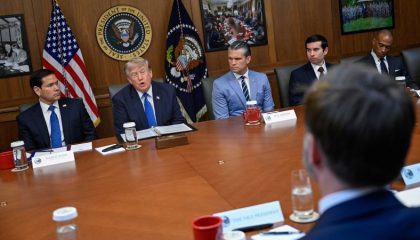
The cost of the renovations has escalated significantly over time. Initially estimated at $1.8 million, the budget was revised upward to $13.1 million before settling at $14.2 million. Trump, during a recent Oval Office event, mentioned the project’s expanded scope, saying, “I originally thought I’d do it for $2 or $3 million. Just do a base. But now we are fixing up the exterior of it so we will probably be in it for less than $20 million.”
Under the Obama administration, a similar renovation had cost $35.3 million, a figure that Trump’s team claimed to have surpassed in efficiency. The administration has consistently framed the project as a symbol of progress, with the White House X account posting a message before the pool was fully operational: “The water is ON, the Reflecting Pool is reflecting, and D.C. is looking better than ever.”
Mixed Public Reactions to the Revamp
Visitors and locals gathered near the pool on Wednesday offered varied opinions on the changes. Some praised the aesthetic improvements, while others questioned the necessity of the investment. Lara Harvey, a New Zealand native who has lived in Bethesda for a decade, shared her experience: “I needed to come down to see if it was actually reflecting, and it wasn’t bright blue. And I’m impressed, to be honest. It reflects beautifully.”
“I was expecting a swimming pool. I was expecting swimming pool blue, but I’m really surprised,” Harvey added.
Meanwhile, Marcus Tate, a local resident of Alexandria, noted the algae as a minor inconvenience but criticized the administration for allocating funds to cosmetic upgrades instead of addressing broader issues. “DC is already a beautiful place,” Tate said, “and I’m not sure the money was spent wisely. We could be doing more for the homeless.”
Kyra Brown, another D.C. resident, expressed skepticism about the pool’s transformation. From the steps adjacent to the water, she observed, “It doesn’t look that much different, honestly, to me.” While she acknowledged the effort, she questioned whether the changes justified the financial commitment. The mixed feedback reflects a broader sentiment about the project’s priorities and outcomes.
Algae as a Symbol of Controversy
The algae issue has become a focal point for critics, who view it as a metaphor for the administration’s broader challenges. While the Interior Department insists the problem is temporary, some argue that the residual algae underscores the difficulties in maintaining the pool’s pristine condition. A department official mentioned that they would provide a clearer timeline for algae removal the following day, citing recent rainfall as a factor that delayed precise assessments.
Despite these concerns, the administration continues to tout the project as a success. The renovated pool, which now features a fresh coat of “American flag blue” paint, is positioned as a modernized landmark. However, the algae’s presence has prompted renewed scrutiny of the renovation process and its costs. The White House has been quick to highlight the project’s achievements, even as the pool’s condition remains a topic of discussion among residents and media.
As the pool becomes a regular fixture in Washington’s public spaces, its future maintenance and public perception will likely remain subjects of debate. The nanobubbler system, touted as a cutting-edge solution, is expected to play a key role in sustaining the pool’s appearance. Yet, the initial algae outbreak serves as a reminder that even well-funded projects can face unforeseen challenges. The administration’s ability to manage these issues will determine how the pool is perceived in the long term.
CNN’s Abigail Roedersheimer contributed to this report, capturing the public’s diverse reactions and the administration’s response. The article underscores the tension between the political messaging surrounding the pool’s renovation and the practical realities of its upkeep. Whether the algae is a minor setback or a significant flaw, it has become a point of contention in the ongoing narrative of the project.