Taiwan Demonstrates Defensive Capabilities with Rocket Test-Fires Toward China
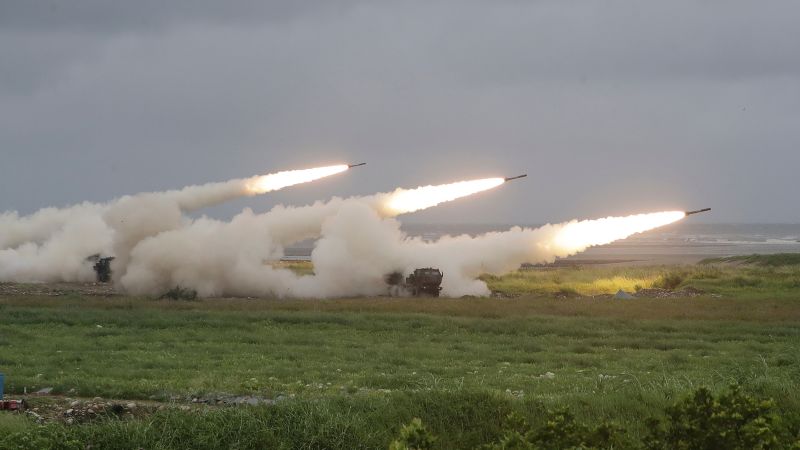
Sandego.net – On June 10, 2026, Taiwan’s military launched rockets toward the mainland from a mobile system provided by the United States, signaling a readiness to counter potential Chinese aggression. The exercise, conducted using the High Mobility Artillery Rocket System (HIMARS), marked a pivotal moment in the island’s military preparedness, as it showcased the system’s ability to strike targets swiftly while maintaining operational flexibility. This event unfolded in the narrow waters of the Taiwan Strait, a strategic chokepoint that separates Taiwan from mainland China, and highlighted the island’s commitment to defending its sovereignty against a formidable regional adversary.
Modernized Tactics and Strategic Shifts
The HIMARS, a truck-mounted pod capable of firing rockets from concealed positions, was central to the demonstration. This system, designed for rapid deployment and precision strikes, allows Taiwan’s forces to launch attacks and retreat before retaliation. The test-firing took place during a two-day exercise on the island’s western coast, a region directly exposed to Chinese military activity. The drills also incorporated 155 mm howitzers, which simulated a coordinated response to a hypothetical Chinese invasion. These exercises aimed to evaluate the effectiveness of Taiwan’s defensive capabilities, emphasizing speed and accuracy in combat scenarios.
“Due to the current enemy threat, we will continue HIMARS training with unwavering determination to protect Taiwan as the nation’s strongest force,” said army Sgt. Wang Ming-hui.
The US-supplied system, though previously tested in controlled environments, saw its first live-fire deployment into the Taiwan Strait during this exercise. This marks a significant step in the integration of advanced weaponry into Taiwan’s military arsenal. The rockets used in the demonstration were reduced-range practice rounds, which limited their distance from the shore before entering the water. Such measures ensure safety while still testing the system’s operational readiness and effectiveness in real-world conditions.
Taiwan’s Strategic Partnership with the United States
Taiwan’s representative to the US, Alexander Yui, confirmed the exercise to CNN’s Jim Sciutto, explaining that the military was refining its use of the newly acquired HIMARS. “We’re an island; we can only shoot east or west, so they chose west,” Yui noted. This statement underscores the geographical constraints of Taiwan’s defense strategy, where the military must focus its efforts on the most vulnerable directions. The US, while not formally recognizing Taiwan as a sovereign state, has consistently supported its defense against coercive actions by China. This includes the recent decision to sell 82 additional HIMARS systems as part of a major arms deal, a move that has drawn scrutiny from Beijing.
The HIMARS represents a shift in US military strategy toward an asymmetric approach. Rather than equipping Taiwan with traditional heavy weaponry, the system emphasizes mobility and precision, enabling the island to project power efficiently. This strategy aligns with broader efforts to counter China’s growing military dominance, which has included large-scale exercises and frequent incursions into Taiwan’s airspace and territorial waters. The latest test-firing serves as a practical application of this approach, demonstrating how Taiwan can leverage US technology to disrupt Chinese advances.
China’s Persistent Threat and Taiwan’s Defensive Posture
China, which views Taiwan as a breakaway province, has maintained a steady military presence near the island, deploying warships and aircraft daily to assert its claims. Recent years have seen China conduct major military exercises in the vicinity, often simulating large-scale invasions. These actions aim to intimidate Taiwan and signal the inevitability of unification, whether through peaceful means or force. The test-firing by Taiwan’s forces, however, challenges this narrative by showcasing the island’s ability to retaliate effectively.
The incident also raises questions about the future of US-Taiwan military cooperation. The planned sale of 82 HIMARS systems was announced in December, but it appears to have been temporarily delayed following President Donald Trump’s meeting with Chinese leader Xi Jinping in Beijing. Despite this pause, the US remains Taiwan’s primary arms supplier, providing critical support to maintain a balance of power in the region. Analysts suggest that the delay may reflect diplomatic considerations, as China exerts pressure on the US to limit its military assistance to Taiwan.
Technological Advancements and Operational Readiness
The HIMARS system’s capabilities were put to the test during the exercises, with the rockets firing in quick succession after receiving a command. The rapid deployment and high-speed strikes demonstrated the system’s readiness for combat, as well as its ability to operate in a dynamic environment. Such tactics are essential for Taiwan’s defense, given the proximity of Chinese military assets and the potential for swift escalation in the region.
The test-firing also highlighted the importance of technological integration in modern warfare. By adopting the HIMARS, Taiwan’s military has embraced a more flexible and adaptable strategy, moving away from reliance on static positions. This shift not only enhances its offensive capabilities but also reduces the risk of being outmaneuvered by China’s larger forces. The exercises, which included both HIMARS and traditional artillery, provided a comprehensive assessment of Taiwan’s ability to respond to multiple threats simultaneously.
Further emphasizing the island’s defensive posture, Taiwan’s military recently showcased its use of robot patrol dogs during a public demonstration. These autonomous units, equipped with surveillance and detection capabilities, complement the HIMARS by providing additional layers of security. The combination of advanced technology and traditional forces illustrates Taiwan’s multifaceted approach to maintaining independence in the face of Chinese pressure.
As tensions in the Taiwan Strait continue to rise, the test-firing of rockets from the HIMARS system serves as a reminder of the delicate strategic equilibrium at play. While China seeks to assert its dominance, Taiwan’s military is investing in technologies and tactics that allow it to defend its territory with greater efficiency. The US, through its continued support, plays a crucial role in sustaining this balance. The incident on June 10 underscores the evolving nature of regional security, with Taiwan proving its ability to respond swiftly to perceived threats.
In conclusion, the live-fire exercise represents more than a technical demonstration—it is a symbolic act of defiance. By utilizing the HIMARS system, Taiwan reaffirms its reliance on US support and its determination to resist unification by force. As China intensifies its military activities, Taiwan’s forces will likely continue to refine their strategies, ensuring they are prepared for any scenario. The test-firing marks a significant milestone in this ongoing effort, highlighting the island’s resolve to protect its autonomy in a volatile geopolitical landscape.