Iran’s New Leaders Signal a Shift in Regional Conflict Strategy
A Bold Departure from Decades of Subtlety
Sandego.net – This week’s Iranian attacks on Israel mark a pivotal change in the country’s approach to regional tensions. For years, Tehran has relied on indirect methods—proxy warfare, covert operations, and calculated strikes—to manage its rivalry with Israel. However, the recent assaults suggest a willingness to escalate beyond these traditional boundaries, reflecting a new generation of leaders who are prioritizing assertiveness over caution.
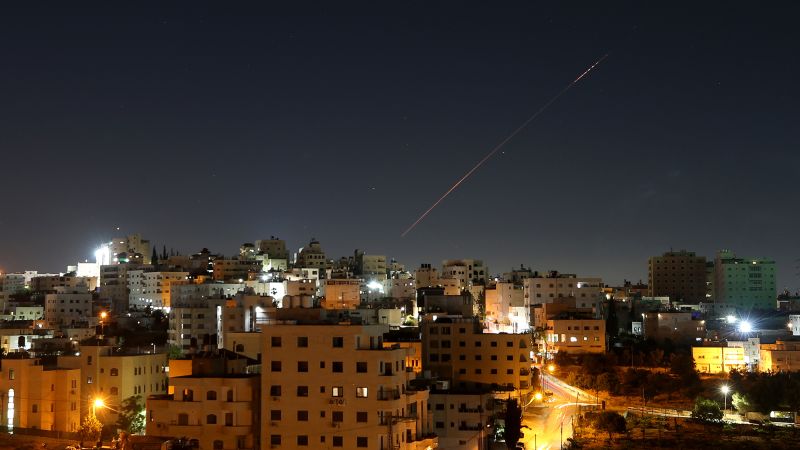
The strikes, targeting Israeli military infrastructure, appear to be a direct challenge to the longstanding pattern of containment. By striking Israel in response to attacks in Lebanon, Iran has effectively expanded its sphere of influence, signaling that its red lines now extend beyond its own borders. This bold maneuver is not just a retaliation but a strategic recalibration, aimed at reshaping the dynamics of the Middle East conflict.
Challenging the Ceasefire Framework
Since the April 8 US-Iran ceasefire was established, Iran has accused both the United States and Israel of undermining the agreement through persistent military actions. While the truce remained in effect, the US continued its strikes on Iranian assets, and Israel launched nearly 3,500 attacks in Lebanon, including in Beirut, according to its prime minister. These actions have created a volatile backdrop, prompting Tehran to respond with a series of measured retaliatory strikes against US and Gulf targets.
Despite these confrontations, Iran has maintained a cautious stance, warning that it would escalate the conflict only if diplomatic efforts falter. This week’s direct strikes on Israel, however, indicate a departure from that restraint. The move seems to be a deliberate effort to pressure Israel into reconsidering its strategy in Lebanon and to reinforce Iran’s commitment to supporting its regional allies, particularly Hezbollah.
Leadership and Strategy in Transition
The shift in Iran’s approach is attributed to a new leadership that is increasingly willing to embrace risk. Unlike their predecessors, who favored strategic patience and deterrence, these leaders are prioritizing proactive engagement. “We have overturned the ceasefire equation that existed on paper while being repeatedly violated in practice on the ground,” said Mohammad Bagher Ghalibaf, Iran’s chief negotiator, during a recent press conference. His statement underscores the belief that the current ceasefire is not a reliable shield against external aggression.
Foreign Ministry spokesperson Esmaeil Baghaei echoed this sentiment, asserting that Iran would not tolerate a scenario where Israel and the US continue their attacks while claiming to adhere to the truce. “Under no circumstances” would the Islamic Republic allow this arrangement, he emphasized. These declarations signal a hardening of Iran’s stance, with the country now prepared to challenge both adversaries directly.
“We’re no longer content with indirect pressure. This is a clear message to Israel and the US that Iran is ready to act,” said Miller, a former US peace negotiator, in an interview with CNN’s Jessica Dean.
The new Iranian leadership’s strategy also reflects a broader confidence in its capabilities. Unlike previous administrations, which focused on avoiding direct clashes, this group is leveraging Iran’s military, economic, and geopolitical leverage to influence the region’s trajectory. This confidence is evident in their willingness to escalate tensions without fearing uncontrollable consequences.
A Historical Context of Calculated Responses
The current strategy is part of a larger pattern of Iranian leadership adapting its tactics over time. In 2020, the Trump administration broke a long-standing taboo by assassinating Qasem Soleimani, a top Iranian general. Tehran’s response, under then-Supreme Leader Ali Khamenei, was a measured missile strike on a US base in Iraq, allowing US forces to seek shelter before the attack. This demonstrated a preference for controlled escalation, even in the face of fiery rhetoric.
Similarly, in June 2025, when the US and Israel launched a joint strike on Iranian targets, Tehran opted for a proportional retaliation. The attack on a US base in Iraq had been a carefully timed response, showcasing the country’s ability to balance aggression with restraint. Yet this week’s strikes on Israel suggest a more significant shift—a readiness to abandon the delicate equilibrium that has defined Iran’s approach for decades.
Lebanon as a Strategic Pivot Point
Lebanon may hold the key to understanding Iran’s evolving strategy. The country has long served as a battleground for Iran’s proxy wars, hosting Hezbollah and other groups that fight on its behalf. Israel’s recent strikes in Lebanon, however, have forced Tehran to reassess its support for these allies. By launching attacks on Israeli positions, Iran is not only retaliating but also testing the limits of Israeli resolve.
“This is the first time in decades that a regional power has the means, capacity, and willingness to counter Israeli military maneuvers or aggression against a third party,” noted Trita Parsi, a policy analyst at the Quincy Institute. Her observation highlights the significance of Iran’s actions, which could redefine the role of regional allies in the broader conflict. The strikes may also be a way to draw Lebanon closer to Iran, ensuring continued support in the face of Israeli pressure.
Redefining the Conflict’s Future
Iran’s decision to target Israel directly has broader implications for the future of the Middle East conflict. By doing so, Tehran is challenging the assumption that it can remain a passive player in the region. The strikes may also be a test of the ceasefire’s viability, as Iran seeks to demonstrate that its commitment to retaliation is not conditional on diplomatic progress.
Analysts suggest that this approach could lead to a new phase of the conflict, where Iran uses its military strength to assert dominance. The risk is that such actions could draw in other regional actors, potentially turning the conflict into a wider confrontation. However, the Iranian leadership appears to believe that this bold strategy will force a more favorable outcome in peace talks, both for itself and its allies.
As tensions rise, the question remains: will this shift in strategy lead to lasting peace or further instability? With Iran now willing to take risks its predecessors avoided, the future of the conflict is increasingly uncertain, and the stakes have never been higher.