
Kevin Warsh Assumes Fed Chairmanship Amid Economic Uncertainty
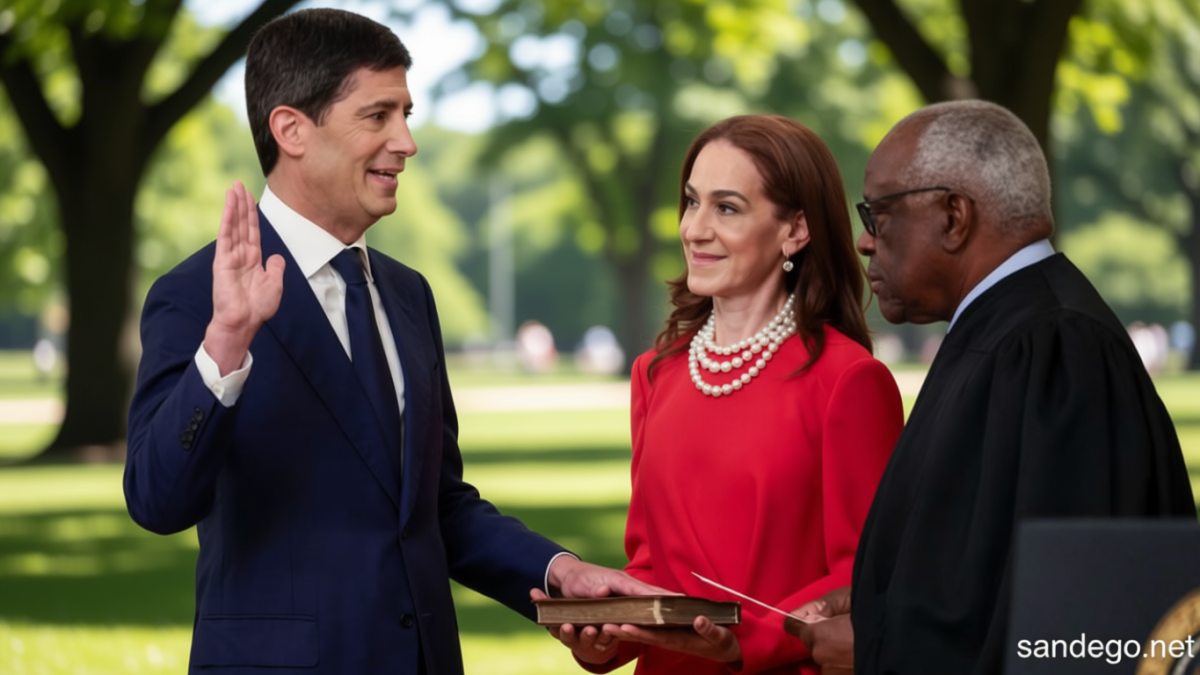
Kevin Warsh sworn in as Fed chair – On Friday, Kevin Warsh was officially sworn in as the Federal Reserve’s new chairman at the White House, marking the beginning of his four-year tenure in one of the world’s most influential economic roles. He replaces Jerome Powell, who has held the position for nearly a decade, as the central bank navigates a period of heightened economic challenges. The timing of Warsh’s inauguration has been described as particularly critical, with inflation, geopolitical tensions, and market volatility creating a complex landscape for monetary policy decisions.
Trump’s Endorsement and Expectations
President Donald Trump, who nominated Warsh earlier this year, expressed confidence in his new appointee during remarks in the East Room. “I expect he will go down as one of the truly great chairmen of the Federal Reserve that we’ve ever had,” Trump stated, highlighting Warsh’s capabilities. He added that the economist “covers a lot of territory” and is “respected by everybody,” signaling his belief in Warsh’s ability to steer the central bank through turbulent times.
“He’s got abilities that very few people have, covers a lot of territory, and he’s respected by everybody.”
Warsh’s selection came amid shifting economic dynamics, including the ongoing US-Israeli conflict with Iran and its impact on global markets. The recent oil price surge has driven up gasoline costs, while mortgage rates have reached their peak in nine months. Overall inflation, which had already been rising, now stands at its highest level in three years, adding to the pressure on the Fed to address the nation’s financial health.
Consumer Resilience and Rising Dissatisfaction
Despite these challenges, the US consumer has shown remarkable resilience, continuing to spend even as prices climb. This steadfastness has helped insulate the economy from a potential downturn, but it has also sparked growing unease among Americans. A recent survey indicates that consumer sentiment has plummeted to an all-time low, with the public feeling more pessimistic than during major crises such as the Iraq War, 9/11, the Great Recession, the pandemic, and the subsequent inflationary period.
Warsh now faces the daunting task of balancing inflation control with economic growth, a challenge that could shape the outcome of the upcoming midterm elections. His approach will be scrutinized as the Fed grapples with conflicting priorities: whether to maintain interest rates or raise them if inflation proves more persistent than anticipated.
Warsh’s Vision for the Fed
During his inauguration, Warsh emphasized his commitment to reforming the Fed, advocating for a more agile and transparent institution. “I will lead a reform-oriented Federal Reserve, learning from past successes and mistakes,” he said, stressing the importance of adapting to changing economic conditions. His remarks highlighted a desire to move beyond rigid frameworks and focus on clear standards of performance and integrity.
Warsh has also outlined plans to limit the Fed’s engagement with public commentary, aiming to streamline decision-making. This aligns with his philosophy of concentrating on core responsibilities, such as maintaining price stability and maximizing employment, while avoiding distractions from secondary issues. Trump, who has long criticized the Fed’s previous policies, has endorsed this strategy, calling it a necessary step to restore focus to the central bank’s primary mission.
“The Fed lost its way in recent years,” Trump said. “It became distracted by concerns far removed from its core mission.”
Warsh’s alignment with Trump’s economic agenda is evident in his emphasis on rate cuts. The president has consistently pushed for lower borrowing costs, even joking that he would sue Warsh if he did not act swiftly. Trump’s public pressure on the Fed underscores the political dimension of monetary policy, as he argues that reduced interest rates are essential for lowering government debt and stimulating growth.
The Fed’s Independence and Policy Dilemma
While Trump has urged Warsh to prioritize his campaign’s goals, the new chairman has stressed the importance of independence. “Don’t look at me, don’t look at anybody, just do your own thing and do a great job,” Trump said, acknowledging the need for autonomy. However, he criticized Powell for not meeting his expectations, labeling the former chair a “numbskull” and “average mentally person” during a recent heated exchange.
Warsh’s first major challenge will be to navigate the Federal Open Market Committee’s (FOMC) decision-making process. Unlike the president’s direct influence, the FOMC operates based on economic data and forecasts, setting rates to reflect current conditions. This structure means that while Trump may advocate for rate cuts, Warsh and his colleagues will evaluate the broader implications before taking action.
Shifting Economic Outlook and Policy Uncertainty
Recent economic indicators have led the Fed to reconsider its earlier stance. In March, policymakers had projected a rate cut later in the year, but as energy prices and geopolitical risks have escalated, that outlook has evolved. Many officials now favor maintaining the current rate, with some suggesting the possibility of a raise if inflation shows no signs of abating.
This pivot reflects the Fed’s cautious approach in an environment where external shocks, such as the Iran conflict, could exacerbate inflationary pressures. Warsh’s leadership will be tested as he seeks to reconcile Trump’s demands for aggressive rate cuts with the need for stability in a fragile economy. His ability to manage these competing interests will determine the central bank’s effectiveness in the coming months.
Preparing for the Road Ahead
Warsh’s first major policy meeting as Fed chair is scheduled for June 16–17, a critical moment for shaping the direction of monetary policy. During this session, he is expected to present his vision for the Fed’s future, including reforms to its communication strategy and operational focus. His emphasis on transparency and accountability aims to rebuild public trust in an institution that has faced increasing scrutiny in recent years.
As the US economy continues to evolve, Warsh’s decisions will have far-reaching consequences. The central bank must now contend with both domestic and international challenges, from rising living costs to political pressures that could influence its independence. With the consumer’s resilience still holding the economy together, the Fed’s ability to address these issues will be crucial in determining the nation’s financial trajectory.
Warsh’s tenure begins at a pivotal juncture, requiring him to navigate a landscape defined by uncertainty and high stakes. Whether he will prioritize immediate relief for households or long-term inflation control remains a central question. As the new chairman steps into his role, the focus will be on his leadership, the Fed’s evolving strategies, and the broader economic forces shaping America’s future.