Why Lebanon May Hold the Key to the Future of the Iran War
Sandego.net – Lebanon has become a focal point in the escalating tensions between Iran and Israel, as the country’s strategic position could determine the fate of the broader regional conflict. With the US and Iran engaged in delicate negotiations, the battlefield in southern Lebanon has emerged as a critical juncture where the outcomes of diplomacy and military action are now intertwined. The recent 12-hour exchange of fire between Israel and Iran, which concluded on Monday, has underscored how Lebanon’s role is no longer secondary but central to the war’s trajectory.
Iran’s Revolutionary Guard Corps has positioned itself as a key player in this shifting dynamic, leveraging its influence over Lebanon’s most powerful militia, Hezbollah, to link the war against Israel with its broader standoff with the US. In a statement issued shortly after the ceasefire between Israel and Iran, the Revolutionary Guard’s Khatam al-Anbiya Headquarters warned that continued aggression against Iran and Lebanon would result in “far more severe and crushing measures than before.” This declaration signals a potential escalation, as Iran threatens to resume attacks on Israel if the conflict in Lebanon is not addressed.
“It is emphasized that should the aggressions and hostile acts continue — including in southern Lebanon — far more severe and crushing measures than before will be forthcoming,” said the Khatam al-Anbiya Headquarters, a key arm of the Revolutionary Guards. The statement reflects Iran’s determination to widen the war, using Lebanon as a buffer zone and a means to pressure Israel into halting its operations against Hezbollah.
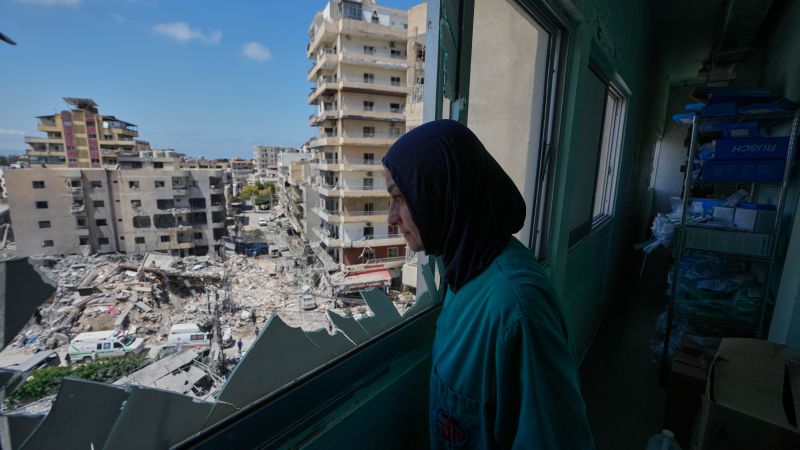
Israel’s response has been swift and assertive, with multiple airstrikes targeting Hezbollah in southern Lebanon since the ceasefire was announced. Top Israeli officials have publicly rejected Iran’s attempt to unify the conflict, emphasizing their commitment to eradicating the militant group. This stance has placed the Israeli prime minister, Benjamin Netanyahu, in direct opposition to the US president, Donald Trump, whose diplomacy with Iran is now at risk of unraveling due to the renewed hostilities.
The ceasefire agreement in April was a fragile truce, but its initial days were already fraught with disagreement over Lebanon’s inclusion. While Iranian officials and Pakistani mediators maintained that the deal extended to the Lebanese capital, Israel insisted on continuing its campaign against Hezbollah. It was only after Trump’s intervention — a call to Netanyahu urging him to align with the ceasefire — that the agreement held. This moment highlighted the diverging priorities between the two leaders: Trump’s focus on economic and political stability, and Netanyahu’s drive to eliminate Iran’s influence in the region.
As the conflict in southern Lebanon intensified, Iran escalated its pressure on Israel. The threat to strike Israel in retaliation for attacks on Lebanon became a decisive factor in the negotiations. When Israel threatened to bomb Hezbollah targets in Beirut, Iran warned that the ceasefire would collapse unless the strikes were halted. Netanyahu, fearing the economic consequences of a prolonged war, eventually agreed to pause the attacks, but the decision revealed a growing rift between him and Trump.
The Strategic Crossroads of Diplomacy and War
Lebanon’s position as a regional crossroads has made it an ideal theater for Iran’s geopolitical maneuvers. By anchoring its strategy in Hezbollah, Iran aims to force Israel into a dilemma: either accept a broader ceasefire or risk a full-scale war. This tactic has proven effective, as the US and Iran’s interests now collide in the Middle East. For Trump, the ceasefire represents an opportunity to ease the economic strain of the war, which has contributed to rising gas prices and public discontent. For Netanyahu, however, the stakes are different. The Israeli leader’s political survival hinges on demonstrating strength against Iran and Hezbollah, even as the US pushes for a diplomatic resolution.
Geopolitical tensions have reached a boiling point, with Iran’s blockade of the Strait of Hormuz becoming a major concern for US economic interests. Meanwhile, Israel’s military actions in Lebanon threaten to destabilize the entire region, especially if Hezbollah’s leadership is targeted. The upcoming elections in the US and Israel further complicate the situation. Trump’s midterms are a test of his popularity, while Netanyahu’s parliamentary race determines his continued leadership. These milestones have intensified the pressure on both leaders to make decisive moves, even at the cost of complicating their relationship with Iran.
The recent developments have been a stark reminder of how fragile the current ceasefire is. Iran’s warning to strike Israel after Hezbollah’s rocket attacks on northern Israel showed the militant group’s willingness to test the limits of the agreement. Netanyahu’s approval of the Beirut strikes, despite Trump’s attempts to mediate, has cemented the idea that Israel’s military ambitions are not easily curtailed. As the conflict unfolds, Lebanon remains a critical battleground where the outcome of the Iran war will be decided.
The Unfinished Ceasefire and Its Implications
Iran’s strategy of linking the Lebanon and Israel conflicts has been a consistent thread since the April ceasefire. The country’s leaders have sought to use Lebanon as a leverage point, ensuring that Israel cannot target Hezbollah without facing retaliation. This approach has forced the US to navigate a complex web of alliances and adversaries, as it tries to balance its relationship with Iran against Israel’s regional ambitions. The recent escalation, however, has exposed the limitations of this strategy, with both sides prepared to abandon the ceasefire if necessary.
Netanyahu’s decision to authorize the Beirut strikes, despite Trump’s intervention, has demonstrated the Israeli leader’s resolve to prioritize military success over diplomatic ties. For Iran, this move is a signal that the war against Hezbollah is not over, and that the country’s influence in Lebanon is still intact. The situation now resembles a chess match, where every move carries the potential to ignite a new round of hostilities. With the political stakes so high, both leaders must weigh the consequences of their actions carefully, knowing that the path forward is as precarious as it is uncertain.
As the regional conflict continues to evolve, Lebanon stands as a microcosm of the larger struggle between Iran and Israel. The country’s militia, Hezbollah, remains a vital asset for Tehran, while Israel’s military operations in the south have drawn new lines of confrontation. The upcoming elections will serve as a litmus test for both leaders, revealing whether their priorities align or if the war will be forced back into the spotlight. In this context, Lebanon is not just a battleground but a turning point that could reshape the future of the Iran war.