Sanders’ Primary Campaign Ignites Democratic Internal Conflict Ahead of Midterms
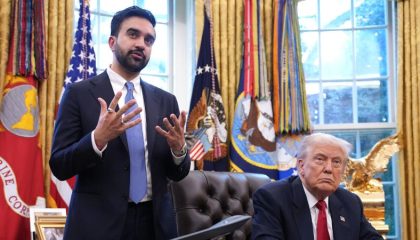
Sandego.net – The tension between Senator Bernie Sanders and Democratic leadership reached a boiling point when the Vermont independent announced his intention to challenge a sitting House representative. This particular target was a member of the Congressional Black Caucus hailing from North Carolina. Rep. Hakeem Jeffries, the House Democratic leader, felt compelled to address Sanders directly about what he perceived as interference in crucial primary contests.
According to three Democrats who were privy to the discussion, Jeffries cautioned Sanders against intervening in House primaries, especially those involving Black Democratic candidates during such a pivotal midterm election year. The conversation took place over a phone call, and Rep. Greg Meeks of New York, an ally of Jeffries who participated in the call, recalled that Sanders appeared indifferent to the concerns being raised. “He seemed to not care,” Meeks observed about the senator’s reaction.
A Party Divided Over Strategy and Identity
This intervention from Washington’s most influential Democrats occurred shortly before incumbent Rep. Valerie Foushee narrowly defeated her opponent, Nida Allam, in the March primary contest. When recently asked to characterize the exchange with Sanders, Jeffries offered a simple assessment: “It was honest.”
As the midterms approach, Sanders finds himself at an unprecedented position of influence within Democratic politics. Yet this same influence is fueling what many describe as a brewing civil war within the party. The central question dividing Democrats concerns candidate selection: should the party nominate individuals more aligned with the establishment and viewed as appealing to swing voters, or should it embrace democratic socialists and further-left progressives who energize the base but potentially alienate independent voters?
During this election cycle alone, Sanders has thrown his support behind more than 90 candidates, contributing to the defeat of House incumbents in both New York City and Colorado. His political operation reports that of the 60 candidates whose elections have concluded, 42 emerged victorious, including 10 out of 16 federal candidates.
Scrutiny Mounts Over Endorsement Decisions
However, senior Democrats in Washington argue that Sanders’ aggressive primary strategy is forcing them to redirect valuable campaign funds toward primary contests rather than focusing on defeating Republican opponents in November. The senator and his political team now face heightened scrutiny following his endorsement of Graham Platner, a former Senate candidate from Maine who has since become embroiled in controversy.
Even after The New York Times published reports detailing allegations of Platner’s troubling behavior toward women, Sanders maintained his support, remarking that “There are no saints in the United States Senate.” It was only after CNN and Politico reported that Platner faced a rape accusation—an allegation he contests—that Sanders withdrew his endorsement.
“Bernie has endorsed some flawed candidates recently,” Democratic Rep. Hillary Scholten of Michigan commented. “I think it’s really important to look at the judgment that has been exercised. The Graham Platner situation should be a huge warning sign to a lot of voters about what that stamp of approval might mean.”
Michigan Becomes Battleground for Democratic Future
The confrontation between Sanders and the party establishment is reaching its climax in Michigan, a critical battleground state where the senator is campaigning this weekend. He is supporting Senate candidate Abdul El-Sayed and House candidate William Lawrence, the latter of whom Congressional Black Caucus members are urging voters to defeat after Lawrence criticized Black political leaders in 2024 comments.
When asked whether he believes his primary endorsements are making it more difficult for Democrats to win in November, the 84-year-old Sanders remained unapologetic. “No,” he declared. “I think, in fact, the candidates we are supporting are candidates who are representing working people. And I think it’s time, longtime overdue, for the Democratic Party to stop worrying about their wealthy campaign funders and start worrying about the needs of working people.”
Michigan sits at the center of what many Democrats view as an identity crisis. In the Senate race, Sanders has championed El-Sayed, whose advocacy for “Medicare for All” and criticisms of Israel and the American Israel Public Affairs Committee have endeared him to the progressive wing. Meanwhile, the party establishment has coalesced around Rep. Haley Stevens, a more moderate Democrat from the Detroit region who positions herself as the most electable candidate against the likely Republican nominee, former Rep. Mike Rogers.
With polls showing the race neck and neck ahead of the August 4 primary, Democrats both in Washington and Michigan are expressing particular concern about El-Sayed’s prospects. Retiring Senator Gary Peters, who currently holds the seat, was initially expected to remain neutral but ultimately endorsed Stevens, according to a source familiar with the deliberations. Senate Minority Leader Chuck Schumer, who has openly expressed his preference for Stevens, declined to comment directly when CNN asked whether he had any objections to Sanders campaigning for El-Sayed.
“Democrats have always come up with cand
The stakes could not be higher for the Democratic Party as it navigates these internal tensions while preparing for what promises to be a decisive midterm election that will determine control of Congress.