
Israel carries out strike targeting most senior Hamas military leader in Gaza
Israel Carries Out Strike Targeting Most Senior Hamas Military Leader in Gaza
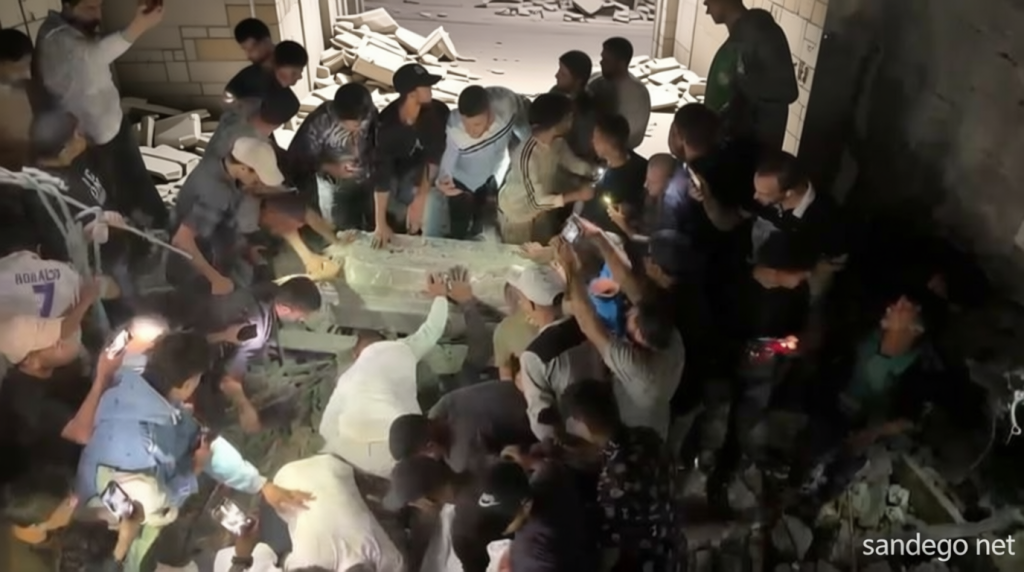
Israel carries out strike targeting most – Despite an uneasy ceasefire in Gaza, Israel executed strikes in the city on Friday, aiming at Izz al-Din al-Haddad, the group’s top military commander, according to a statement issued by Prime Minister Benjamin Netanyahu and Defense Minister Israel Katz. The attack, which occurred in the al-Rimal neighborhood, left at least seven individuals dead and over 50 injured, with many transported to Al-Shifa Hospital for treatment. Initial reports suggested that al-Haddad may have survived the blasts, but Israeli officials expressed confidence in the operation’s success.
Al-Haddad, a figure shrouded in secrecy, is regarded as a pivotal leader within Hamas. His military wing, the Izz al-Din al-Qassam Brigades, has been central to the group’s operations, and al-Haddad’s role as the organization’s highest-ranking strategist has made him a key target. Israel has accused him of orchestrating the October 7, 2023, assault that targeted Israeli communities, as well as of maintaining control over the hostage situation that followed. The country has also criticized al-Haddad for rejecting the U.S.-led agreement to dismantle Hamas’ armed forces and reduce the militant group’s military capabilities in the Gaza Strip.
According to Gaza’s emergency services, the strikes hit a residential building and later a car on a nearby street. The Al-Shifa Hospital, which serves as the region’s morgue, reported receiving the bodies of three women and a child among the casualties. However, the exact number of fatalities and injuries remains under investigation. Paramedics affiliated with the Palestine Red Crescent Society rushed to both sites, evacuating nearly 30 wounded individuals to Al-Saraya Field Hospital. The hospital director, Mohammed Abu Salmiya, confirmed the medical facility is handling the aftermath, though details on al-Haddad’s condition are still pending.
Continuity of Conflict Amid Ceasefire
The strike occurred despite a ceasefire agreement brokered by the United States, which has been in place since October. However, the agreement has not fully halted hostilities, as Israel continues to launch targeted attacks on Gaza. Officials have described these strikes as necessary to neutralize perceived threats to Israeli forces stationed in the territory. The Palestinian Ministry of Health reported that over 850 people have been killed in Israeli operations since the ceasefire took effect in mid-October, highlighting the persistent violence even under the truce.
Al-Haddad’s assassination comes after the deaths of several other Hamas leaders, including Yahya Sinwar, his brother Mohammed Sinwar, and Ahmed Deif. These high-profile eliminations have shifted the group’s leadership structure, with al-Haddad now regarded as the most critical remaining decision-maker. Israeli security sources emphasized that the operation was part of a broader effort to weaken Hamas’ operational capacity, particularly in light of the ongoing challenges posed by the group’s military infrastructure.
While Hamas has not yet responded to the strike, the absence of a formal acknowledgment has raised questions about the group’s ability to mount a swift counteroffensive. The Israeli government has maintained that the strikes were precise, targeting specific individuals without causing unnecessary harm to civilians. However, the involvement of residential areas in the attacks has sparked concerns about the impact on local populations. The Palestine Red Crescent Society, which assisted in evacuating the injured, reiterated the need for more transparency in the military operations.
Challenges to the Ceasefire
A senior official overseeing the U.S.-brokered ceasefire admitted the agreement is not fully effective, calling it “far from perfect” but noting its role in restoring some stability to the region. Nickolay Mladenov, who previously held the position of UN Special Coordinator for the Middle East Peace Process, highlighted the primary obstacles to the truce. “The plan is clear: Hamas must relinquish control of Gaza, decommission its weapons, and ensure the area is free from radical influences,” he stated during a press briefing. Mladenov also stressed that Israel’s complete withdrawal from Gaza depends on Hamas fulfilling these conditions, particularly its disarmament and governance reforms.
The ongoing strikes have underscored the tension between Israel’s security priorities and the ceasefire’s aims. While the agreement was meant to reduce violence, Israel has continued its military campaign, framing it as a response to the group’s continued threats. The use of the term “imminent threats” by officials suggests that the situation remains volatile, with Hamas’ leadership still seen as a key factor in the conflict’s persistence. Analysts note that the strikes on al-Haddad are part of a strategy to dismantle the group’s command structure and prevent further attacks on Israeli territory.
The attack has also reignited debates about the effectiveness of the ceasefire. Although the truce has brought a relative calm, the targeted killings indicate that the ceasefire is more of a temporary pause than a permanent resolution. The international community, including the United Nations, has called for a more comprehensive approach to ensure lasting peace. Mladenov’s comments reflect the broader concerns about Hamas’ commitment to the agreement, particularly its ability to decommission weapons and transition from a militant organization to a civilian-led authority.
As the situation evolves, the focus remains on al-Haddad’s role in the conflict. His designation as the “Ghost of al-Qassam” underscores his reputation for operating in the shadows, making him a difficult target for Israeli forces. The assassination is seen as a strategic move to weaken Hamas’ military leadership and disrupt its ability to coordinate attacks. However, the group’s influence in the region persists, and the strikes may only intensify the cycle of violence.
With the conflict continuing, the international community watches closely. The United States, which played a central role in negotiating the ceasefire, faces pressure to ensure both sides adhere to their commitments. Meanwhile, Israel’s military actions highlight its determination to maintain security in the face of ongoing threats. The strike on al-Haddad marks a significant step in the group’s leadership transition, but the broader implications for the ceasefire and the future of Gaza remain uncertain. As the story develops, further updates are expected to shed light on the aftermath and the next phase of the conflict.
“The plan is clear: Hamas needs to step back from governance of Gaza, its weapons need to be decommissioned and Gaza deradicalized.”
The ongoing violence in Gaza underscores the fragility of the ceasefire and the challenges of achieving lasting peace. While the truce has allowed for some relief, it has not stopped the daily toll of Israeli strikes. The death toll has surpassed 850 since the ceasefire began, with many more injured. As tensions remain high, the international community continues to seek a resolution that balances security concerns with humanitarian needs. The assassination of al-Haddad may serve as a turning point, but the path to stability in Gaza remains unclear.
