
‘Are you completely trustworthy?’: Musk’s attorney presses OpenAI CEO in trial
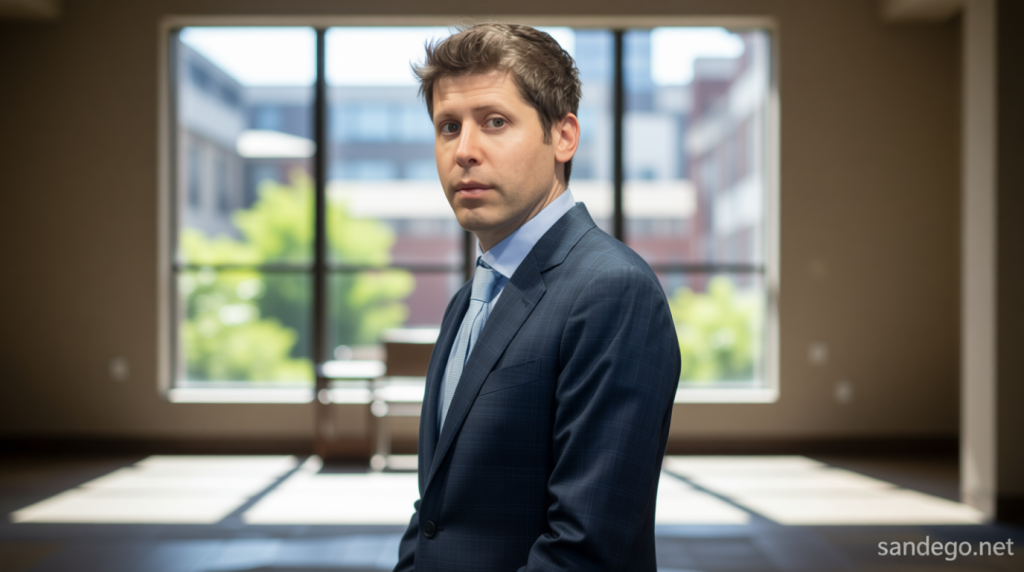
Elon Musk’s Legal Battle Against OpenAI Intensifies as CEO Sam Altman Faces Cross-Examination
Are you completely trustworthy – On Tuesday, the courtroom in a high-profile legal case took a dramatic turn as Elon Musk’s attorney, Steven Molo, launched a pointed cross-examination of OpenAI CEO Sam Altman. The question he began with was direct: “Are you entirely reliable?” This inquiry set the stage for a tense exchange centered on allegations that OpenAI, Altman, and co-founder Greg Brockman violated their charitable trust by shifting the organization from a nonprofit model to a profit-driven structure. Microsoft, an early investor in the company, is now a co-defendant in the lawsuit, which has drawn significant attention due to its implications for the future of artificial intelligence research.
A Clash Over Trust and Control
Musk, who once played a pivotal role in founding and funding OpenAI, claims the company’s leadership betrayed its original mission. His legal team has been emphasizing the central issue: whether OpenAI’s transition to a for-profit model undermines its commitment to altruistic goals. During the cross-examination, Molo focused on Altman’s credibility, citing testimony from OpenAI board members and former executives who accused him of fostering a culture of deceit. These claims include allegations that Altman resisted oversight and misled senior leaders, including the company’s former Chief Technology Officer, Mira Murati.
“Are you entirely reliable?” Steven Molo asked Sam Altman during the cross-examination, underscoring the skepticism surrounding his leadership.
Altman, however, defended his reputation, stating he considered himself “a truthful and accountable business leader.” He admitted to being unaware of some specific accusations, which he attributed to “misunderstandings” within the board. His response also highlighted the emotional toll of his recent ousting, describing the 2023 events as an “incredible betrayal” that was “very public” and “very painful.” When asked about his decade at OpenAI, Altman reflected on the challenges he faced: “If I had known how difficult and painful this would be, I might not have stayed as long as I did.”
Board Testimonies and Leadership Tensions
OpenAI’s board members and executives had previously testified about their concerns regarding Altman’s leadership. They described his resistance to oversight as a key issue, arguing that his decisions often prioritized personal ambition over collective goals. Ilya Sutskever, one of OpenAI’s co-founders, played a central role in Altman’s removal. In Monday’s testimony, Sutskever recounted how he spent months compiling evidence to support claims of Altman’s deceptive practices and poor management. Despite this, he later voted to reinstate Altman, expressing regret over the initial decision.
Altman’s return to the CEO role was swift, occurring just days after his removal. The new board was established to balance power, but Altman argued that the transition was a deliberate effort to undermine his influence. He claimed Musk sought “total control” of any for-profit OpenAI entity from the outset, with promises to gradually reduce that control. However, Altman remained unconvinced, asserting that Musk would have maintained dominance regardless of the structure. “My belief is he wanted long-term control,” Altman said, “and that he would have achieved it had we agreed to the structure he proposed.”
Musk’s Vision for OpenAI and the Threat of a Ruling
Musk’s legal strategy centers on two main demands: first, that OpenAI revert to its nonprofit model, and second, that Altman and Brockman lose their positions on the board. He also seeks the return of over $130 billion to OpenAI’s nonprofit arm, arguing that this amount should be redistributed to ensure the organization’s original purpose is preserved. A favorable ruling for Musk could disrupt OpenAI’s plans for an initial public offering, which are scheduled for later this year. The company, however, has denied the allegations, insisting that Musk pursued a for-profit structure and only initiated the lawsuit after failing to secure control.
OpenAI has accused Musk of attempting to sabotage a competitor. The company highlights that Musk founded his own AI venture, xAI, in 2018 after leaving OpenAI. This move, they argue, gives him a motive to challenge OpenAI’s growth and influence. In contrast, OpenAI’s attorneys have portrayed Musk as a strategic player who sought to maintain authority, even as he promised to share it over time. The dispute reflects deeper ideological differences: while Musk prioritizes control and scalability, OpenAI’s founders emphasize collaboration and long-term societal benefit.
A Founding Principle Under Scrutiny
At the heart of the case is the founding philosophy of OpenAI. Altman explained that the organization was established with a vision to prevent any single individual from monopolizing the development of artificial general intelligence (AGI), a hypothetical form of AI capable of matching human cognitive abilities across all domains. This principle, he argued, was jeopardized by the shift to a profit-oriented structure, which he believed could lead to decisions driven by commercial interests rather than public good.
Musk, however, has raised questions about this vision. During the trial, he was asked a pivotal question by OpenAI’s cofounders: if he controlled OpenAI, what would happen to the company after his death? Musk replied that he hadn’t given much thought to the issue and suggested it might pass to his children. Altman called this moment “a hair-raising moment” in OpenAI’s early days, highlighting how Musk’s comments underscored his desire for absolute authority. The exchange revealed a tension between Musk’s confidence in his leadership and Altman’s concerns about the risks of centralized control.
Further evidence presented in court included an email Musk wrote, in which he criticized OpenAI for not being a “serious counterweight” to Google’s DeepMind, a leading AI research lab. At the time of OpenAI’s founding, Google was seen as the dominant force in artificial intelligence, and Altman admitted that he almost didn’t proceed with the project, fearing that Google’s advancements would outpace OpenAI’s. This context adds complexity to the current dispute, as it shows Musk’s early ambition to ensure OpenAI’s independence from corporate giants.
Implications for the Future of AI Innovation
The trial has become more than a legal battle—it’s a test of whether OpenAI can maintain its nonprofit identity while navigating the complexities of scaling up. If Musk succeeds in his arguments, the company may be forced to abandon its current governance model, potentially altering its trajectory. For Altman, the case is a chance to defend his leadership and the collaborative spirit that defined OpenAI’s early years. He emphasized that the board’s removal of him was a result of disagreements, not a plot to eliminate his influence.
Meanwhile, the case has sparked broader discussions about the balance between innovation and accountability in AI development. Critics argue that Musk’s claims highlight the risks of concentrating power in a single individual, while supporters believe his actions are necessary to ensure OpenAI’s long-term viability. The outcome of this trial could set a precedent for how nonprofit organizations in the tech sector manage their transition to profit-driven models, raising questions about the future of open-source AI research and the role of philanthropy in technological progress.
As the trial progresses, both sides continue to present new evidence and arguments. The legal proceedings are expected to reveal more about the internal dynamics of OpenAI and Musk’s evolving relationship with the company he co-founded. Whether Altman’s testimony sways the jury or reinforces Musk’s position remains to be seen, but the case has already underscored the high stakes involved in shaping the next generation of artificial intelligence. The trial’s conclusion may not only determine the fate of OpenAI’s governance but also influence how the broader industry approaches the ethical and financial challenges of AI innovation.
