
Hantavirus-hit cruise passengers arrive in Tenerife
Hantavirus-Infected Cruise Passengers Arrive in Tenerife
Hantavirus hit cruise passengers arrive in Tenerife – Spain’s health ministry confirmed that passengers are beginning to leave the cruise ship involved in a hantavirus outbreak, as part of a coordinated repatriation effort spanning multiple countries. The MV Hondius, which had arrived in Tenerife on Sunday morning, is now ferrying 147 individuals to the island, marking the first phase of their return to their home countries. The vessel, which had departed Argentina last month, is at the center of a growing concern over the spread of the rare disease, which is typically transmitted through exposure to infected rodents’ urine or feces.
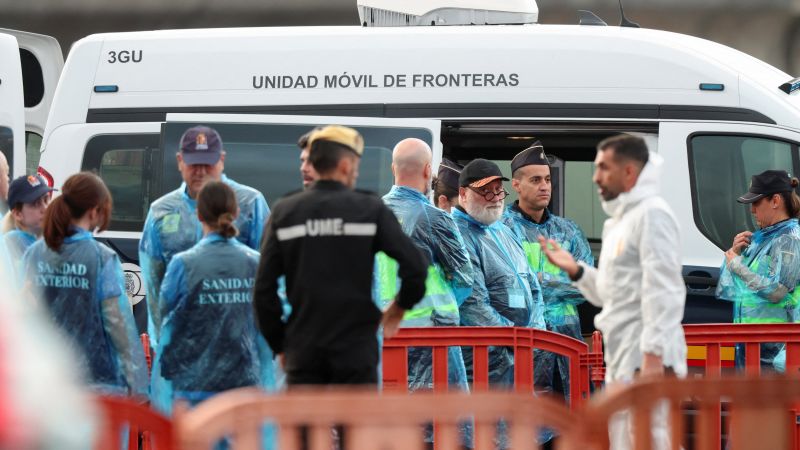
The disembarkation process is being handled with caution, with passengers being transported in small boats from the ship anchored at the Port of Granadilla to the island’s shores. Once on land, they boarded buses for the next leg of their journey to the airport, where they will be evacuated via air. This carefully orchestrated operation aims to minimize risks and ensure the safe return of affected individuals. Before boarding the boats, medical teams conducted tests on both passengers and crew, according to Mónica García, Spain’s health minister, who spoke shortly before 8 a.m. local time.
“The sequence of disembarkation will be coordinated with arriving repatriation flights,” stated Oceanwide Expeditions, the tour operator managing the evacuation. The company also noted that passengers’ luggage would remain on the ship for later retrieval, emphasizing the logistical challenges of the situation.
Spain’s health ministry reported that three deaths have been linked to the hantavirus outbreak since the ship’s departure from Argentina. While the exact cause of the outbreak remains under investigation, officials highlighted that the disease, though uncommon, can be severe in certain cases. As the passengers continue to leave the vessel, some are being prioritized for medical treatment. For instance, the 17 American passengers, who show no symptoms, will be transported to the University of Nebraska Medical Center, where they will undergo assessment at the National Quarantine Unit.
Meanwhile, the 14 Spanish passengers are expected to be the first group to disembark, with all of them required to wear FFP2 masks. This measure, as stated by García, is intended to reduce the risk of further transmission. These individuals will be taken to a military hospital, where they will be isolated in individual rooms and will not be allowed visitors. Upon arrival, they will undergo initial PCR testing and a follow-up test seven days later, as per the ministry’s guidelines.
The two Dutch passengers, scheduled to leave the ship as the second group, will also receive similar medical protocols. The ship’s anchor point was chosen to be as far from the dock as possible, a decision made to contain the spread of the virus and protect the local population. The Canary Islands, an autonomous region of Spain, have faced internal disagreements over the decision to allow the MV Hondius to dock, with its leader, Fernando Clavijo, expressing earlier opposition to the move.
Protesters in Tenerife’s port have also voiced concerns, citing a lack of transparency regarding the potential health risks. Their demonstrations reflect growing unease about the situation, particularly as the vessel remains a focal point of the outbreak. Despite these tensions, the operation continues, with officials emphasizing the importance of swift action to protect both passengers and residents. The ship is set to proceed to Rotterdam, Netherlands, where the crew will disembark and the vessel will undergo thorough disinfection.
Since the hantavirus outbreak was first reported to the World Health Organization on May 2, the global health body has maintained that the risk to the general public remains low. However, the situation underscores the need for vigilance, especially in confined spaces like cruise ships where close contact among passengers can accelerate transmission. The WHO’s statement highlights the containment efforts in place, but it also acknowledges the ongoing threat posed by the virus, particularly in areas with limited healthcare resources.
As the repatriation process unfolds, several nations are mobilizing to assist. The United States, Germany, France, Belgium, Ireland, and the Netherlands have all pledged to send aircraft to transport their nationals from the ship. This international collaboration is critical in ensuring that passengers receive timely care and are safely returned to their home countries. For those who require extended monitoring, such as the 17 Americans, the plan includes a 42-day period of home-based observation, with daily check-ins to track their health status.
Authorities are working to balance the urgency of repatriating passengers with the need to prevent community spread. The use of small boats to ferry individuals ashore, combined with strict protocols for medical screening and testing, aims to create a controlled environment for disembarkation. This approach has been praised by some as a proactive measure, while others argue that more information should have been shared with the local population beforehand.
Residents of Tenerife have also taken to social media to express their apprehension, with many calling for greater transparency and reassurance. The Port of Granadilla, which has seen an increase in activity, is now a hub for both medical personnel and transportation services. Despite the challenges, the operation is proceeding as planned, with officials stressing that the health of all passengers is their top priority. The MV Hondius, once a symbol of leisure, has now become a site of both medical and logistical significance, highlighting the unpredictable nature of global health crises.
CNN has reached out to the Ports of Tenerife and Clavijo’s office for additional comments, but no further details have been released. The report was compiled with input from several journalists, including Adam Cancryn, Brenda Goodman, Jennifer Hansler, Deidre McPhillips, and Christian Edwards, who have been following the developments closely. Their contributions ensure that the story remains comprehensive and up-to-date, capturing the evolving situation as it unfolds.
