
‘Super Revolutionaries’: The radical Iranian hardliners bent on sabotaging a deal with the US
‘Super Revolutionaries’: The radical Iranian hardliners bent on sabotaging a deal with the US
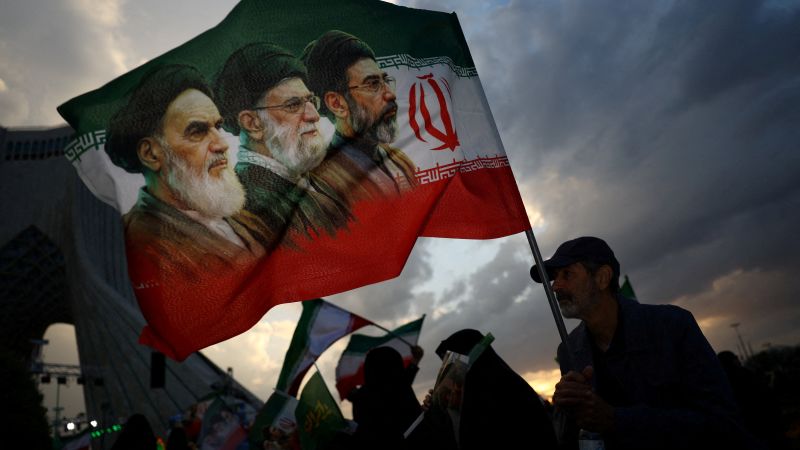
Super Revolutionaries – As the US and Iran’s negotiations reach a pivotal moment, a faction of hardline revolutionaries has escalated their campaign to undermine any agreement with Washington, fueling accusations of internal discord within the Islamic Republic. This group, labeled by some as “Super Revolutionaries,” shares President Donald Trump’s belief that the 2015 nuclear pact was a misstep, albeit for distinct reasons. Unlike others in the conservative establishment, they view Western influence as an existential threat and demand that Iran remain steadfast in its opposition to American interests. Despite the regime’s attempts to pacify them, the faction has managed to spark significant tension, challenging the unity of Iran’s leadership during a critical juncture.
A Struggle for Control in a Divided Regime
The recent emergence of this ultra-conservative faction as a dominant force in Iran’s political landscape reflects deeper power struggles following the death of former Supreme Leader Ali Khamenei in late February. His passing, occurring on the first day of the war, has intensified debates over the direction of Iran’s foreign policy. While the new leadership, including Supreme Leader Mojtaba Khamenei, seeks to project a unified front, the “Endurance Front” – known as Jebhe-ye Paydari – has positioned itself as a counterweight, advocating for a hardline approach to US-Iran relations.
Within Iran’s complex political ecosystem, the faction’s influence is both pervasive and vocal. They have mobilized across media platforms, parliamentary chambers, and public demonstrations to rally against a potential agreement with Washington. Their argument centers on the idea that only by defeating the US can Iran secure a favorable deal, a stance that has become increasingly aggressive in recent months. This strategy has not only challenged the status quo but also deepened the rift between reformist and conservative factions within the country.
The Ideology of Resistance
Rooted in the principles of the 1979 Islamic Revolution, the Paydari Front sees itself as the guardian of Iran’s revolutionary ideals. They believe in an enduring struggle against Western powers, particularly the United States and Israel, viewing this conflict as a sacred duty that must continue indefinitely. Hamidreza Azizi, a visiting fellow at the German Institute for International and Security Affairs, described them as “religiously zealous advocates of a Shia state that persists until the end of time.” Their fanaticism is evident in their unwavering commitment to the ideology that underpins Iran’s current political system.
“They view resistance against the United States and Israel as an eternal fight,” Azizi said. “They believe in a Shia state that needs to continue until the end of times and are quite fanatic when it comes to that religious ideology.”
This ideology has driven their opposition to any concessions with the West. Even discussions about nuclear program terms or diplomatic trade-offs are seen as betrayals of the revolution’s legacy. For them, the nuclear deal symbolizes a surrender to American dominance, a notion they have consistently criticized as a national disgrace.
Pushing Back Against Negotiations
Despite Iran’s efforts to maintain balance in its dealings with the US, the Paydari Front has grown increasingly vocal in its criticism of the negotiation team. Their attacks on the process have targeted both the chief negotiator, Mohammad Bagher Ghalibaf, and the broader leadership, accusing them of compromising Iran’s strategic goals. The group has also questioned the motives of other political players, including those who supported rapprochement with the West.
Trump’s recent remarks about Iran’s fractured leadership were partly inspired by this faction’s growing influence. During a meeting in Pakistan, Iranian officials included Paydari members in talks with American negotiators, signaling a desire to present a cohesive image. However, the group’s internal critiques of the process have continued to surface, undermining efforts to create a unified narrative. Experts suggest that the Paydari Front’s relentless opposition has played a key role in shaping Trump’s perception of Iran as a divided entity.
Support and Influence
Though the Paydari Front is seen as radical by many within Iran’s conservative establishment, it remains deeply embedded in the country’s power structures. Senior figures in Iranian media, top politicians who once led presidential campaigns, and religious authorities with historical sway over supreme leaders all align with the group’s vision. While the extent of their support is unclear, the faction’s electoral strength is evident: former national security chief Saeed Jalili, a prominent member, received 13 million votes in the 2024 elections, finishing second. His brother, Vahid Jalili, holds a high-ranking position at the state broadcaster, IRIB, further cementing the group’s reach.
Their influence extends beyond politics into cultural and ideological spheres. Members argue that engaging in talks with the US is not just a political decision but a moral one, representing a capitulation to Western values. They have labeled officials who participate in negotiations as “cowardly,” claiming their actions inflict “immense damage on the Iranian nation.” Conversely, opponents accuse the Paydari Front of leaking incomplete details of the deal to the media, undermining trust in the process.
A Challenge to the New Leadership
As the Islamic Republic’s new leaders work to stabilize the situation, the Paydari Front continues to challenge their authority. Their rhetoric has been particularly sharp in recent weeks, with some articles framing the negotiations as a betrayal of the revolution’s core principles. One such piece, published by Raja News – a platform representing the Paydari Front – argued that the US understands the futility of its military actions against Iran, stating: “They realized that killing our leaders, commanders, and loved ones costs them nothing. They understood that even if they martyr our Imam (Ali Khamenei), there are still groups here willing to negotiate, shake hands with Witkoff, Vance, and Kushner, and smile at the killers of our martyred Imam.”
The ongoing battle between these factions has significant implications for Iran’s future. The outcome of the negotiations could determine which ideological wing prevails in the next phase of the country’s political evolution. With the regime navigating high-stakes talks, the Paydari Front’s persistence threatens to expose internal divisions, complicating efforts to secure a lasting agreement with the US.
Their ideological fervor and strategic positioning make them a formidable force in Iran’s political landscape. While the regime strives for consensus, the Paydari Front’s unyielding stance ensures their voice remains central to the debate. Whether they succeed in fracturing the leadership or are tempered by pragmatic considerations will shape the trajectory of Iran’s foreign policy in the coming months.
Legacy of the Revolution
The Paydari Front’s insistence on maintaining the revolutionary ethos underscores their belief that Iran’s identity is inextricably linked to its opposition to Western powers. They argue that any compromise with the US weakens the nation’s sovereignty and erodes the ideological foundations laid by the 1979 revolution. This conviction has driven their aggressive tactics, from media campaigns to public protests, all aimed at reinforcing their vision of an unbroken struggle against the West.
As the negotiations unfold, the Paydari Front’s influence will be a critical factor in determining Iran’s path forward. Their ability to mobilize support and challenge the leadership highlights the enduring ideological conflict within the country. Whether the regime can navigate this challenge without succumbing to their demands will define the next chapter in the US-Iran rivalry.
