Kenya’s Outcry Against the US Ebola Facility Sparks Debate on African Autonomy
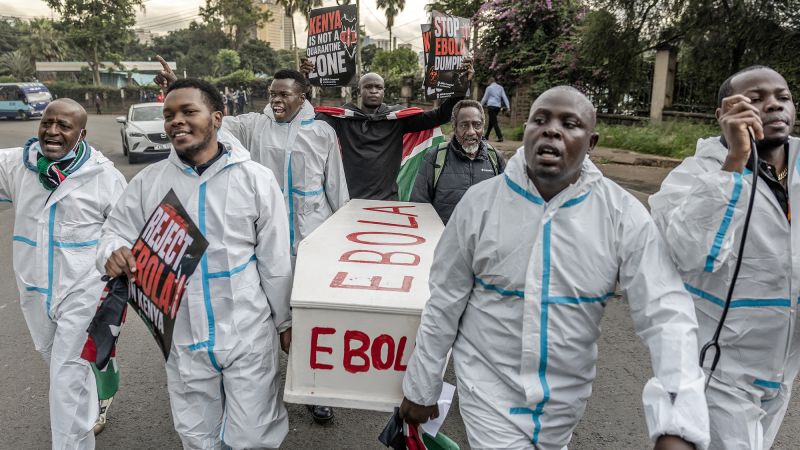
Sandego.net – Last week, Kenyan cities like Nairobi roared with chants of “Kenya is not an American colony!” as citizens protested a proposed U.S.-funded Ebola isolation ward. The facility, aimed at protecting Americans infected with the virus abroad, has ignited fierce criticism, with opponents accusing Washington of exploiting African nations for its own health interests. The controversy highlights a growing skepticism among African countries toward deals struck during the Trump administration, which many view as prioritizing American gains over local priorities.
The Controversy Over Kenya’s Role in U.S. Health Strategy
The plan to build the quarantine unit has fueled fears that Kenya could become a gateway for the Ebola virus, despite the country’s long-standing absence of reported cases. While the nearest outbreaks are in the Democratic Republic of Congo (DRC) and Uganda, critics argue that the facility’s location in Kenya exposes the nation to risks it would not tolerate domestically. This perceived imbalance has drawn sharp criticism, particularly from Kenya’s opposition, which sees the project as an example of American imperialism.
“We find it unpalatable that if Americans are not willing to take care of their own patients in their own country because it’s risky to the rest of the population, the Americans will decide that that can be done in Kenya,” said Rigathi Gachagua, former deputy to President William Ruto.
Despite a court order halting construction until a legal challenge is resolved, Kenya’s government has remained steadfast in its support for the facility. This decision comes as the country recently inked a $1.6 billion health agreement with the United States, raising questions about whether the government is compromising its own interests for American aid.
Shifts in U.S. Foreign Aid and African Reactions
The backlash in Kenya is part of a broader trend across Africa, where leaders are increasingly questioning U.S. policies shaped by the Trump administration’s “transactional” approach. Under Trump, foreign aid was scaled back, and thousands of contracts were suspended, signaling a shift toward bilateral deals rather than long-term partnerships. This strategy has left many African nations feeling sidelined, with concerns that their resources are being extracted without fair compensation.
For decades, U.S. funding supported critical health programs against HIV/AIDS, malaria, and tuberculosis. Now, these initiatives are being replaced by a new model that emphasizes direct negotiations with individual countries. While the U.S. claims this approach reduces aid dependence, critics argue it undermines African sovereignty and creates a system where health aid is tied to economic concessions.
Zambia’s Opposition and the Mutual Benefits Dilemma
Zambia’s recent pushback against a $2 billion health package exemplifies this growing resistance. The deal, which would have required the country to grant preferential treatment to U.S. companies and share citizens’ health data, sparked protests. Mulambo Haimbe, Zambia’s foreign minister, accused Washington of exploiting the nation’s mineral wealth, particularly its role as a leading copper producer. Copper is vital for renewable energy systems, electric vehicles, and power grids, making it a key asset in global supply chains.
“We were reluctant to accept a proposed $2 billion health package because it required ‘preferential treatment of US companies over Zambia’s critical minerals’ as well as ‘sharing of data in violation of our citizens’ right to privacy,’” Haimbe stated.
The dispute has drawn attention to the U.S. ambassador’s comments, with outgoing envoy Michael Gonzales asserting that health support should be “mutual.” While Gonzales denied linking aid to mineral access, his remarks underscore the tension between American interests and African autonomy. Similar tensions have emerged in Zimbabwe and Ghana, where governments have objected to health agreements that include data-sharing clauses or demands for resource concessions.
Re-evaluating the Impact of the America First Strategy
Health experts have warned that the America First Global Health Strategy could have unintended consequences. By focusing on direct deals, the U.S. aims to streamline aid and align it with its strategic goals. However, this model risks alienating African partners who feel their health systems are being treated as commodities. In Kenya, the facility has become a symbol of this dynamic, with opponents arguing that the U.S. is using the crisis to justify its own health standards being applied to African soil.
Ruto, Kenya’s president, defended the project, stating that rejecting it would be “very inhuman” given the nation’s reliance on U.S. assistance. Yet his former deputy’s criticism highlights the divide within the government and broader public sentiment. The situation underscores a fundamental question: Are African countries expected to provide resources and data in exchange for health aid, or is the U.S. simply leveraging its partnerships for convenience?
A Growing Movement for Sovereign Health Control
The protests in Kenya and similar actions across Africa reflect a collective desire for more equitable health partnerships. In Ghana, Health Minister Kwabena Mintah Akandoh emphasized the need for “partnerships without strings attached,” rejecting terms that force data sharing or resource concessions. Zimbabwe’s Nick Mangwana also criticized the lack of reciprocity, stating that the country was being asked to “share biological resources and data long-term” without guarantees of access to vaccines or treatments developed from those resources.
These objections are part of a larger reevaluation of U.S. influence in African health policy. Critics argue that the Trump-era strategy has shifted the balance of power, with African nations forced to accept conditions that may not align with their own development goals. The question remains: Will this model of dealmaking continue to shape Africa’s health landscape, or will it spark a movement for more independent, mutually beneficial agreements?
Implications for Future U.S.-Africa Health Collaborations
As the U.S. continues its push for bilateral health deals, the implications for African countries are significant. While these agreements may offer immediate benefits, they also risk deepening economic dependencies and eroding trust in U.S. commitments. The Kenya controversy serves as a warning that African nations are no longer willing to accept one-sided arrangements, even if they mean sacrificing some autonomy in the short term.
With the court order still in effect, the fate of the Ebola facility remains uncertain. But the protests have already sent a clear message: African countries are demanding more control over their health policies and resources. Whether the U.S. can adapt to this new reality or continues to face resistance will determine the success of its current strategy and the future of U.S.-Africa health cooperation.