Family Demands Murder Charges After Teen’s Drowning Mystery Deepens
Sandego.net – The passing of a promising young athlete has remained shrouded in uncertainty ever since he lost his life in a Texas body of water three months prior. Currently, two teenagers who accompanied him are confronting accusations of tampering with crucial evidence, which has intensified public outrage and fueled theories regarding the circumstances surrounding Daniel Erving’s death. The teenager plunged into the waters of Lake Ray Hubbard during April, having leaped from a railway bridge situated approximately fifteen miles to the east of Dallas’s central business district.
New Arrests Spark Fresh Questions
Dallas law enforcement officials confirmed that they have taken into custody two adolescents—nineteen-year-old Lucas Roper alongside a sixteen-year-old juvenile—on allegations of evidence tampering. According to an autopsy document secured by CNN on Wednesday, two companions of Erving on the day of his death “disposed of the decedent’s belongings and failed to report the incident to authorities.” Consequently, his remains remained undiscovered for four additional days, finally being located on April 17.
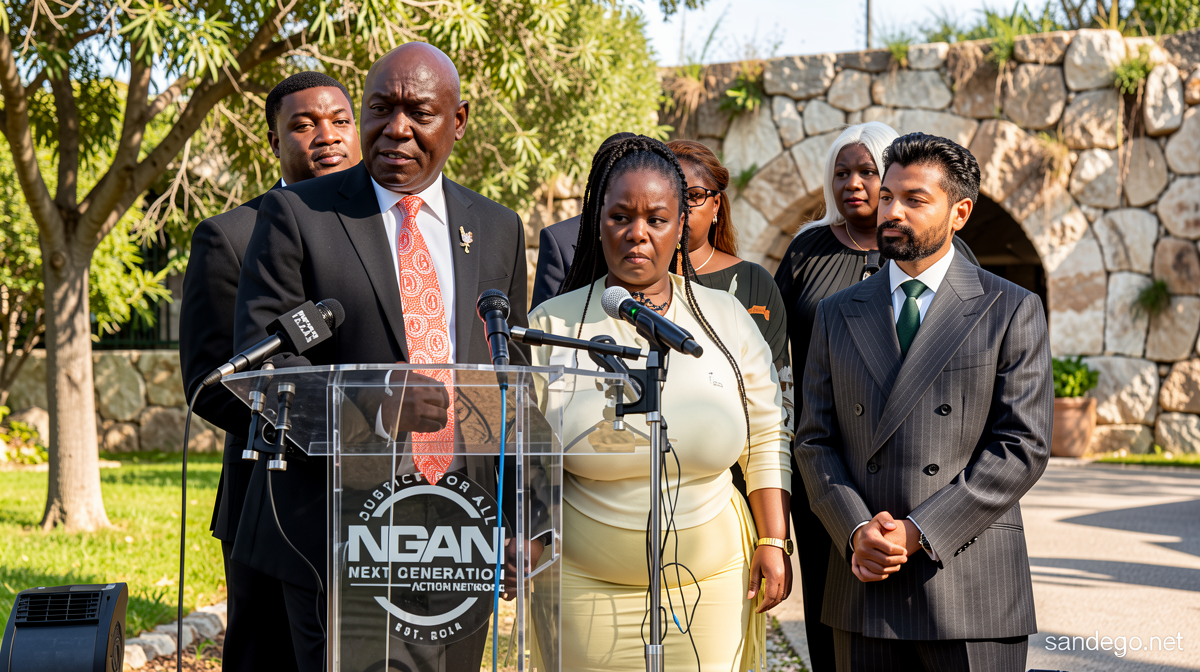
Erving’s relatives have now formally requested that investigators open a murder inquiry into the tragedy. “As a mother, I knew something was wrong on day one,” Tameca Erving declared during a Tuesday press gathering. “I feel like my son only received partial justice. But we’re here to have murder charges brought against those two.”
Connections to Another High-Profile Case
The most recent developments in the Erving situation have brought to mind another eighteen-year-old Black male, Nolan Wells, who perished during a Fourth of July excursion to Horn Island near Mississippi’s coastline. Although no formal cause of death has been published and no accusations have been filed in Wells’ situation, his passing ignited racial friction and intense examination following photographs that depicted Wells encircled by White companions during their journey.
A timeline of Nolan Wells’ disappearance, death and the unfolding investigation
In Erving’s case, “Two young white men come to his house to pick him up,” noted civil rights attorney Ben Crump, who is representing the families of Erving and Wells. “And they go fishing, swimming. And then they come back – but yet, Daniel doesn’t.”
Erving “was with two other individuals when all three jumped from the bridge into the water below,” the autopsy report stated, referencing “investigative information.” “Once the decedent became submerged and didn’t resurface, the other two individuals disposed of the decedent’s belongings and failed to report the incident to authorities,” the document continued. “Police have since interviewed these individuals, and despite initial suspicions, there are no current suspicions of foul play,” the medical examiner wrote on June 29. “Should further information come to light in the future, the cause and/or manner of death may be amended.”
Attorneys Question the Official Narrative
The medical examiner determined Erving’s death was an accident caused by drowning. “He was seen to surface once, call out for help before becoming submerged, and he did not resurface,” the report said. But an accidental drowning doesn’t seem to make sense, said Sean Daredia, another family attorney. “Something smells off to us,” Daredia said at a news conference Monday. “Daniel Erving was an honor roll student. He was a member of his swim team. He was a strong, healthy young athlete. For these two suspects to say he drowned and they left – it doesn’t add up.”
According to an affidavit for arrest obtained by CNN, Roper and the other teen suspect are accused of throwing out Erving’s clothes and driving away from the scene. Roper told authorities he feared getting in trouble over the drowning and decided to flee in his vehicle, according to the arrest affidavit. The affidavit also said Roper admitted to deleting text messages between him and Erving. Roper was arrested July 9, CNN affiliate KTVT reported.
The 16-year-old suspect also told police that Roper disposed of Erving’s clothes into a tree line near the railroad track bridge from which they jumped and instructed him to throw Erving’s phone out of the vehicle as they fled, according to the document. Authorities recovered some of Erving’s clothing and his phone after the juvenile showed them where they had been discarded, the affidavit says.
CNN asked the Dallas Police Department why it took nearly three months after Erving’s body was found April 17 to arrest the two teens on suspicion of tampering with evidence but did not receive an answer. In a statement to CNN, Dallas police said detectives “conducted a thorough investigation, including interviews, evidence collection, and coordination with the Dallas County Medical Examiner’s Office.” “During the investigation, detectives identified evidence that two individuals who were present at the lake failed to report the incident and later discarded items belonging to Daniel,” the police told CNN. “As a result, investigators obtained