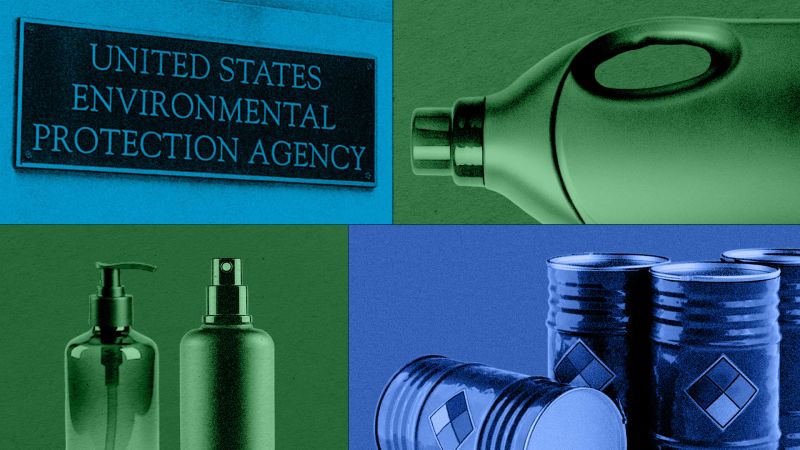
Exclusive: EPA Scientists Report Pressure to Minimize Risks of Household Chemicals
Sandego.net – Within the Environmental Protection Agency under the Trump administration, researchers report experiencing significant pressure to modify safety evaluations of chemicals prevalent in everyday consumer goods, such as cleaning agents and personal care products. This internal tension has led to concerns that certain risks to public health and the environment are being systematically understated, according to multiple current and former employees from the Office of Chemical Safety and Pollution Prevention. These individuals describe a shift in how chemical assessments are conducted, with supervisors encouraging them to prioritize political alignment over scientific rigor.
Political Influence on Risk Assessments
Employees reveal that the agency’s focus on minimizing perceived dangers has intensified during Trump’s tenure. This includes scrutinizing the potential health effects of chemicals already in use, with the goal of ensuring that risks appear manageable. One insider explained that the approach involves adjusting test conditions to reflect scenarios where exposure is minimal, even if those scenarios lack solid scientific grounding. For example, if a chemical poses a risk when both hands are submerged in it, a supervisor might challenge the conclusion by asking, “What if only one hand is exposed? Or just a single finger?” This tactic aims to redefine safety thresholds, often sidelining data that highlights more realistic exposure levels.
“What we’ve been told is: ‘Let’s look at alternative scenarios,’” said a former employee. “If putting two hands in a chemical shows risk, this person said a supervisor might ask, ‘What if you dip one hand? What if you dip one finger?’ in search of the smallest amount of contact needed to call it safe.”
Additionally, scientists have faced directives to disregard the social implications of chemical exposure, particularly on marginalized communities. With the administration’s emphasis on reducing diversity and inclusion initiatives, some have been instructed to avoid incorporating findings that link certain chemicals to health disparities among racial groups. This has created an atmosphere where considerations of equity are secondary to the primary goal of regulatory compliance.
Impact on Scientific Integrity
The EPA’s chemical safety division is tasked with evaluating substances for potential health hazards, including cancer, reproductive issues, and endocrine disruption. However, the pressure to align with political priorities has raised concerns about the reliability of these assessments. A veteran employee noted that the agency has encouraged the use of “realistic exposure scenarios” in its evaluations, but this often translates to parameters that are overly optimistic. “We are considering scenarios we don’t have any basis for,” another former staff member stated, highlighting the disconnect between the data and the conclusions drawn.
Experts warn that this approach could lead to underestimating the true risks associated with chemicals. The administration’s deregulatory agenda has also been linked to the appointment of former industry representatives to key roles, which some argue has influenced the agency’s scientific direction. This combination of policy shifts and personnel changes has created a dynamic where political decisions increasingly shape the interpretation of chemical safety data.
EPA’s Defense of Scientific Process
In response to these claims, the EPA has defended its methods, emphasizing its commitment to gold-standard science. A statement provided to CNN noted that the agency’s risk evaluations are guided by the President’s Executive Order on Restoring Gold Standard Science. According to the EPA, this involves using realistic exposure scenarios, transparently addressing uncertainties, and ensuring that findings are reproducible. The agency also reiterated that its decisions are based on peer-reviewed studies, validated testing techniques, and real-world data, such as environmental monitoring and exposure modeling.
Despite this, career employees describe a growing divide between scientific staff and political appointees. They argue that the latter prefer a narrower definition of risk, often prioritizing economic interests over comprehensive health assessments. Some senior scientists have been moved to administrative positions, where they no longer oversee critical evaluations, while newer staff with less institutional knowledge now take on these responsibilities. This shift has placed additional burdens on junior employees, who must frequently justify their findings to higher-ranking officials who may question the scientific basis of their conclusions.
“Every decision is going to the political level, down to the smallest detail. That is abnormal,” said a scientist who recently left the agency’s chemical division. “Subject-matter experts having to explain to political appointees why they chose a particular science approach, being scrutinized for what they did, and if asked to think about it differently there’s little you can do to push back if you’re meeting with the top person.”
The situation has also affected the agency’s internal culture, with some staff expressing fear of retribution for challenging political directives. The termination of federal union contracts and the suspension of employees who signed dissent letters have contributed to this climate of caution. “You have to follow instructions,” one career employee said. “Otherwise, that’s insubordination.” This sentiment underscores the tension between maintaining scientific integrity and adhering to political mandates.
Broader Implications for Chemical Regulation
Employees who spoke to CNN emphasized that identifying risks in chemical reviews often leads to regulatory action. Conversely, when risks are minimized, the need for oversight diminishes. This dynamic has raised alarms about the long-term consequences for public health, particularly as thousands of chemicals in commonly used products remain unassessed for their full impact on human health. The EPA’s current approach, while framed as evidence-based, has sparked debate over whether it truly reflects the complexities of chemical exposure in real-world settings.
Some sources suggest that the pressure to downplay risks is part of a broader strategy to reduce regulatory burdens on industries. By narrowing the scope of what qualifies as a significant hazard, the agency may be enabling the continued use of products that could otherwise be restricted. This has led to questions about the balance between scientific analysis and political influence in shaping environmental policy. While the EPA maintains that its evaluations are grounded in robust scientific methods, critics argue that the process has become more about aligning with the administration’s goals than uncovering all potential dangers.
As the agency continues to prioritize efficiency and cost-effectiveness, the role of scientists has evolved. Their ability to advocate for comprehensive risk assessments has been constrained, with many now focusing on compliance rather than innovation. This shift has not only affected the quality of evaluations but also the confidence of those working within the agency. “There was a level of respect and trust that the scientists were relying on the best science,” one former employee recalled. “But now, that respect has eroded, and the focus is more on political outcomes than scientific truth.”
While the EPA has taken steps to defend its methods, the challenge remains in ensuring that these adjustments do not compromise the thoroughness of risk analysis. The agency’s leadership continues to stress that its evaluations are based on rigorous data, yet the experiences of its staff highlight a growing concern about the influence of political priorities on scientific decision-making. This tension is likely to shape the future of chemical regulation, as the EPA navigates the delicate balance between policy and evidence in a rapidly changing political landscape.