Goldfish Granted Legal Personhood in Landmark Argentine Ruling
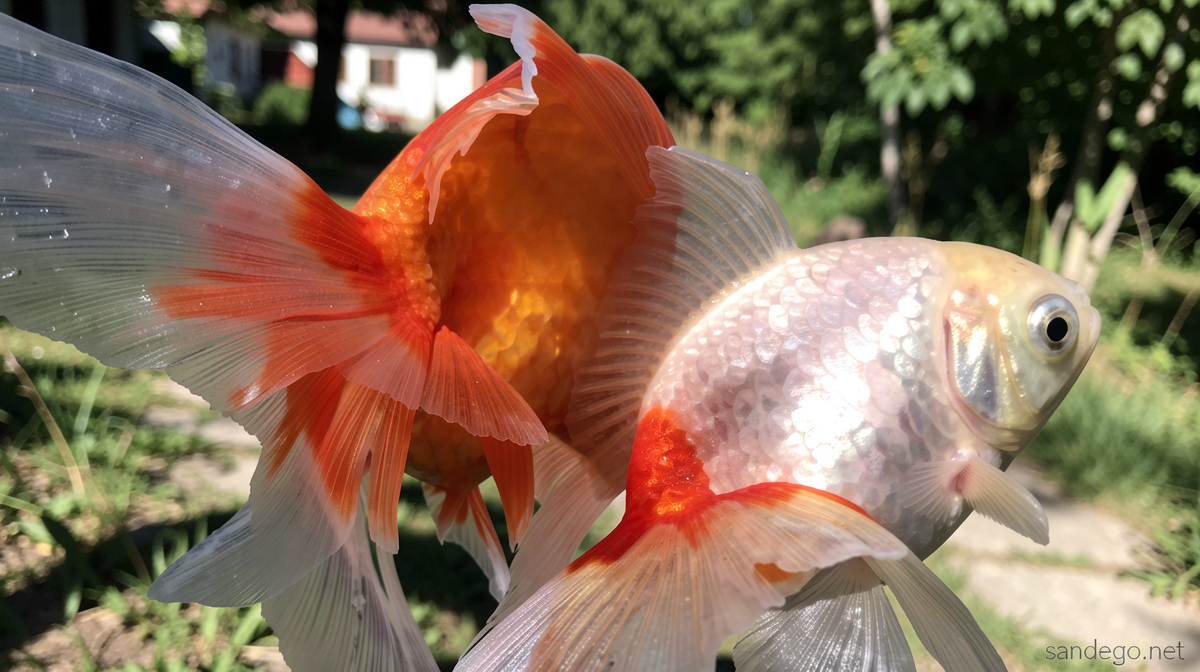
Sandego.net – In a Buenos Aires district known for its upscale dining establishments, a sushi restaurant once displayed two goldfish in a transparent case on its exterior wall. Most passersby barely registered their presence, though children occasionally pressed their hands against the glass. However, one observant individual noticed that the tank sat directly in sunlight and endured constant street noise—conditions far from ideal for aquatic life. This discovery set in motion a legal journey that would ultimately transform the status of these two small fish, now known as Fede and Magui, from mere objects to sentient beings entitled to rights under Argentine law.
A Legal Battle for Aquatic Rights
Matías Trufero, attorney representing the anti-speciesism organization Jaulas Vacías, explained the situation to local media. The sanctuary, which currently shelters over 200 rescued animals, recognized that the fish’s living conditions violated Argentina’s Law 14.346, legislation designed to penalize animal mistreatment. “Anyone passing by and stopping to look could see it wasn’t suitable for the fish,” Trufero noted. The NGO promptly filed a formal complaint with the courts, presenting evidence that the display case conditions constituted cruelty.
Working alongside aquatic specialists, Jaulas Vacías constructed a comprehensive legal argument. The court responded swiftly, ordering the immediate relocation of Fede and Magui to more appropriate accommodations. Restaurant employees reportedly accepted the decision without resistance, though CNN has reached out for additional comment.
From Display Case to Spacious Tank
Carlos José Aga, one of the specialists involved in the rescue operation, provided a vivid comparison to illustrate the inadequacy of the original setup. “Having two fish in a glass display case is more or less the same as putting two polar bears in a cage inside a sauna,” he remarked. Aga subsequently offered to take custody of the goldfish, and the court approved his adoption request.
The transition involved moving the fish from their cramped 40-liter display case into Aga’s home, where they now inhabit a spacious 2,500-liter aquarium. Aga emphasized the importance of maintaining precise environmental conditions for aquatic creatures. “Fish are like astronauts, they travel in their own environment with careful monitoring of all their vital parameters, and when they arrive at the place, those conditions must be reproduced with great accuracy to avoid imbalances that could lead to a decrease in their immunity,” he explained. According to Aga, the goldfish are thriving in their new home.
Establishing Legal Precedent
Beyond securing better living conditions, the legal team pursued a broader objective: reclassifying the fish as subjects of law rather than property. “At the beginning of the case, we requested that, in addition to removing the fish to a safe and suitable location, they be declared subjects of law,” Trufero clarified. This distinction carries significant implications, as it elevates animals from objects to beings possessing inherent rights.
The ruling establishes important groundwork for other animals housed in substandard conditions. Trufero addressed common questions regarding goldfish ownership, noting that keeping fish is not inherently unlawful. “It’s not illegal per se to keep a fish in a fish tank. However, it is illegal to keep them in conditions that cause mistreatment or cruelty,” he stated. Inadequate space, insufficient nutrition, and other violations fall under Argentina’s animal protection statutes. Additionally, exotic species may face restrictions under local wildlife regulations, which exist in numerous countries worldwide.
A Growing Movement for Animal Rights
Argentina’s legal landscape has witnessed increasing recognition of non-human rights over recent decades. The first habeas corpus petition for a non-human animal was filed in 2005 on behalf of Suiza, a chimpanzee residing in Brazil who unfortunately passed away before reaching her sanctuary destination. Since then, similar cases have emerged globally, including in Argentina.
Perhaps the most celebrated precedent involves Sandra, an orangutan born in Germany who spent two decades at the Buenos Aires Zoo. In 2014, a judge declared Sandra a “non-human person” following legal action initiated by environmental advocates. The decision recognized that her captivity and public exhibition violated her fundamental rights, despite adequate food and absence of physical abuse. The Buenos Aires Zoo subsequently transformed into an eco-park in 2016, removing animals from display cases and relocating many to sanctuaries. Sandra herself was transferred to the Center of Great Apes in Wauchula, Florida, in 2019.
“The importance of declaring these animals subjects of law lies in the fact that they cease to be considered a thing, an object,” Trufero explained. “In cases of cruelty and mistreatment, they can be considered victims and not things, which radically changes the way the future of animals is defined.” The case of Fede and Magui opens a door for these types of fish, very common in homes and businesses, to be legally protected. “A subject with a legal right can do little or nothing for themselves unless there are people who speak on their behalf,” the lawyer concluded, emphasizing the ongoing need for advocates to champion animal welfare in courts and society.