Sandego.net – **Title:** Tensions Are Heating Up Over Arctic Territory Beyond Greenland **Meta Description:** Explore rising geopolitical tensions in Svalbard as climate change and international competition reshape this strategic Arctic territory, with China and Russia expanding their presence. — **Improved Article HTML:** “`html
Tensions Are Heating Up Over Svalbard: The Arctic’s Hidden Battleground
Tensions are heating up over Svalbard, a remote Arctic archipelago that has become an unexpected flashpoint in global geopolitics. While Greenland dominates headlines with discussions of American acquisition, this Norwegian territory is experiencing its own dramatic transformation. The removal of two granite lions from a Chinese research facility in Ny-Ålesund last month symbolizes mounting pressures in the high Arctic. Norwegian authorities dismantled the stone guardians in May, followed by the removal of “Yellow River Station” signage in June, signaling a shift in how this territory is managed.
According to geopolitical analysts, Norway’s actions reflect broader efforts to strengthen territorial claims amid accelerating climate change and shifting global power dynamics. Both Beijing and Moscow maintain established presences in Svalbard, yet international attention remains disproportionately focused elsewhere. As temperatures rise six to seven times faster than the global average, this territory’s strategic importance continues to grow.
Why Svalbard Has Become a Geopolitical Focus
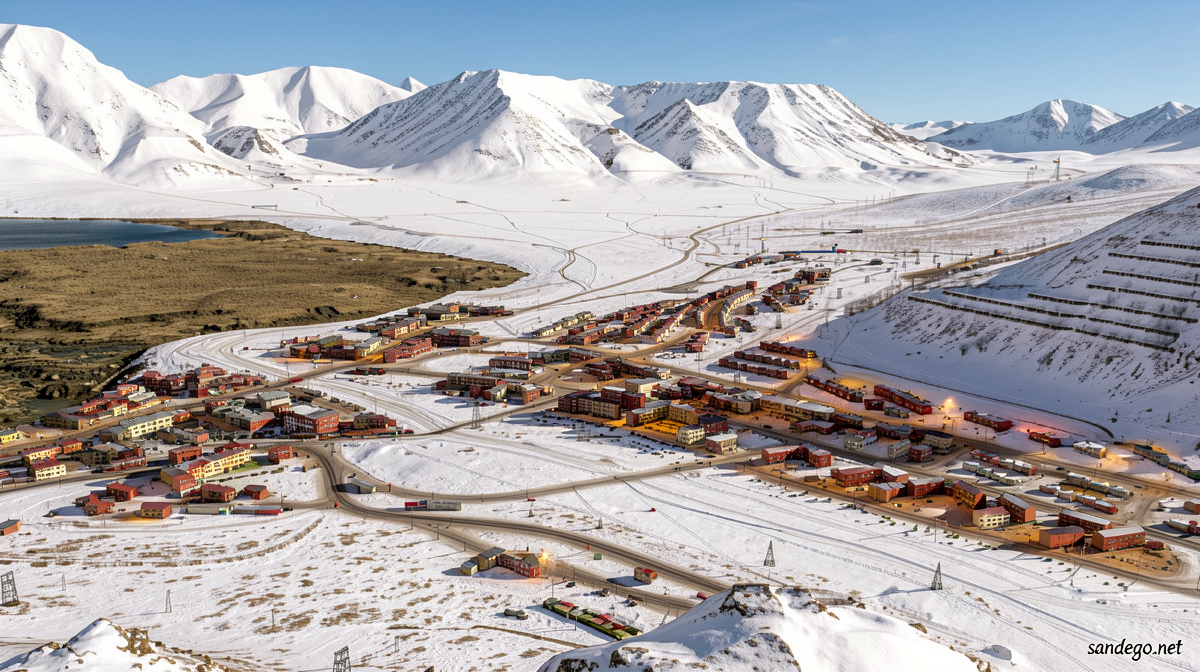
Svalbard presents extraordinary characteristics that make it invaluable. Approximately 3,000 residents call this archipelago home, with no indigenous population. Longyearbyen stands as the northernmost permanently settled town on Earth. Women are prohibited from giving birth within the territory’s boundaries, a unique regulation that underscores its special status. A century-old international agreement grants Norway complete sovereignty while allowing citizens from nearly fifty nations—including Russia and China—to live and work without visas.
The territory has evolved into the premier center for Arctic scientific research and one of the last remaining spaces for genuine international collaboration. Hedda Andersen, a glaciologist at Ny-Ålesund Research Station, explained: “People from all over the world with huge, huge cultural differences… come together to collaborate.”
However, this cooperative spirit faces mounting pressure as Svalbard’s distinctive framework encounters increasingly divided global relationships. Otto Svendsen, an associate fellow at the Center for Strategic and International Studies, noted: “You’re seeing the broader geopolitical context spilling over on the territory in a way that it hasn’t in previous decades.”
Strategic Value and Rising Competition
Svalbard’s geographical position enhances its strategic value considerably. The surrounding waters contain valuable fishing resources and essential seabed mineral deposits. The location proves ideal for managing and receiving data from polar-orbiting satellites utilized for scientific research, meteorological predictions, and military defense purposes. Additionally, the archipelago sits near Russia’s Kola Peninsula, a critical military zone housing much of Moscow’s submarine nuclear capabilities.
Accessibility further boosts Svalbard’s appeal. Regular commercial flights from mainland Norway enable rapid access to the high Arctic within mere hours. Numerous nations maintain operations there, including Russia, China, the United Kingdom, Italy, Japan, and Poland. These research installations serve as gateways for expanding Arctic influence.
Serafima Andreeva, a research associate at The Arctic Institute think tank, described research stations as “almost like a geopolitical currency,” characterizing how they function as diplomatic assets.
Eivind Vad Petersson, state secretary in Norway’s Ministry of Foreign Affairs, observed that the traditional regional motto “High North; low tension” no longer accurately reflects current conditions. Russia’s comprehensive military campaign against Ukraine beginning in 2022 significantly disrupted perceptions of Arctic immunity to geopolitical turbulence.
This conflict highlighted the unusual situation of Russia maintaining a settlement on NATO territory. Barentsburg, primarily a mining and research community on Svalbard, houses predominantly Russian residents and features a prominent Vladimir Lenin monument. Russian activities on the archipelago have intensified existing tensions, with authorities organizing a military-style demonstration in Barentsburg during 2023 featuring trucks and snowmobiles displaying Russian flags alongside a helicopter flying at low altitude.
As tensions are heating up over this remote Arctic territory, the world watches to see how Svalbard’s unique status will evolve in the coming years. The removal of the Chinese lions represents more than a symbolic gesture—it signals a new chapter in Arctic geopolitics where climate change and international competition converge in unexpected ways.
“`