Escalation Continues: US and Iran Trade Strikes Amid Failing Ceasefire
Sandego.net – What many observers initially viewed as a fragile truce has now devolved into renewed hostilities. Over the past two days, both Washington and Tehran have launched dozens of coordinated attacks utilizing aircraft, drones, and ballistic missiles. This back-and-forth violence makes it increasingly difficult to predict the trajectory of the conflict. These latest military actions represent just another chapter in a series of reciprocal strikes that began after the two nations agreed to a tentative ceasefire in April, followed by the signing of a Memorandum of Understanding in June. That agreement was intended to pave the way for a lasting conclusion to the fighting.
Each side has accused the other of failing to honor their commitments. Iran maintains that the United States has not fulfilled its obligations under the agreement, while American officials counter that Tehran is the one breaking its word. President Donald Trump has grown visibly frustrated with the situation, particularly during his attendance at the NATO summit in Turkey earlier this week. The Iranian attacks during this diplomatic gathering seemed to push him over the edge. On Wednesday, Trump announced that the MoU with Iran was effectively finished, describing Iranian leadership as “cuckoo” and dismissing them as a “waste of time.”
Iran’s Response and Military Posture
Tehran has not remained silent in the face of American aggression. High-ranking officials, including the parliament speaker and the nation’s chief negotiator, have taken to social media platform X to issue stern warnings. Their message was clear: “If you strike, you’ll get hit.” This reciprocal threat underscores the volatile nature of the current situation.
Currently, the US military is targeting multiple locations within Iran, with most strikes focused on coastal areas. Despite these intensive bombardments, Iranian forces continue to demonstrate their capacity to respond. They have successfully launched missiles and drones toward American military installations in both Kuwait and Bahrain. Meanwhile, the strategic importance of the Strait of Hormuz cannot be overstated. Experts caution that the recent wave of attacks is unlikely to diminish Iran’s ability to disrupt maritime traffic through this critical energy corridor.
“The ceasefire had little chance of survival because the Iranian government that signed it has no authority over the Islamic Revolutionary Guard Corps (IRGC),” said Carl Schuster, the former director of the US Pacific Command’s Joint Intelligence Center.
Structural Challenges to Peace
The complexity of the situation stems largely from Iran’s internal power structure. The Islamic Revolutionary Guard Corps operates as an elite military force entirely separate from Iran’s conventional armed services. This organization controls the nation’s missile capabilities and bears primary responsibility for safeguarding the Islamic revolution. Crucially, the IRGC answers directly to the supreme leader rather than the civilian government, which has complicated diplomatic efforts.
Retired US Air Force Colonel Cedric Leighton, serving as a CNN military analyst, provided insight into why the current military campaign may fall short of its objectives. He noted that the IRGC’s primary objective remains maintaining the theocratic regime’s hold on power. According to Leighton, the ongoing air campaign is insufficient in scope to compel any fundamental changes from Tehran’s revolutionary forces.
“Their overarching goal is to keep their theocratic regime in power. This air campaign won’t force them to change any of that. It’s too limited in scope,” said retired US Air Force Col. Cedric Leighton, a CNN military analyst.
The Strait of Hormuz: A Flashpoint for Global Energy
Control over the Strait of Hormuz represents one of Iran’s most valuable negotiating chips. During periods of calm, approximately twenty percent of global oil supplies transit through this narrow waterway. The IRGC has leveraged this position since the conflict’s inception, successfully driving up international oil prices through strategic disruptions.
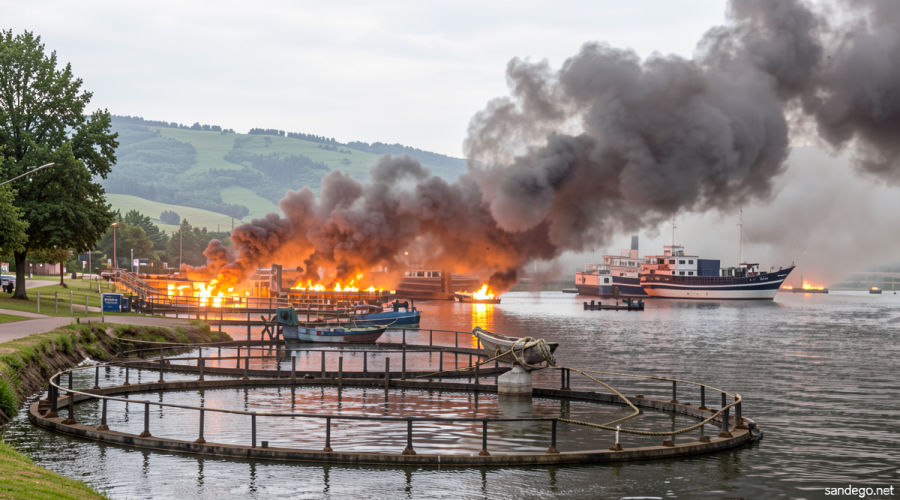
The most recent escalation followed a predictable pattern. According to a US official, Iran targeted three commercial vessels operating within Oman’s territorial waters near the strait on Tuesday. Tehran insists that all maritime traffic must utilize designated Iranian routes and obtain proper authorization before crossing. However, an increasing number of shipping companies are opting for alternative routes closer to the Omani coastline, thereby reducing Iran’s leverage.
From Iran’s perspective, this shift violates key provisions of the MoU, which included commitments to reopen the strait, alleviate financial pressures on Tehran, and establish frameworks for addressing Iran’s nuclear program. The United States has responded to each Iranian attack on shipping with corresponding military action, making this current round of fighting the most severe since the agreement was finalized.
Economic Consequences and Future Outlook
President Trump’s decision to declare the peace process dead carries significant economic implications. Following the Tuesday attacks on commercial vessels, Washington initiated a new wave of strikes targeting eighty locations across Iran. Simultaneously, the United States reimposed sanctions on Iranian oil exports, reversing an earlier decision to suspend these penalties for sixty days as part of the ceasefire arrangement.
The IRGC reported on Wednesday morning that Iranian forces had struck eighty-five American military targets situated in Bahrain and Kuwait. These retaliatory actions coincide with ongoing funeral ceremonies for the former Iranian Supreme Leader, adding another layer of domestic political complexity to Tehran’s response.
While some analysts suggest that the current intensity of hostilities remains lower than the initial phase of the war that began in late February, leaving room for diplomatic recovery, others remain skeptical. Schuster emphasized that any sustainable ceasefire must ultimately gain the approval of the IRGC leadership. Such an outcome would only materialize if the revolutionary guard determines that peace represents the sole path to ensuring its continued existence as an independent power center within Iran’s political landscape.