Farage’s Political Gamble Meets an Unlikely Challenger
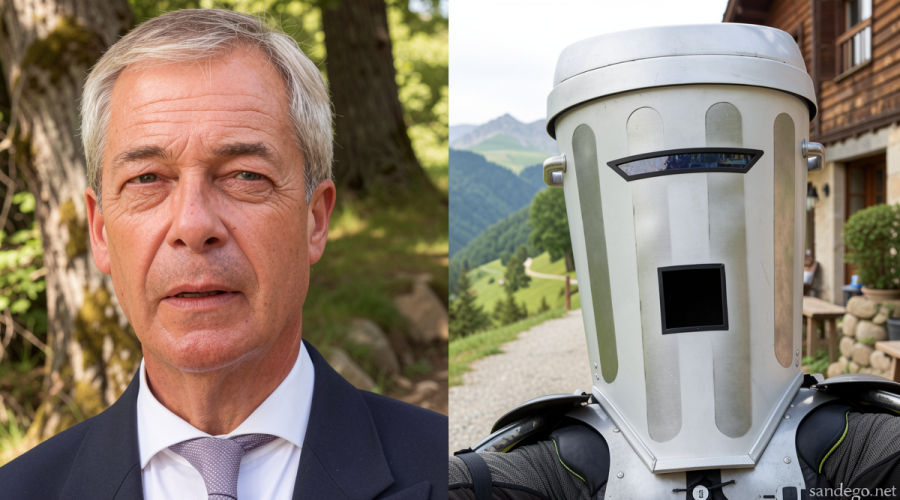
Sandego.net – What began as a bold maneuver by one of Britain’s most recognizable political figures has transformed into an extraordinary electoral scenario. Nigel Farage, the prominent right-wing populist who leads Reform UK, stepped down from his parliamentary seat on Tuesday, setting off a special election that has taken an unexpected turn. Rather than facing established political rivals, the former Brexit campaign leader now finds himself competing against a satirical comedian dressed as a trash can.
The Resignation and Mounting Controversy
Farage’s decision to leave his position as Member of Parliament for Clacton-on-Sea came amid growing scrutiny over his financial affairs. The Reform UK leader, whose party currently leads most British opinion polls, faced accusations that he had failed to properly declare millions of pounds in gifts received from affluent supporters. Parliament’s standards watchdog has launched an investigation into these matters, though Farage has consistently maintained that he has done nothing wrong.
Positioning himself as a champion of democratic accountability, Farage declared that his constituents deserved to have the final say on his political career. He characterized the situation as a choice between his voters and what he described as an “establishment” determined to undermine him. The politician emphasized his commitment to continuing what he called “the political revolution that Reform has started.”
Political Parties Unite in Boycott
The response from Britain’s major political parties was swift and unified. The ruling Labour Party, the Conservative Party, and the Liberal Democrats all announced they would not participate in the Clacton by-election. This collective decision left the field virtually open for Farage’s unexpected opponent.
Prime Minister Keir Starmer, who had recently stepped down as Labour leader, dismissed the resignation as a “desperate stunt.” Meanwhile, a representative for Andy Burnham, who is widely considered the next prime minister, characterized the move as “a gimmick designed to distract from serious allegations about Farage’s funders.” Critics argued that the timing suggested Farage was attempting to escape potential consequences through a public vote.
Count Binface Steps Into the Arena
With traditional political opponents declining to compete, Count Binface emerged as the sole challenger. Known across Britain as a satirical comedian, Binface describes himself online as a “space politician” and has built a substantial following on X, where he boasts more than 200,000 followers. His campaign platform includes humorous but pointed policies, such as requiring cyclists who break traffic rules to ride unicycles instead.
Binface enthusiastically embraced the opportunity, posting on social media: “Game on, Nige.” His candidacy has drawn attention from both supporters and skeptics. Some politicians view the comedian’s participation as evidence that the by-election is merely a sideshow, while Farage’s allies argue it demonstrates the mainstream parties’ fear of confronting him directly at the ballot box.
Divergent Interpretations Emerge
The situation has generated considerable debate about its significance. Conservative MP Ben Obese-Jecty described the contest between Farage and Binface as “the farce that is the Clacton by-election.” In contrast, Reform UK’s home affairs chief Zia Yusuf criticized the boycotting leaders as “cowardly and transparent,” asserting that “the establishment is on the ropes.”
Binface himself has played into the narrative, joking during a BBC Radio 4 interview that politicians might be avoiding him rather than Farage. When asked about his appeal to Clacton voters, the comedian offered a simple but effective message: “I’m not Nigel Farage.”
Broader Implications
The unusual election highlights the shifting dynamics of British politics. Farage, recognized as the chief architect of Brexit, has seen his party achieve significant gains in recent local government elections. His supporters believe the boycott reveals the establishment’s reluctance to engage with his growing political movement. Meanwhile, the outcome of this by-election could provide valuable insights into public sentiment regarding both Farage personally and the broader political landscape.
As the special election approaches, all eyes remain on Clacton-on-Sea, where voters will decide not only Farage’s political future but also whether a comedian in a trash can costume represents a legitimate challenge to one of Britain’s most influential political figures.