As NATO Meets, Putin Weighs Strategic Moves in Ukraine and Beyond
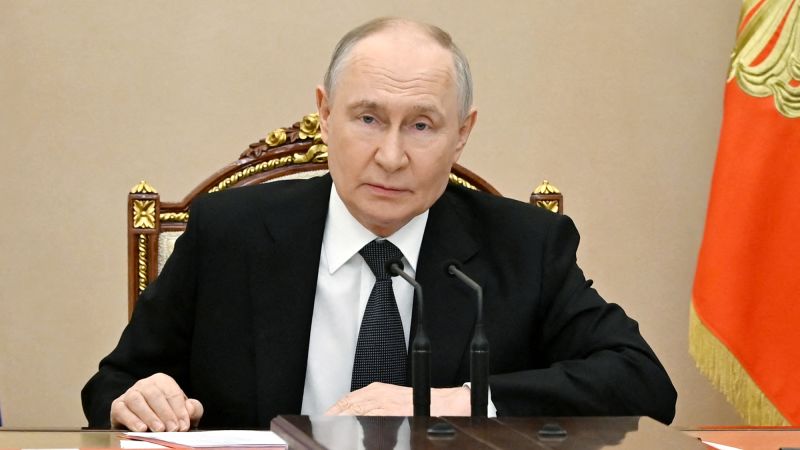
Sandego.net – In the shadow of mounting pressures, Russian President Vladimir Putin faces a pivotal decision. With NATO convening in Ankara this week, the alliance’s internal deliberations may influence the direction of Russia’s war efforts. The conflict in Ukraine, now entering its fifth year, has become a test of endurance for Moscow, straining its economy and eroding public support. Yet, as the battle rages on, questions linger about whether Putin will seize this moment to challenge the alliance further, both in Europe and beyond.
Strain on Russia’s Economy and Leadership
The war has imposed a heavy toll on Russia, with economic indicators reflecting the strain. The nation’s energy-dependent economy now grapples with fuel shortages, exacerbated by relentless Ukrainian strikes. Refineries under attack have forced Moscow to import gasoline, depleting currency reserves to sustain the conflict. Meanwhile, the military, once a symbol of strength, is stretched thin, with resources diverted to maintain front lines in Ukraine. Even as the war drags on, the Kremlin remains focused on securing logistical support, including from North Korea and Iran, to keep its operations afloat.
Politically, Putin’s standing has weakened. Polls show declining public confidence, and the regime’s ability to project power has been questioned. Despite these challenges, the leader’s strategic calculus remains complex. The situation in Ukraine has become a cornerstone of his geopolitical vision, but the path forward is uncertain. As Kyiv’s bombardments continue, causing gas shortages and damaging infrastructure, the pressure on Moscow grows. The black smoke billowing from its skyline serves as a stark reminder of the war’s impact, both on the battlefield and at home.
European Concerns and Potential New Fronts
European nations are increasingly wary of Russia’s next move. Poland has reportedly received warnings from the U.S. that Moscow might strike in a limited capacity, perhaps using drones or hybrid tactics. Such actions, once unthinkable, now seem plausible as the conflict evolves. Denmark’s recent drone incursions into its airspace have heightened fears, while Norway’s Svalbard archipelago hosts a small Russian settlement, Barentsburg, that some suspect could expand its role. These developments fuel anxiety across the continent, with NATO members on edge about the possibility of a wider war.
Adding to the uncertainty is the decision to issue Russian passports to Transnistria residents in Moldova. While initially seen as a symbolic gesture, this move could signal a deeper intent to consolidate control. Analysts debate whether this action is a precursor to greater territorial ambitions, or simply a diplomatic maneuver. The situation highlights Russia’s evolving strategy, as it seeks to assert influence in regions where its power is contested.
“The Catherine wheel of anxiety spins in the largest military alliance in history, with some justification.”
Since the 2022 invasion of Ukraine, Russia’s position has shifted dramatically. The initial confidence of the operation has given way to a more precarious reality, where the nation’s resources are stretched thin. The war has become a central focus of Russian life, a phenomenon unseen in generations, while NATO states, though affected, remain more detached. This contrast underscores the challenges facing the Kremlin, as it balances domestic pressures with international ambitions.
A Split-Screen Dilemma
Russia’s current state can be visualized as a split-screen: one side depicting vulnerability, the other showcasing resolve. On the left, the image of weakness is clear. Moscow’s military capabilities have diminished, its economy is under siege, and its geopolitical standing is diminished. The nation now depends on Beijing for strategic backing, and its reserves are being depleted to fund the war. Factories, once humming with productivity, are repurposed to sustain the conflict, while schools teach the sacrifices of veterans in Ukraine.
Conversely, the right side of the screen reveals a Russia hardened by necessity. State media, long a tool of propaganda, has become a unifying force, reinforcing the narrative of a nation at war. The conflict dominates public discourse, with citizens rallying behind the cause despite the toll on their daily lives. This resilience, however, is tempered by the reality that Russia’s options are constrained. The “Catherine wheel of anxiety” continues to turn, reflecting both the nation’s readiness and its limits.
With NATO members still divided over defense spending, Russia’s financial commitment to the war appears more sustainable. The alliance spends approximately 7% of its GDP on the conflict, while some nations struggle to meet their budget targets. This disparity could embolden Moscow to escalate, leveraging its strategic position to test NATO’s resolve. However, the risk of overextension remains, as the war has already stretched Russia’s military and economic capacity.
Despite these limitations, the possibility of a broader conflict looms. Putin could frame the war as a necessary stand against the West, a move that might justify further mobilization or even a full-scale invasion. The recent intensification of attacks on Kyiv, occurring every 10 to 15 days, suggests a pattern of sustained pressure. Yet, the frequency of these strikes also indicates a shortage of munitions or targets, complicating Russia’s ability to launch a decisive offensive.
As the NATO summit unfolds, the world watches closely. The alliance’s unity will be tested, not only by Putin’s potential actions but also by internal disagreements over strategy. The stakes are high: a decision to escalate could reshape the balance of power in Europe, while a pause might allow Russia to regroup. For now, the Kremlin’s dilemma remains a defining moment in the ongoing saga of global conflict.