China’s Rare Submarine-Launched Ballistic Missile Test Sparks Regional Concern
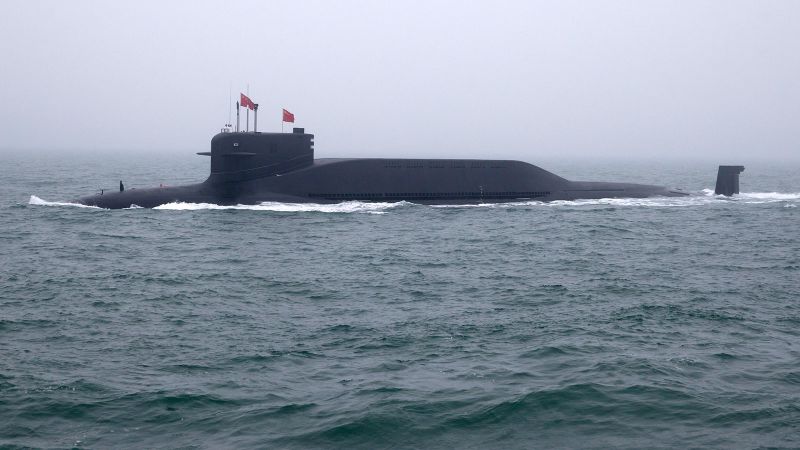
China conducts rare submarine launched ballistic – On Monday, China executed a rare test of a submarine-launched ballistic missile (SLBM) in the Pacific Ocean, drawing attention from neighboring Pacific nations. The operation involved a People’s Liberation Army Navy (PLA Navy) submarine, which launched the missile into open waters, with the projectile landing precisely as planned, according to a statement from PLA Navy spokesperson Senior Captain Wang Xuemeng. This test, Wang noted, is part of China’s annual military training exercises, and the relevant countries were informed beforehand. However, the event has raised eyebrows, particularly due to its location within the South Pacific Nuclear Free Zone, which China joined in 1987.
Strategic Missiles and Regional Tensions
The missile tested likely belonged to China’s advanced SLBM arsenal, which includes models like the JL-2 and JL-3. While the exact type was not specified, experts suggest the JL-3 is the most probable candidate. This variant, first introduced in 2018, has the range to target the continental United States from Chinese coastal waters, highlighting China’s growing naval reach and strategic capabilities in the Pacific. The test underscores the nation’s commitment to expanding its nuclear deterrence, a move that has intensified scrutiny from regional partners.
Despite China’s assurances that the exercise adhered to international legal standards, the timing of the test has fueled apprehension. New Zealand, a key member of the South Pacific Nuclear Free Zone, emphasized that the missile’s trajectory fell within the zone’s boundaries. The treaty, established in 1986 under the Treaty of Rarotonga, aims to prevent nuclear testing and the use of nuclear weapons in the region. China’s participation in the zone, however, has been questioned, with critics arguing that the test could signal a shift in its nuclear policy.
“This test marks a significant step in China’s nuclear strategy,” stated New Zealand’s Foreign Affairs Minister, Winston Peters. “It challenges the nuclear-free commitments made by Pacific nations and raises concerns about the future of the region’s security framework.”
Regional tensions have also been amplified by Australia, which views the test as a destabilizing factor. Australian Foreign Minister Penny Wong noted that the exercise should be considered in light of China’s broader military expansion, including its increased focus on SLBM technology. “China needs to clarify its intentions,” she remarked, highlighting the need for transparency in Pacific affairs. The test, however, is not unique to China, as other nuclear powers routinely conduct similar operations.
Global Context and China’s Naval Growth
China’s test aligns with its aggressive modernization of the nuclear force, driven by advancements in submarine technology. The Type 094 Jin-class submarines, which form the backbone of its SLBM capabilities, are being produced at an accelerated pace, as reported by a U.S. think tank. This expansion is part of a strategic effort to project power across the Pacific and beyond, with the JL-3’s long-range potential enabling strikes on distant targets. The test reflects China’s increasing confidence in its naval capabilities and its ability to conduct complex operations at sea.
While the test has sparked criticism, it is part of a global trend of nuclear powers testing their arsenals. The U.S. Navy conducted four Trident SLBM trials off Florida in September 2024, and India and Russia have also carried out similar exercises. However, China’s choice to test within the South Pacific Nuclear Free Zone distinguishes its actions, raising questions about the zone’s effectiveness and the nation’s adherence to its nuclear commitments. The event also signals a shift toward more frequent and large-scale maritime missile tests, a strategy that experts say will shape the region’s security dynamics.
“China’s test is not just a technical demonstration—it’s a strategic message,” said a defense analyst. “By choosing the Pacific, they’re asserting control over a critical area of influence and signaling readiness to project power globally.”
In response to the test, Pacific nations are calling for greater transparency and dialogue. China’s military exercises, including this SLBM test, are seen as part of a broader effort to strengthen its position in the region. The country’s rapid development of submarine-launched ballistic missiles, combined with its expanding naval fleet, has led to concerns about the balance of power. As the test highlights China’s growing military capabilities, the focus remains on whether its actions will align with or challenge the nuclear disarmament goals of the Pacific community.