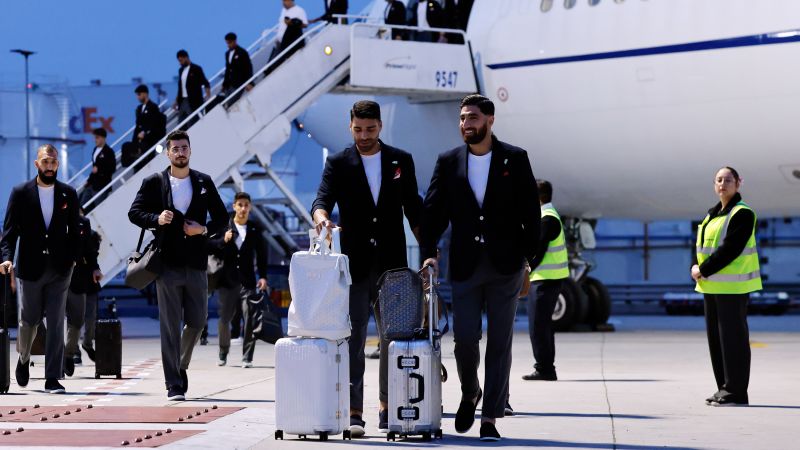
Tehran Lambasts US Obstruction of Iran Soccer Team Ahead of World Cup
Sandego.net – The Iranian capital has accused the United States of blocking Iran’s participation in the upcoming World Cup, as the national soccer team lands in Mexico to prepare for their matches. Tehran’s criticism centers on visa restrictions that delayed the team’s access to the U.S. for key games, a move that has sparked diplomatic tensions. The Iranian Football Federation’s president, Mehdi Taj, described the situation as a form of political interference, highlighting the strain on the team’s ability to compete under equal conditions. This controversy comes as the U.S. readies itself to host the first World Cup since 1930, with Iran scheduled to face New Zealand, Belgium, and Egypt in the group stage.
Visa Delays Fuel Frustration Over US Actions
Iranian officials claim the U.S. issued visa permits to the team just one day before the first match, suggesting deliberate timing to create obstacles. According to the Iranian Students’ News Agency (ISNA), this last-minute decision was seen as a strategic attempt to undermine the team’s readiness. “The United States is showing a lack of fairness in how it handles international sports events,” Taj stated, emphasizing that the obstructionism could affect Iran’s performance. The move has raised concerns about the U.S. leveraging its visa system to exert pressure on Iran during a global stage.
“What Washington is doing reflects malice and unequal treatment of teams,” Taj remarked. “They were defeated in some areas by the resistance of the people, and now they’re trying to vent their frustrations on the football field.”
The U.S. administration defended its actions, insisting that all necessary permits for athletes and support staff had been issued. Officials cited security protocols, stating that the visa process was designed to prevent potential threats. However, Iranian diplomats argue that these measures are excessive, especially since the team is now based in Mexico for the upcoming fixtures. “It remains truly strange that Washington is interfering in the administration of the sporting event,” Taj added, vowing to submit a formal complaint to FIFA.
Soft Power and National Pride on the Pitch
Football has long been a symbol of unity in Iran, offering a shared source of pride despite political and economic challenges. The World Cup qualification is viewed as a crucial moment for the nation, with fans rallying behind the team as a gesture of solidarity. Yet, the current visa dispute has turned this celebration into a platform for broader geopolitical tensions. Mexican President Claudia Sheinbaum confirmed that the Iranian squad would stay in the country for their matches, which aims to ease logistical strains. Still, the U.S. continues to assert its influence, with Taj suggesting that the restrictions might be an attempt to disrupt the team’s momentum.
The Iranian Football Federation’s spokesperson highlighted that the team’s arrival in the U.S. was delayed, impacting their ability to acclimate to the competition. “Tehran has made it clear that the U.S. is using its visa policies to hinder Iran’s progress in the World Cup,” they said, pointing to the strained relationship between the two nations. The coach, Amir Ghalenoei, echoed these concerns, noting that some staff and media personnel had not yet secured entry permissions. “This situation is not fair,” he stated, according to Tasnim news agency, underscoring the team’s frustration with the administrative hurdles.
As the World Cup approaches, the focus on Iran’s soccer team has intensified, with its journey becoming a microcosm of the larger U.S.-Iran rivalry. While the matches in the U.S. will be broadcast in Iranian cinemas with approval, the controversy has shifted the spotlight from the game to the geopolitical narrative. The Iranian Embassy in Ankara joined the criticism, calling the visa restrictions “the worst form of political interference in sport.” This event now serves as a reminder of how sports can intersect with international diplomacy, testing the resilience of both teams and their supporters.