The nostalgic Midwestern salad that deserves a comeback this summer
The nostalgic Midwestern salad that deserves – As the United States approaches its 250th anniversary, summer is in full swing, and families across the nation are preparing for the season’s most cherished traditions—barbecues, picnics, and backyard gatherings. Amid these celebrations, one dish has stood the test of time, quietly shaping the flavors of Midwest family events for over five decades. Meggan Hill, a food blogger and author, has revived this timeless recipe, now a staple in her new cookbook, which promises to bring the essence of Midwestern cooking back into the spotlight.
A comforting blend of flavors
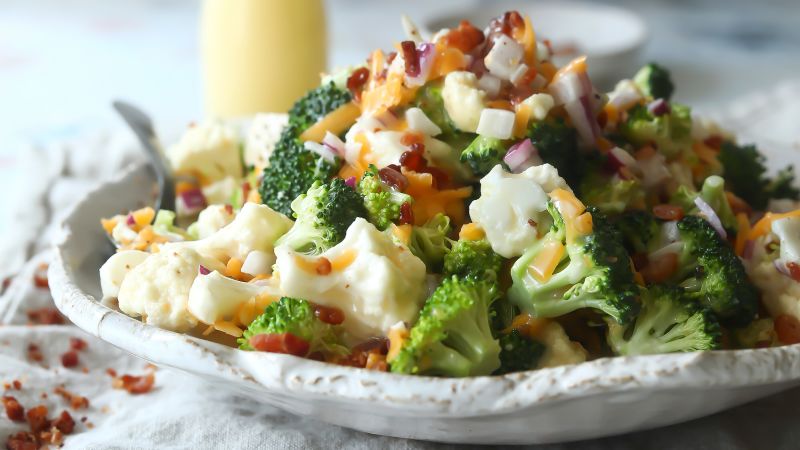
The salad in question, a broccoli and cauliflower medley, is more than just a side dish—it’s a nostalgic symbol of shared meals and simple joys. Hill’s version, thick with creamy dressing, sharp cheddar, and the smoky undertones of bacon, has become a favorite at her family’s get-togethers. While some may dismiss Midwestern cuisine for its heavy reliance on mayonnaise, Hill argues that these recipes deserve a second look. “It’s not about impressing anyone,” she explained. “It’s about feeding people well and creating memories that stick.”
“Midwestern food is often judged or almost dismissed because some of the classic recipes include a fair amount of mayonnaise. … They deserve more attention though, if you ask me,” said Hill, a Wisconsin native and founder of “The Culinary Hill Cookbook: Modern Home Cooking With a Midwestern Heart,” released June 16. “Not because we’re trying to impress anyone. Just because we’re trying to feed them well and hopefully leave them with a happy memory—or at least happy taste buds.”
The salad’s combination of crunch, creaminess, and salty richness makes it a standout. Its ability to convert even the most reluctant veggie-eaters has made it a beloved staple, particularly during festive occasions. “It’s a side that should be enjoyed when the occasion calls for something more indulgent,” Hill noted. “It’s not just food; it’s a reminder of home.”
Roots in Midwest tradition
Growing up in Wisconsin, Hill’s childhood revolved around food. “I have core memories tied to meals,” she said. “Like my first encounter with raw mushrooms dipped in dill. It was love at first bite.” These early experiences shaped her culinary philosophy, where hearty, familiar flavors took precedence over fancy presentations. “Thanksgiving was—and still is—about the food. Birthday parties are about the food. People gather around the table, and those memories are so vivid,” she reflected.
While the salad itself is a modern favorite, its origins trace back to the early 20th century. Hill credits Piggly Wiggly, a pioneering grocery store chain, for inspiring the dish. “They were one of the first to offer premade deli salads,” she said. “That’s where I first saw this recipe in action.” Her family’s version, however, is steeped in personal history. Her grandmother, mother, and aunts crafted the dish long before Hill even had the chance to taste it, but she discovered it during summer camping trips on Lake Michigan in Sheboygan. “It was a summer tradition,” she recalled. “And now, it’s a year-round custom.”
From family recipes to a culinary movement
Hill’s journey began in high school, where her love for cooking naturally grew. “I wasn’t a big fan of cooking, but I loved eating,” she said. “It was a way to connect with my family’s heritage.” This passion led her to collect recipes from loved ones while studying communications at the University of Wisconsin-Madison. By 2010, those handwritten notes had transformed into a spiral-bound cookbook, a humble yet meaningful project that laid the foundation for her current work.
“It was like the kind you might see at a church or school fundraiser,” Hill explained. “I printed 100 copies and gave them away to everyone whose recipes were mentioned.” Her blog, launched to share these dishes with a broader audience, has since expanded into a comprehensive resource. Today, Culinary Hill features over 1,379 recipes, from sloppy joes to slow cooker meatballs with a sweet grape jelly glaze. These dishes, rooted in Midwest simplicity, have found new life in a digital age.
Recipe secrets and family wisdom
For Hill’s latest book, she’s compiled her most treasured recipes, including the broccoli and cauliflower salad. The dish, she said, is a perfect example of how comfort food can transcend trends. “It’s crunchy, creamy, salty, sweet—and to us, it’s familiar,” she said. “It hits all the notes and is a great standby.”
When it comes to preparing the salad, Hill offers practical tips to adapt it to modern tastes. “I often use half the dressing quantity,” she shared. “But my family insisted I include their preferred amount of mayonnaise.” This balance of personal preference and tradition is central to her approach. “If you’re wary of bacon and cheese, you can swap in raisins and shelled sunflower seeds,” she added. “It’s all about flexibility while keeping the spirit of the dish intact.”
Her parents, though “not big cooks,” played a key role in shaping her culinary journey. “They didn’t have the skills, but they had the heart,” Hill said. “Cooking became a way to honor their legacy while adding my own twist.” This blend of heritage and innovation is evident in every recipe she shares. “My family can’t get enough of it, and I still make it for every holiday to this day,” she laughed. “In fact, I’m making it this weekend.”
Despite living in California for 15 years, Hill’s connection to the Midwest remains strong. “The recipes keep me grounded,” she said. “Visiting Wisconsin to spend time with my kids—Calvin, 14; Charlotte, 11; and Julian, 6—reinforces that.” These trips often include nostalgic favorites like scotcheroos and ham roll-ups, which complement the salad’s bold flavors. “Food is the thread that connects us to our past,” she said. “No matter where we are, it reminds us where we came from.”
Hill’s new book is a testament to the enduring appeal of Midwestern cuisine. “It’s not just about replicating old dishes,” she said. “It’s about making them accessible and appealing to today’s cooks.” With a focus on restaurant-quality copycats and easy-to-prepare backyard classics, the book bridges the gap between tradition and innovation. “There are even a few mayo-based comfort foods for good measure,” she added, acknowledging the ingredient’s divisive reputation.
As summer approaches, Hill encourages others to embrace this dish. “A party isn’t complete without it,” she said. “Even at Christmas, when you wouldn’t think a chilled salad would fit on the buffet, it brings a sense of familiarity and warmth.” The broccoli and cauliflower salad, with its rich textures and bold flavors, is more than a meal—it’s a celebration of shared history, family bonds, and the enduring charm of Midwestern cooking.