What Experts Say About the Effectiveness of Electric Muscle Stimulation Workouts
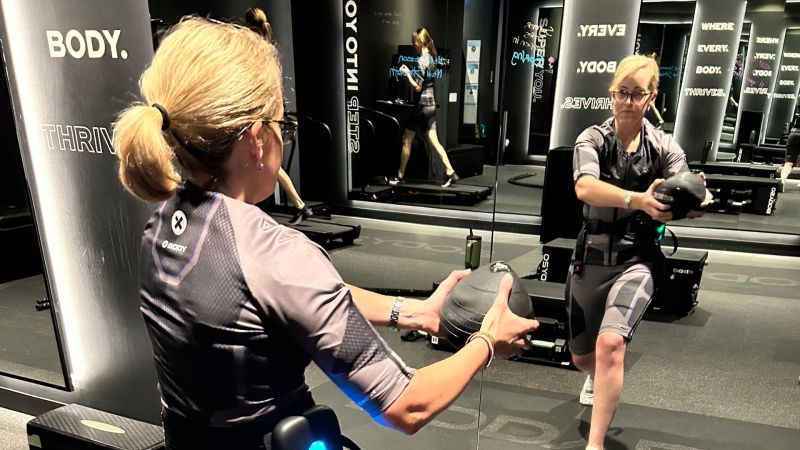
What experts say about the effectiveness – For many fitness enthusiasts, the search for effective workouts often leads to unconventional methods. Emily Ferrara, a 43-year-old woman with a thyroid condition and PMOS, discovered a new approach after her usual gym sessions failed to meet her goals. Inspired by online research and a recommendation from her former trainer, she opted for an electrode suit, a form of electric muscle stimulation (EMS). After two years of attending three EMS classes weekly in Atlanta, she claims to have achieved significant changes in her body composition—reduced fat and increased muscle mass. While she also incorporates cardio twice a week, the EMS sessions have become a cornerstone of her fitness routine.
The Science and Popularity of EMS
EMS, or electrical muscle stimulation, is gaining traction in fitness circles and social media platforms. The technique involves attaching electrodes to the body, which send electrical impulses to trigger muscle contractions. These contractions mimic the effects of physical exertion, allowing users to engage in minimal movement while still achieving results. For Ferrara, this meant spending just 20 minutes per session, a fraction of the time required for traditional workouts. The process begins with warming up on a treadmill to generate body heat, which enhances the conductivity of the electrodes. This preparation step ensures the stimulation works optimally, according to her experience.
EMS has roots in physical therapy and sports science. Originally used in the 1970s by Soviet athletes to improve muscle strength, it later became a tool for rehabilitation. Today, it’s integrated into modern fitness studios, where it’s marketed as a quick, efficient alternative to conventional training. The rise in popularity is reflected in the growing number of venues offering EMS sessions. ClassPass, a leading gym and spa membership app, reports a 16% increase in facilities with EMS programs between 2023 and 2025. Celebrities like Cristiano Ronaldo and Tom Holland have also embraced the method, using it to enhance specific muscle groups or prepare for physically demanding roles.
Expert Perspectives on EMS
Despite its growing appeal, not all experts view EMS as a universally effective solution. Dr. Greg Holtzman, a clinical practice leader at Washington University PT, highlights that the technique may not be suitable for everyone. “EMS is a tool that works best for individuals who are either very weak or very strong,” he explains. This could include post-operative patients or athletes aiming for targeted muscle development. However, for the average person, Holtzman argues that varied exercises like functional training or weightlifting offer more comprehensive benefits.
“The literature out there generally does support the potential use of e-stim for the very weak and the very strong. I describe the very weak kind of being that post-operative patient, or the very strong, where you’re trying to really target a very specific muscle group for really targeted gains in that particular muscle group. But as a general exercise tool, probably not as efficient as it could be—or comfortable, to be quite frank,” Holtzman said.
One key aspect of EMS is its method of muscle recruitment. Unlike traditional exercises, which typically engage smaller muscle fibers first, EMS activates larger fibers immediately. This approach can lead to rapid muscle engagement but may also contribute to prolonged soreness. Holtzman notes that while the technology itself rarely causes injury, the fatigue it generates requires users to maintain proper form during workouts. “Even with the stimulation, the movement itself can lead to strain if not executed correctly,” he warns.
EMS in Rehabilitation and Fitness
Before its integration into mainstream fitness, EMS was primarily used in rehabilitation settings. Physical therapists employed it to help patients recover from injuries by stimulating muscle activity without requiring full-body movement. This application has since expanded, with EMS now being used in conjunction with traditional exercises to accelerate recovery or enhance muscle tone. The technique is particularly useful for individuals with mobility limitations, as it allows them to work out with minimal physical effort.
However, the effectiveness of EMS depends on the individual’s goals. For someone like Ferrara, who sought to improve body composition, the results have been tangible. She credits the method with helping her reduce body fat and build lean muscle, even after years of consistent training. Her success story reflects the potential of EMS as a supplementary tool, especially when paired with other forms of exercise. Yet, Holtzman cautions that its benefits are most pronounced for those with specific needs, such as targeted muscle strengthening or recovery from surgery.
Risks and Considerations
While EMS is generally safe, it comes with certain risks. Skin irritation and discomfort are common, particularly if the electrodes are not properly positioned or if the intensity is too high. Holtzman emphasizes that these issues are usually minor but should be taken seriously. “It’s not something that typically sends you to the hospital,” he says, “but people with active infections, malignant cancers, or pacemakers should consult a medical professional before starting.”
“Increased power on the machine will not necessarily injure the muscles it’s targeting, but it can create prolonged soreness,” Holtzman added. “E-stim itself is probably not going to be the thing that contracts the muscle so hard that we get an injury, but because of the way it recruits different muscle fibers, people do have to be cautious of the fatigue they feel.”
For some, the novelty of EMS is its ability to provide immediate feedback on muscle engagement. This can be a valuable tool for tracking progress, especially when combined with body composition assessments. Ferrara’s experience, for example, includes regular testing to measure changes in her weight and body fat percentage. She notes that the results are measurable, though they require consistent effort and patience. “It wasn’t just like a BMI testing,” she said. “They were able to assess it, and so then I was able to say, ‘OK, my weight has gone down a little bit, but my body composition has changed, so it’s not as much fat, it’s more muscle now.’”
Comparing EMS to Conventional Methods
While EMS offers convenience and efficiency for certain users, its effectiveness compared to traditional workouts remains a topic of debate. A 2022 meta-analysis of EMS studies found that the technique can produce similar outcomes to conventional strength training for specific muscle groups, but it falls short in overall fitness benefits. The research suggests that EMS is particularly useful for rehabilitation or as a complement to other exercises, rather than a standalone solution.
For fitness professionals, the challenge lies in balancing innovation with practicality. Some argue that EMS could revolutionize how people approach exercise, especially for those with limited time or physical capacity. Others, like Holtzman, advocate for a more holistic approach, emphasizing the importance of diverse workouts to ensure balanced muscle development and cardiovascular health. “EMS is a great tool, but it should be part of a broader fitness strategy,” he said.
Ultimately, the appeal of EMS lies in its ability to deliver results quickly. For Ferrara, the 20-minute sessions have provided the motivation she needed to stay consistent. However, the method’s success hinges on individual needs and goals. Whether it’s a way to supplement existing routines or a primary form of exercise, the key is understanding its limitations and how it fits into a personalized fitness plan. As the popularity of EMS continues to grow, so too will the need for informed decisions about its use in both rehabilitation and wellness contexts.